Meet MariaDB: Inside Our First India Meetup


A plugin catalog that installs extensions with one SQL command. An analytics engine that runs inside MariaDB Server. A contributor’s patch that makes metadata queries two and a half times faster. On 12 November, the MariaDB Foundation’s first India meetup showed all three, two of them in public for the first time.
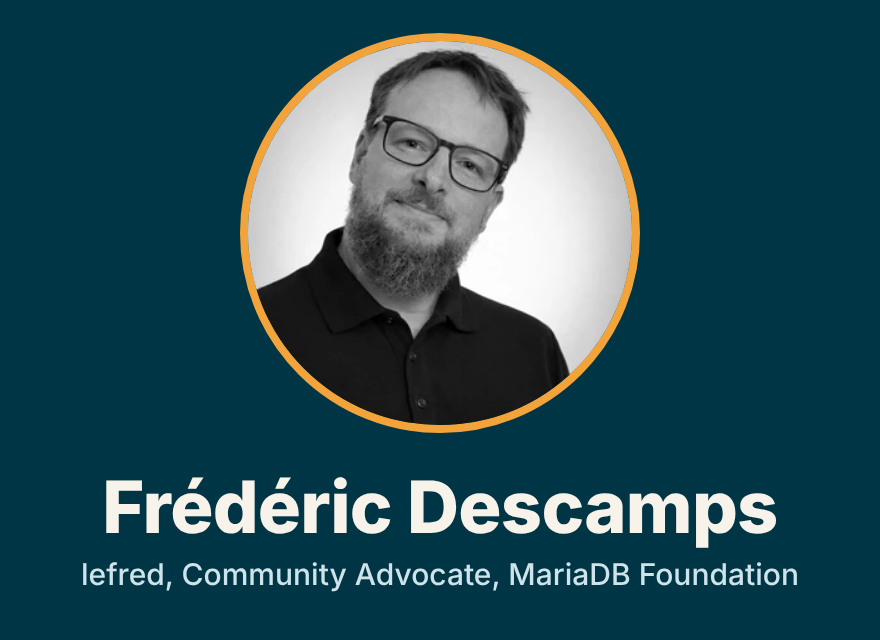
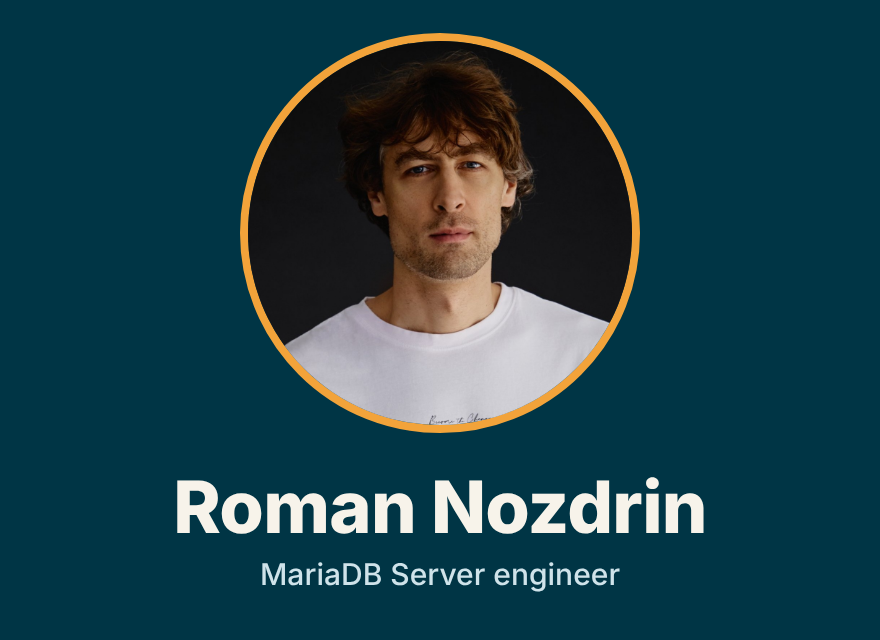
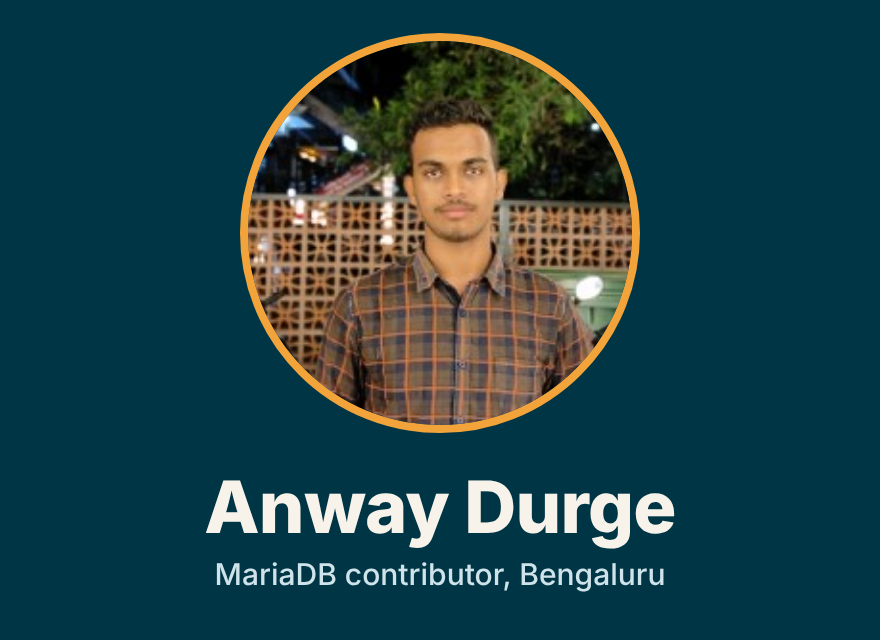
The meetup ran online for about 90 minutes. Anna and Monty Widenius opened with the story of MariaDB. Frédéric Descamps (lefred), Roman Nozdrin and Anway Durge followed with the work that is coming next, and the evening closed with a long, lively Q&A. Here is what they shared.
Marina: package management for database plugins
Few people extend their database with plugins that are not already part of the server, lefred said. Finding a plugin, checking it, compiling it and installing it is hard work. Linux solved the same problem more than 20 years ago with package managers such as APT and DNF, where repositories and packages are signed. Databases never did.
Marina is the Foundation’s answer, and this was its first public showing. It works like a package manager built into the database:
- Signed catalogs. A Marina server hosts catalogs of plugins. The Foundation will run one with plugins for MariaDB, and it can also carry components for MySQL. Anyone can host their own.
- Everything from SQL. A small client plugin lets you search the catalog, install, update and pin plugin versions without leaving SQL or touching the file system.
- Trust levels. Verified plugins were reviewed and tested by a person. Screening means automated checks passed. Community plugins are not reviewed yet, so you must explicitly confirm that you want them. Commercial plugins are encrypted, and only buyers of the decryption key can use them.
- Catalogs that work together. A catalog can point to other catalogs, proxy them, mirror them or cherry-pick only the plugins you want. You can list several catalogs in your configuration.
- Private distribution. For cloud providers and air-gapped sites, a catalog can serve plugin files itself, so clients never reach the internet.
Plugin authors add a marina.md file next to their README, and its install and usage sections appear in the catalog automatically. That gives developers visibility for their plugins, and DBAs a way to install them without hunting and recompiling.
lefred was clear about the limits. Marina guarantees that the file you install is exactly the one added to the catalog, unchanged, and that only privileged accounts can install plugins. It does not guarantee what a plugin does once installed. That is what the trust levels are for.
In the live demo, lefred added a small greeting plugin from GitHub to a catalog, then installed it from a MariaDB 12.3 client with a single SELECT statement. Because it was a community plugin, Marina first asked him to confirm. Seconds later the plugin and its function were available.
Marina is currently written in PHP, with clients in C. The team plans to rewrite the server in Go, so it can be deployed as a single binary with one configuration file. A release and announcement are planned for the coming weeks.
When the duck meets the sea lion: DuckDB inside MariaDB
Roman Nozdrin started with a problem. The analytics options in the M-ecosystem, ColumnStore and Exasol for MariaDB and HeatWave for MySQL, all run as a separate analytical runtime. That means passing queries from the transactional system to another engine, fetching results back, and keeping users and privileges in sync between the two.
His answer is to bring the analytics engine as close to the transactional data as possible: a DuckDB storage engine for MariaDB. It is a “smart” engine, meaning MariaDB can hand the whole query to DuckDB and simply return the result. MariaDB keeps the client protocol, metadata and privileges, while DuckDB brings its columnar storage, vectorized execution and MVCC.
A few details stood out:
- Joins without a second copy. A query can join InnoDB and DuckDB tables in the same instance. DuckDB’s vectorized executor runs the query, while InnoDB rows are read through the normal MariaDB path.
- Fast bulk loading. Besides normal inserts and replication from a separate transactional instance, the engine exposes functions that ingest Parquet or CSV files in parallel, locally or straight from S3. These loads sit outside MariaDB transactions, so they cannot be rolled back.
- Transactions have a cost, for now. Inside an explicit transaction, the engine must see InnoDB changes made since the transaction began, which currently means a full scan with filters pushed down. Index scans are coming soon.
On benchmarks, Roman showed the engine on a roughly 1 TB TPC-H dataset (scale factor 1000), performing on par with the DuckDB command-line client and often ahead of it. On ClickBench, ClickHouse still wins the seven heaviest string-processing queries, while the engine is on par or ahead on many of the rest. Very large machines (192 vCPUs) favor ClickHouse on a dataset this small, and Roman is working on DuckDB patches for that.
The most practical result came from Magento. On a full orders report over two tables with synthetic data, the report took 18 seconds with both tables in InnoDB, and ran about 63 times faster with both tables in DuckDB.
Next on Roman’s list: support for Quack, DuckDB’s native client protocol, and DuckDB 2.0’s pluggable parser, which lets DuckDB run MariaDB SQL statements unchanged. The plugin is already built and waiting for the next MariaDB release, and it will be offered through Marina. Roman thanked the DuckDB community and DuckDB Labs, and Alibaba, which started the DuckDB engine work and contributed it through AliSQL.
From GSoC to the codebase: Anway Durge
Anway Durge, from Bengaluru, started contributing to MariaDB in February 2026 and became a Google Summer of Code contributor this year. Many in the Indian community already know him from the MariaDB booth at Open Source India, where he answered the technical questions.
His GSoC project tackled a hidden cost in INFORMATION_SCHEMA. For every query, MariaDB filled an internal temporary table and then read it back to the client, even for a simple lookup in a single schema. Anway added flags that recognize simple queries (no ORDER BY, GROUP BY, DISTINCT or aggregates) and stream their rows straight to the client instead. On a test with 2,000 rows, a lookup dropped from 78 ms to 31 ms, about 2.5 times faster, and the time stayed flat as the row count grew. A second change builds the list of visible databases from in-memory privilege data for users with exact-name grants, instead of scanning the whole data directory.
He was candid about the journey. His mentor, Jan Lindström, told him honestly when the work was not good enough yet, while he was also working as a research intern. Senior engineers reviewed his GSoC proposal and helped him improve it. Monty added during the session that the server team has also made in-memory temporary tables handle BLOBs, so INFORMATION_SCHEMA queries go to disk less often. Simple queries still gain from Anway’s change, and there is plenty more to improve.
Anway is now fixing bugs in the DuckDB engine and exploring the MariaDB AI plugins. In his words, it takes a few clicks in an IDE such as Cursor to connect the MariaDB skills, the MCP server and mariadb-shell.
Where it all started: Monty and Anna
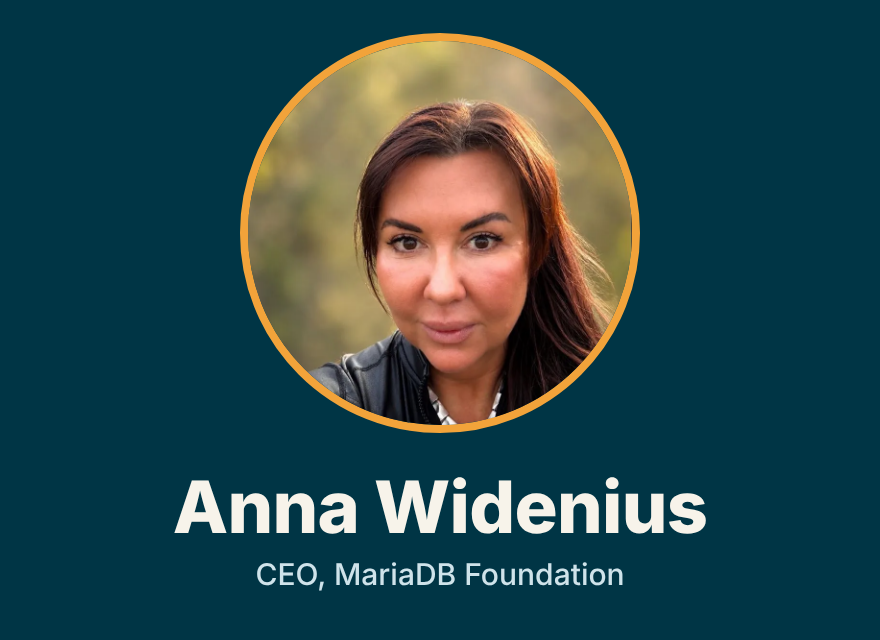
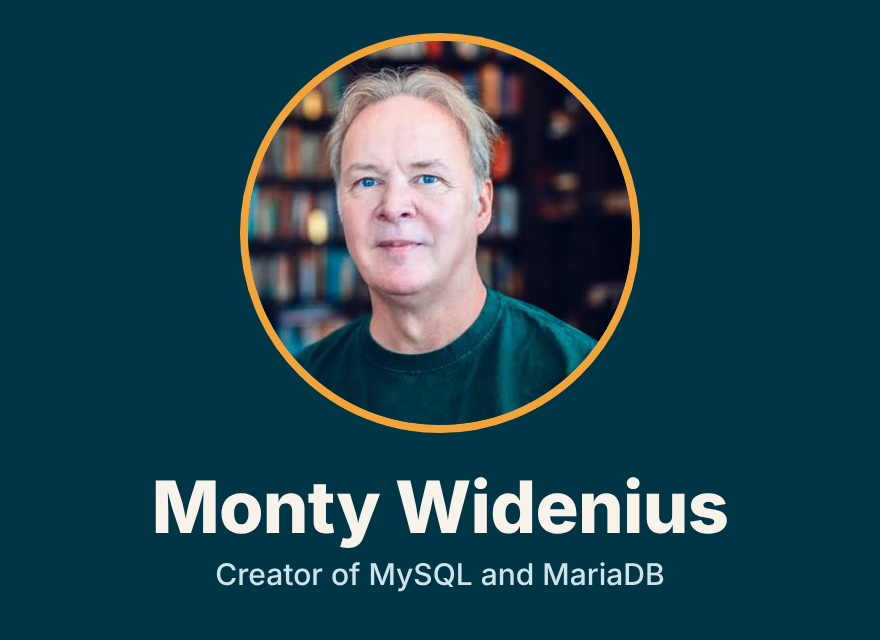
The evening opened with the story behind it all. Anna Widenius, CEO of the MariaDB Foundation, began with a correction: Monty is the creator of MariaDB, and her own claim to fame is that she put the Maria into it. Monty names his projects after his children, starting with My, his oldest daughter.
Monty took the audience from writing his first games in 1978 to a database application generator that became one of the best-selling databases in Scandinavia, and on to MySQL. He and David Axmark wanted to give something back to open source and still work on it full time. Their first license was simple: use the code freely, but if you earn money with it, pay $500 per server, or feel a bad conscience. That model grew the company to about 70 people and kept it profitable. MySQL moved to the GPL in 2000, and Sun bought it for $1 billion.
When Oracle announced it would buy Sun, Monty forked MySQL, and about 20 engineers joined him on the new project, MariaDB. He did it, he said, not for money but so that MySQL’s spirit would live on, its engineers would have a place to work, and everyone who depended on it could keep trusting open source. To make sure the same could never happen to MariaDB, he created the MariaDB Foundation, which holds the MariaDB Server trademark and guards the code.
Anna then explained the Foundation’s mission in three words: continuity, openness and adoption. Continuity means MariaDB Server can exist and stay open source forever. Openness means contribution happens fully in the open, through public Jira and GitHub, with code judged on its technical merit. External contributions have grown sharply, many of them AI-assisted, so human review matters more than ever. The Foundation answers every contribution within seven days, and Georgi Kodinov, its contributions officer, provides first-level reviews before bringing in subject matter experts from MariaDB plc. Adoption is why events like this one happen: spreading the word, and listening closely to what users need next.
From the Q&A
The chat stayed busy all evening. Some of the questions and answers:
What license should a small founder choose for a product they hope to make a business? Monty: if the product can be embedded in others, like a storage engine or a library, GPL is probably best, because companies that do not want GPL in their product buy a commercial license. For tools, BSL can work: the code becomes open source after a set time, and you can still charge, for example, cloud providers. What he would never choose is open core, because users of the open-core parts are in effect using a closed-source product.
Why should a MySQL user choose MariaDB over moving to PostgreSQL? Monty: the move to MariaDB is easy, because the syntax is basically identical and migration tools exist. PostgreSQL works differently, so queries need retuning. Under high concurrency with many users, MariaDB is stronger, and in many other cases the two are similar. Upgrades are another difference: MariaDB lets you upgrade from any version to any version. Roman pointed in the chat to the MariaDB Migrator, an automated MySQL to MariaDB migration tool.
How did MariaDB become part of Magento and Adobe Commerce? lefred: Magento has always relied on the query cache, which MariaDB kept and MySQL removed in 8.0. The integration itself was built by the Magento community, and the Foundation now wants to work with that community on more Magento-specific optimizations.
How does Marina protect against a compromised GitHub repository? lefred: when a plugin is added to a catalog, Marina records its checksum and signature. If the code on GitHub is later changed, it no longer matches, and Marina refuses to install it. Reviewing a plugin before it enters a catalog is the catalog maintainer’s job.
Can Marina run without internet access? Yes. You can build or upload your own plugins into a private catalog and set its distribution to private, so clients download only from your Marina server.
Does Marina handle plugin updates when you upgrade the server? That is the plan: Marina should detect newer plugin versions and fetch the versions that match your server after an upgrade. It does not do this yet.
What’s next
This was the first of several MariaDB events in India this winter, with more live events and at least one hackathon in the works. Marina will be released in the coming weeks, and the DuckDB engine is waiting for the next MariaDB release.
Thank you to everyone who joined, asked questions and stayed until the end, and to our speakers for sharing work that is still taking shape.
Watch the full meetup, with chapters for each talk: MariaDB Foundation Meetup #1 India on YouTube
To hear about the next event, follow the MariaDB Foundation on LinkedIn. We also list our events on Luma, Meetup and Monkeys. Building something with MariaDB? Add it to the MariaDB Server Ecosystem Hub.
Leave a Reply