
Blog
-
Solanica joins MariaDB Foundation as a Silver Sponsor
We are pleased to welcome Solanica, the company driving the development of OpenEverest, as a MariaDB Foundation Silver Sponsor.
OpenEverest is an open-source platform for deploying and managing databases on Kubernetes. Its recently added MariaDB support gives developers and platform teams another way to bring MariaDB into their infrastructure, with deployment, high availability, backups and recovery accessible through a common interface.
MariaDB in the Kubernetes ecosystem
For organisations running applications on Kubernetes, database support is an important part of their […]
-
MariaDB Foundation: Reproducing and Validating MDEV‑37992 with TAF
Thanks to Mark Callaghan for filing MDEV‑37992. This regression only appears under specific LRU and buffer‑pool conditions, and requires a memory‑resident workload to expose.
Using TAF, I reproduced the issue across 11.8, 12.3, and 13.1 using both parent commits and patched commits from MDEV‑33966. The fix restores expected throughput in all branches.
The workload used was POINTS‑COVERED‑PK with 10M rows × 8 tables, 40 threads, warmup enabled, and a 90G buffer pool. TAF’s warmup iteration, rest detection, and stable‑state perf […]
-
Bagisto MariaDB Vector Semantic Search
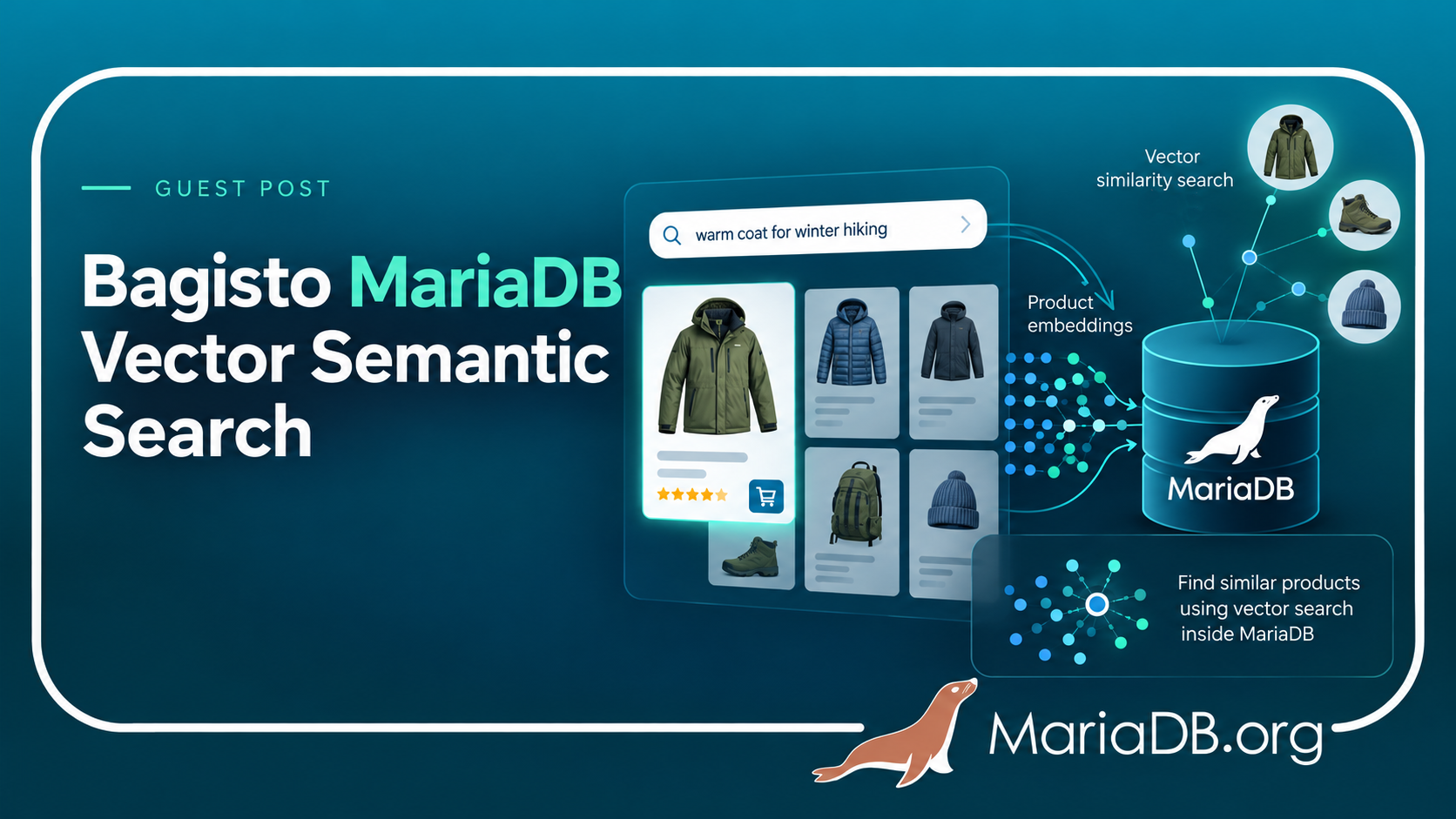
I’m always interested to see how MariaDB Vector is being used in real applications, beyond the usual demos and simple similarity-search examples.
In this guest post, the team behind Bagisto takes a very practical look at semantic search for e-commerce using MariaDB Vector. What I particularly like is that they don’t stop at showing it works: they test indexing, query latency, concurrency, filtering, recall, and the impact of tuning the vector cache, the InnoDB buffer pool, and the HNSW index […]
-
Community Spotlight: Slava Rozhnev and SQLtest.online
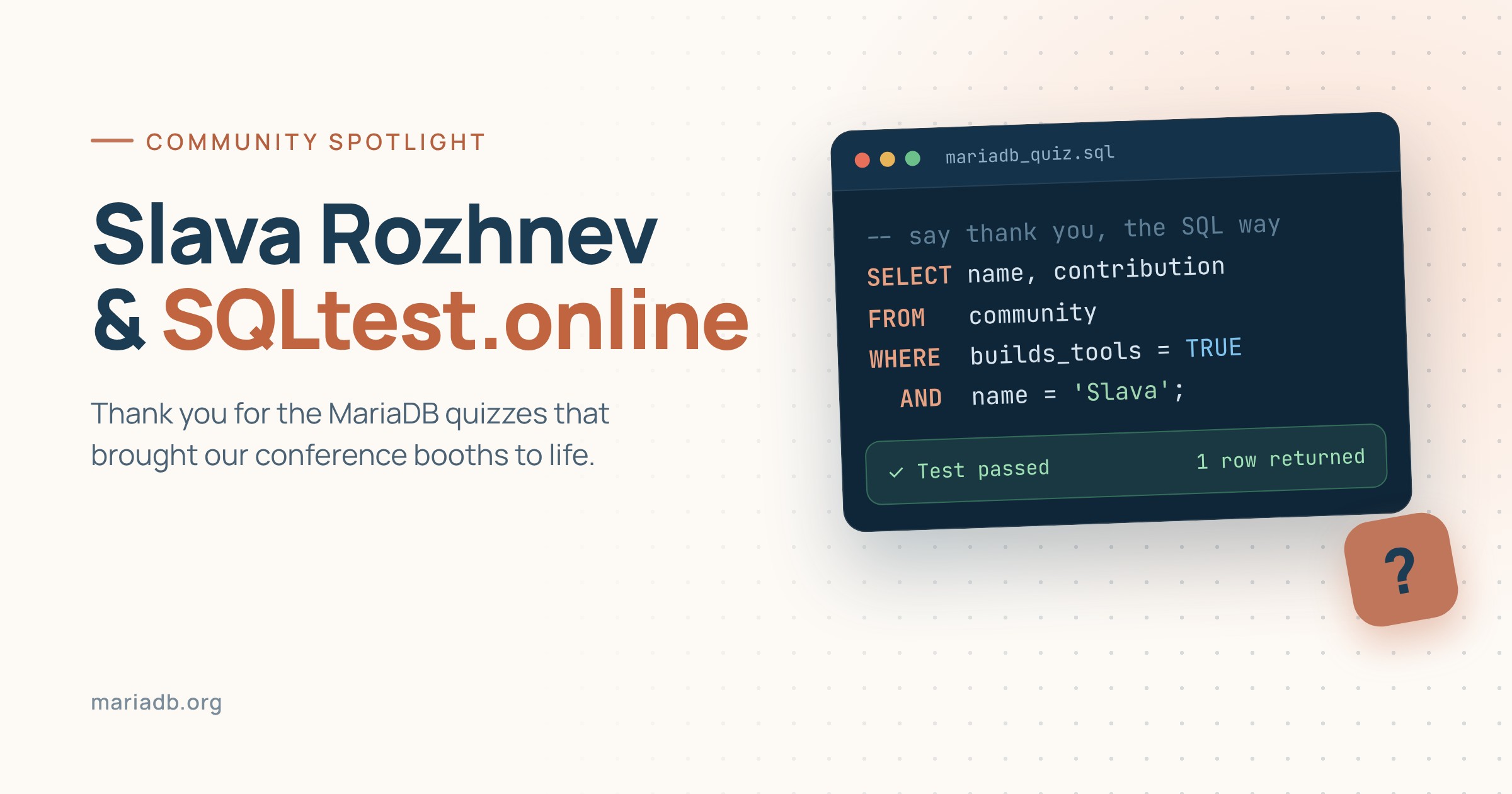
Open source runs on people. Not only the engineers who commit code, but everyone who builds tools, answers questions, writes tutorials and shows up when help is needed. Slava Rozhnev, creator of SQLtest.online, is one of those people for MariaDB. He has been creating SQL quizzes with the MariaDB Foundation for a while now, and this post is our way of saying thank you.
A collaboration that keeps growing
Slava’s work with the Foundation goes back further than this year’s […]
-
Building a Public Performance Change Detection Library for MariaDB
Performance engineering inside a database project is usually private. Teams run internal workloads, investigate changes, fix issues, and move on. The knowledge stays inside the company, and the outside world only sees a benchmark graph or a release note.
I know this pattern well — I spent more than twenty‑six years doing this work for both PervasiveSQL and MySQL.
The investigations were deep, the lessons were real, but almost none of it was visible to the outside world.
The surprises, […]
-
Open Source milestone – MariaDB’sEcosystem hub hits 200 solutions
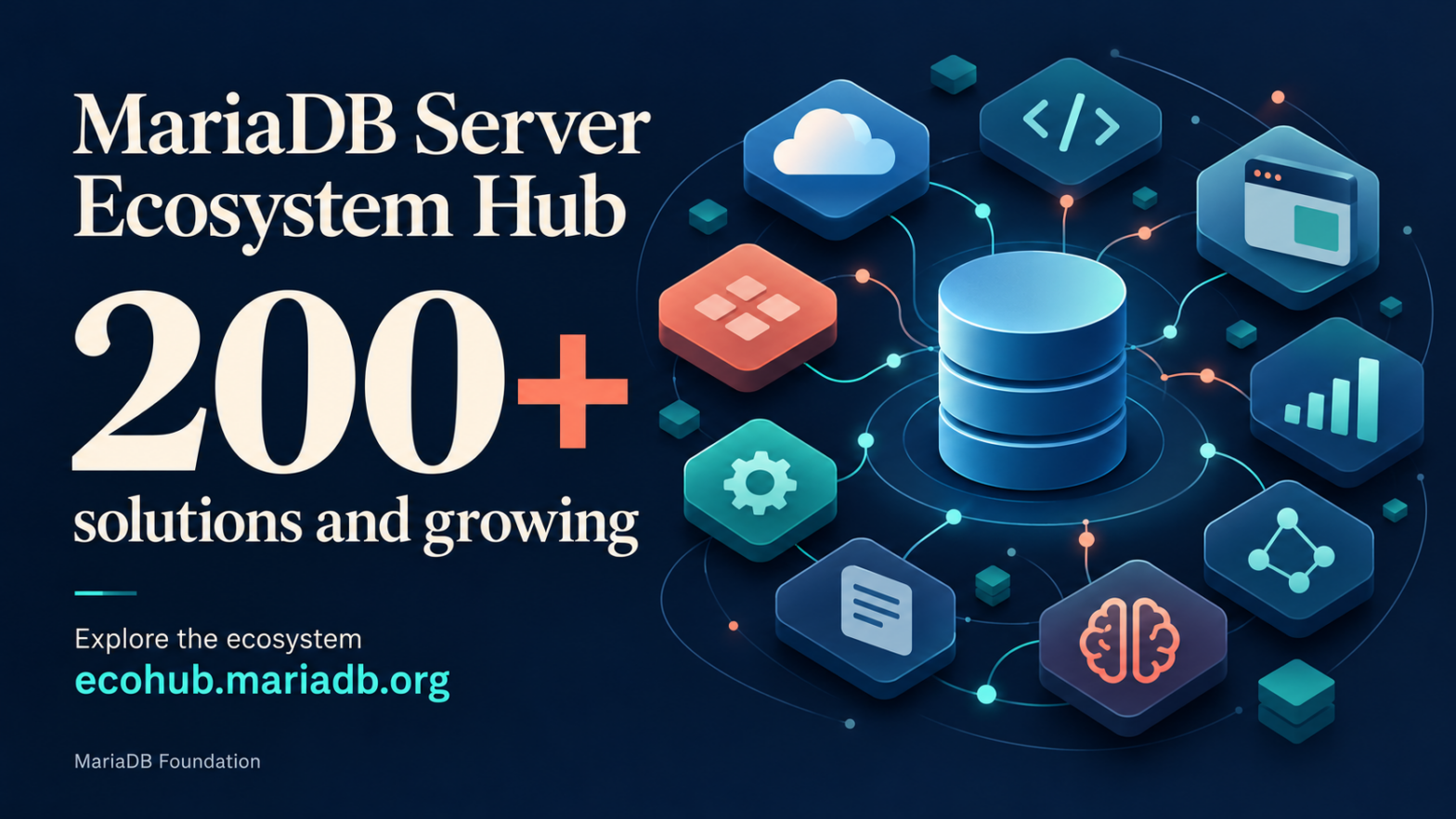
New ‘App store of open source’ is one stop shop serving the fast-growing MariaDB community’s needs for applications, developer tools, cloud platforms and projects.
The MariaDB Foundation today announces the MariaDB Server Ecosystem Hub has exceeded 200 entries, just six months after launch.
The Hub is a curated, open directory of MariaDB Server approved products, services and open-source projects. The ecosystem spans cloud and hosting platforms, monitoring and observability, backup and recovery, security, migration, connectivity, DevOps, analytics, AI and application […]
-
Laravel 13 now supports MariaDB Vector natively
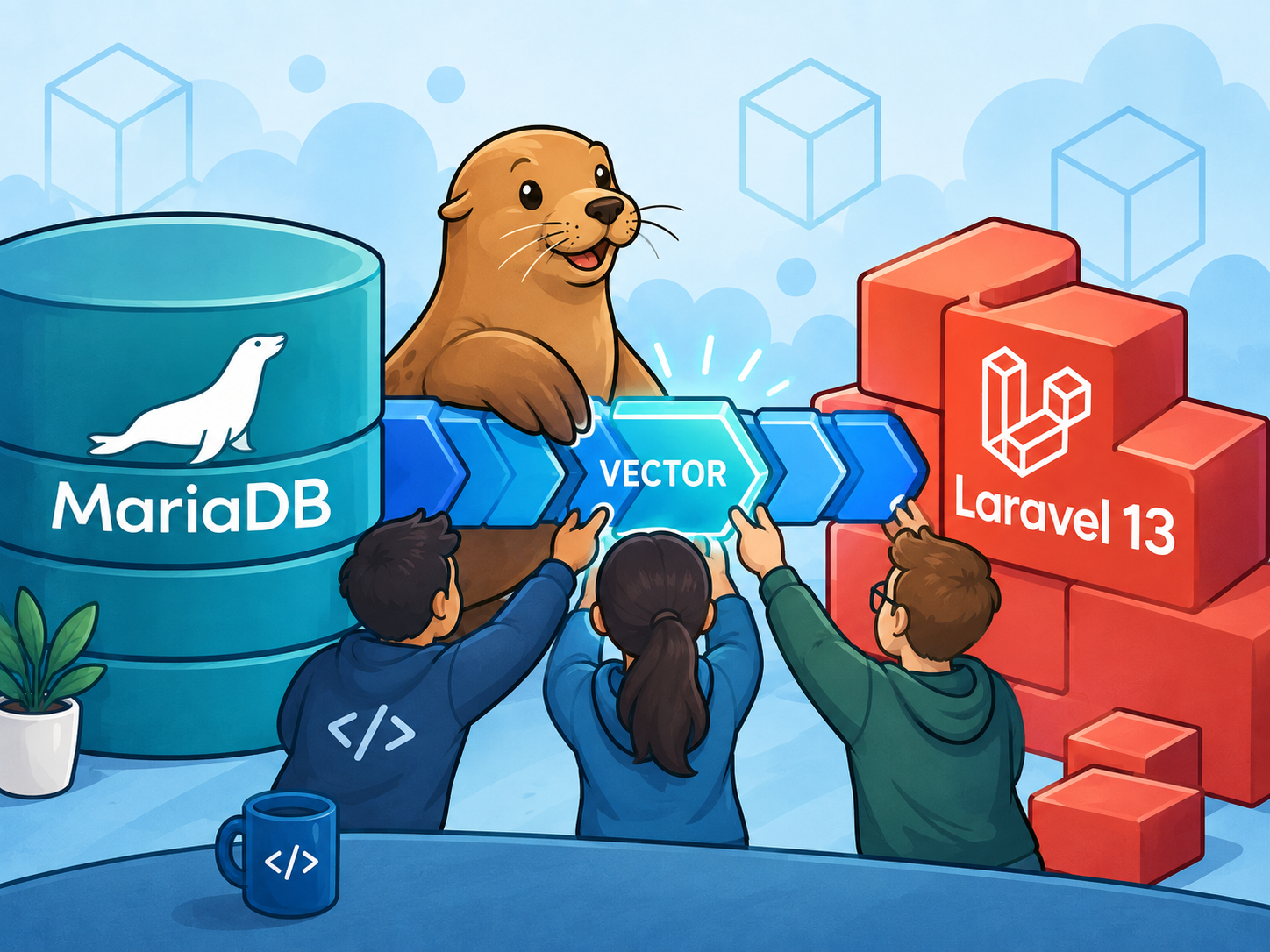
If your Laravel application runs on MariaDB, you can add semantic search to it without a second database, an external vector service or an extra package. Since Laravel 13.28, vector columns, vector indexes and similarity queries work on MariaDB out of the box. A large part of that work came from community contributors, including Mohamed Touhami Rhaima.
Until this summer, Laravel’s built-in vector search was a PostgreSQL feature: it assumed pgvector. Laravel’s AI SDK documentation now reads: “Vector queries are currently supported on […]
-
Frappe joins MariaDB Foundation as a Silver Sponsor
MariaDB Foundation welcomes Frappe as a Silver Sponsor.
Frappe builds open-source software for running organisations, including ERPNext, Frappe HR and Frappe CRM. Its applications are built on Frappe Framework, where MariaDB is the default database. That makes MariaDB part of the infrastructure behind the work Frappe users do every day, from managing finances and inventory to serving customers.
“Frappe shows what open-source software can deliver when the entire stack is available for people to use, adapt and improve,” said Anna […]