
MariaDB’s Hackathon Challenge at Junction 2026

Junction is Europe’s biggest hackathon: about 2,000 people building for 48 hours in Espoo, Finland. At Junction 2026, on 13–15 November, the MariaDB Foundation hosted MariaDB’s Wikipedia challenge: build tools that make Wikipedia better, using MariaDB Vector or system-versioned tables, or both. We chose Wikipedia because Wikipedia itself runs on MariaDB. For the challenge we prepared the MariaDB Wikipedia datasets: Finnish, Swedish and English Wikipedia, with the full edit history and ready-made vectors.
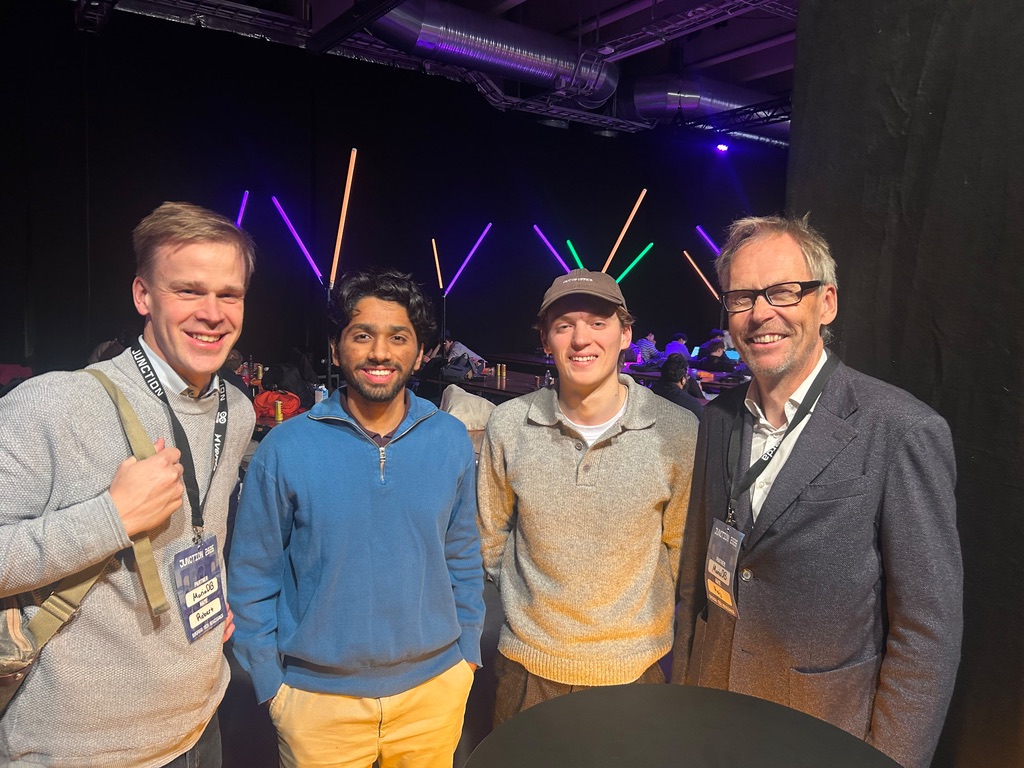
Kaj Arnö and Robert Silén were there for the MariaDB Foundation, with Tim Lobanov, our key account manager at Junction, and a visit from Kimmo Virtanen of Wikimedia Suomi, the Finnish Wikimedia chapter.
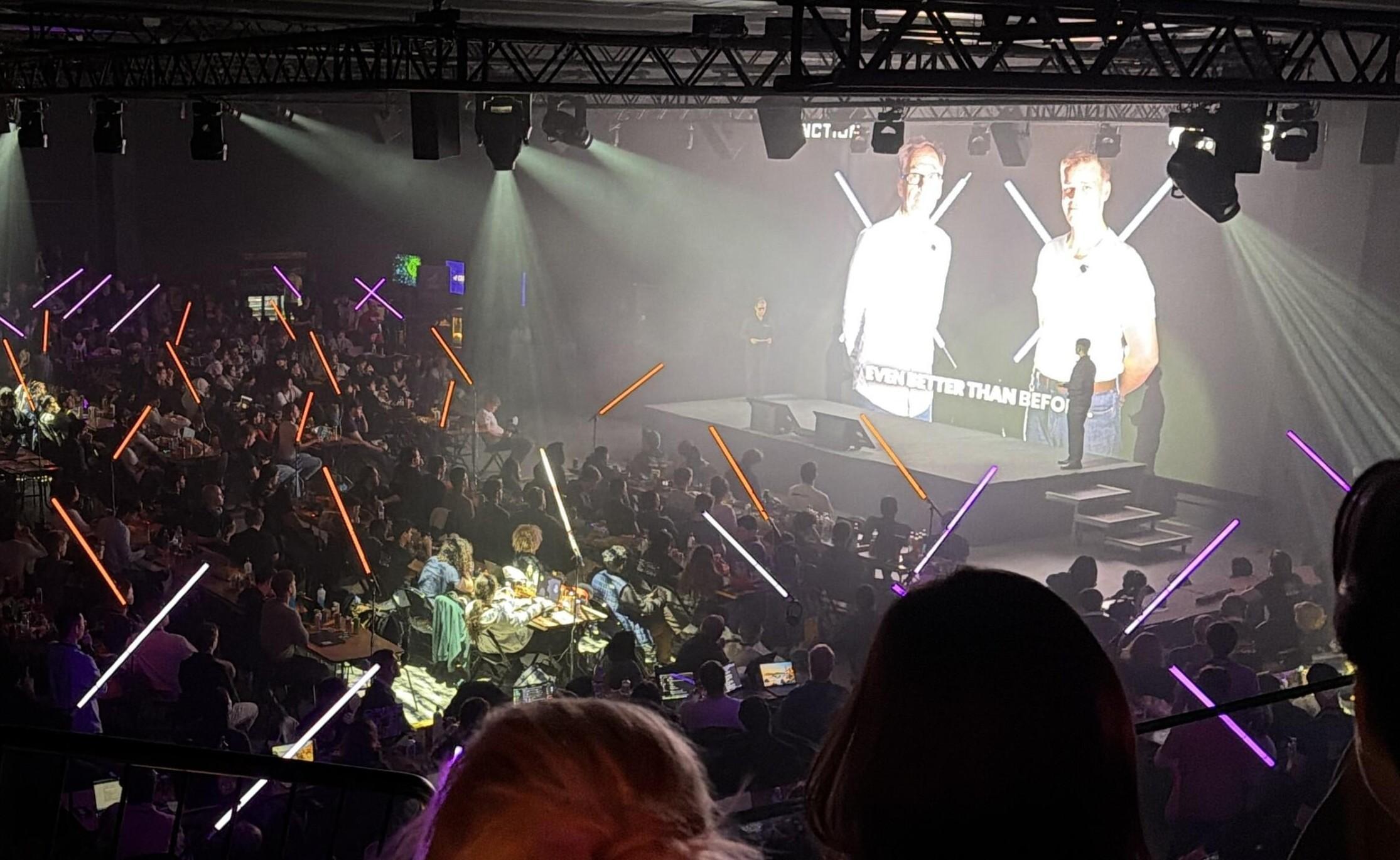
Our challenge video played at the opening ceremony, and interest was high from the start: in the end 157 people in 41 teams chose the challenge.
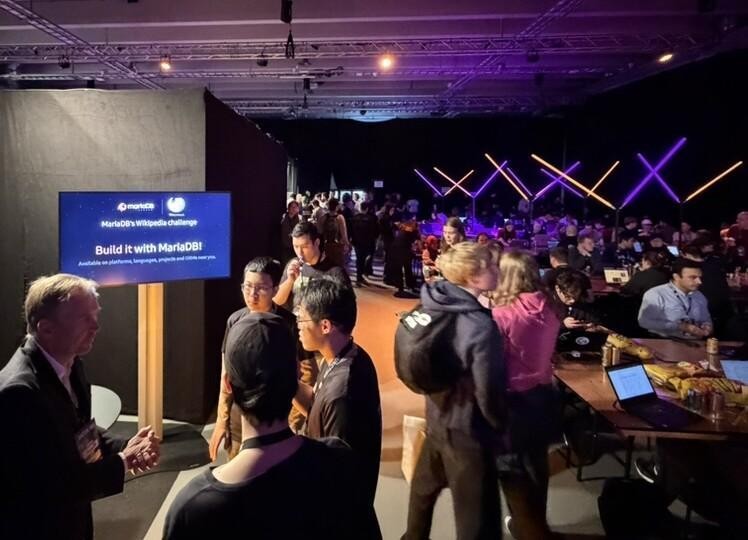
Teams kept coming back to the booth to ask for feedback, and we mentored them right up to the deadline on Sunday. Then Kaj and Robert, with help from Tim, had three hours to choose the winners from 36 submissions before the closing ceremony.
Insights and statistics – the short version
After Junction we analyzed all submission repos and turned them into statistics – here is what we found:
- Vectors and system-versioned tables were used together. 29 of 34 readable repositories use MariaDB Vector and 29 use system-versioned tables. A third of all teams ask both in a single SQL statement: “what was the nearest passage as it stood on that day”.
- Wikipedia editors were the favourite target use category. The submissions split evenly between comparing language editions, exploring edit history and edit wars, and giving trustworthy answers. They were built for Wikipedia editors (47 %), readers (42 %), and researchers and journalists (11 %).
- The teams found insights to improve MariaDB. A vector index on a system-versioned table loses recall (answer accuracy), and one team returned duplicate rows. Several teams measured recall, and one wrote a ready-made bug report. Getting the HNSW settings right was the most common struggle.
- Our datasets worked. 32 of 36 teams used them: dataset M (every version since 2002) in 28 projects, dataset S (with ready-made vectors) in 23.
- PyMySQL was used instead of MariaDB’s python connector. 24 repositories connect with PyMySQL and 11 with MariaDB Connector/Python. Only two run on MariaDB Cloud.
- The latest AI and tech trends reveal themselves. Besides the Junction partners’ technology (e.g. Verda GPUs, Gemini and Nemotron), the teams reached for AI coding agents (Claude Code in 17 repos, Codex in 7), the latest models (Claude, Qwen, Kimi, DeepSeek), some self-hosted with Ollama or vLLM, multilingual embedding models, and streaming answers (words appear while the model is writing).
The winners were Janus (1st), Language Mirror (2nd) and Ghosts of Wikipedia (3rd) – more about the winners and the submissions at the end after the statistics.
Insights and statistics – the long version
1. What they built
Wikipedia angle
| History & edit wars | 12 | 33 % |
|---|---|---|
| Cross-language discrepancies | 12 | 33 % |
| Trust & cited answers | 12 | 33 % |
An even split: 12 teams compared language editions, 12 explored history and edit wars, and 12 built trustworthy question answering with sources.
Who the solution is for
| Editors | 17 | 47 % |
|---|---|---|
| Readers | 15 | 42 % |
| Researchers & journalists | 4 | 11 % |
17 solutions were built for Wikipedia editors: worklists of articles that need attention, and the exact sentence to fix. 15 serve readers, four researchers and journalists.
How the solution is delivered
| Web app | 21 | 58 % |
|---|---|---|
| Browser extension (e.g. Chrome) | 7 | 19 % |
| Local only | 5 | 14 % |
| MediaWiki extension | 1 | 3 % |
| MediaWiki instances | 1 | 3 % |
| Web app + bookmarklet | 1 | 3 % |
Most are web apps. Seven are browser extensions that work on the Wikipedia page itself, and one is a real MediaWiki extension: the shortest path to the people who edit Wikipedia.
2. How they used MariaDB
How MariaDB Vector and system-versioned tables were combined
| Both tracks in one query | 12 | 33 % |
|---|---|---|
| Both tracks separately | 9 | 25 % |
| SVT-centric | 6 | 17 % |
| Vector-centric | 5 | 14 % |
| Unknown | 2 | 6 % |
| Peripheral | 2 | 6 % |
The challenge offered two tracks, and most teams took both. Twelve put them in one statement, typically a vector search on passages filtered or joined FOR SYSTEM_TIME AS OF a date. Only two used MariaDB peripherally, as a cache.
What MariaDB Vector was used for
| RAG / question answering | 19 | 56 % |
|---|---|---|
| cross-language matching | 13 | 38 % |
| search over history or deleted text | 9 | 26 % |
| semantic search / discovery | 7 | 21 % |
| claim / source checking | 6 | 18 % |
| framing / bias measurement | 2 | 6 % |
Question answering with sources (RAG) was the most common use, but matching passages across language editions was a close second, and the most original uses were not RAG at all: searching vectorised text that Wikipedia deleted years ago, suggesting links that were never made, and measuring how a vectorised paragraph leans by its distance to two poles of anchor sentences.
Other MariaDB features
| FULLTEXT | 23 | 68 % |
|---|---|---|
| window functions | 22 | 65 % |
| COMPRESSED columns | 19 | 56 % |
| JSON functions | 17 | 50 % |
| recursive CTE | 11 | 32 % |
| PARTITION BY SYSTEM_TIME | 9 | 26 % |
| views | 9 | 26 % |
| DELETE HISTORY | 7 | 21 % |
| application-time PERIOD | 6 | 18 % |
| SPATIAL | 4 | 12 % |
| euclidean distance | 2 | 6 % |
| system_versioning_asof | 2 | 6 % |
| S3 engine | 1 | 3 % |
| triggers | 1 | 3 % |
FULLTEXT (23) and window functions (22) were nearly as popular as the headline features: hybrid search and revert detection with LAG() over the history. Nine teams partitioned history by SYSTEM_TIME, and six added an application-time PERIOD, the bitemporal design that separates when something happened from when Wikipedia said it.
MariaDB version
| 12.x | 13 | 38 % |
|---|---|---|
| 11.8 | 8 | 24 % |
| “lts” image only | 6 | 18 % |
| 11.4 | 3 | 9 % |
| not stated | 2 | 6 % |
| 11.7 | 2 | 6 % |
13 repositories pin or name MariaDB 12.x and 8 use 11.8, the LTS with vectors. Six only say mariadb:lts, which moves under them. Three named 11.4, which has no vector support, though they used other features.
Data and starter repositories
| M: every version since 2002 | 28 | 78 % |
|---|---|---|
| S: History of Finland now, fi/sv/en + vectors | 23 | 64 % |
| L: all of Finnish Wikipedia | 6 | 17 % |
| none of our datasets | 4 | 11 % |
Dataset M, every saved version of 19,742 Finnish history articles, was the most used (28 projects): the history is what made system-versioned tables interesting. Dataset S with its ready-made bge-m3 vectors was used by 23, and the full Finnish Wikipedia (L) by 6. Five teams used all three; four built on live Wikipedia instead.
| live Wikipedia API | 15 | 42 % |
|---|---|---|
| web search / cited sources | 11 | 31 % |
| nothing beyond our datasets | 10 | 28 % |
| Wikimedia pageviews | 8 | 22 % |
| other language editions (beyond fi/sv/en) | 7 | 19 % |
| Wikidata | 7 | 19 % |
| Wikimedia Commons images | 3 | 8 % |
| other (training data, hosted vectors) | 2 | 6 % |
Ten teams used nothing beyond our datasets. The others mostly added the live Wikipedia API (15), web search or the cited sources themselves to check facts (11), pageviews (8) and other language editions beyond Finnish, Swedish and English (7), from Russian and German to Esperanto.
| Pattern/reference | 15 | 42 % |
|---|---|---|
| Moderate reuse | 7 | 19 % |
| None | 7 | 19 % |
| Heavy reuse | 4 | 11 % |
| Unknown | 2 | 6 % |
| Schema copied, not credited | 1 | 3 % |
Most teams used our two starter repositories as a reference rather than copying them: 15 borrowed patterns, 11 reused code and 13 credited them. The tips in them, such as M=16 with ef_search=80 and loading history with system_versioning_insert_history, show up again and again.
3. The stack
Languages and frameworks
| Python | 24 | 71 % |
|---|---|---|
| JavaScript | 6 | 18 % |
| TypeScript | 2 | 6 % |
| C# | 1 | 3 % |
Python is the main language in 24 of 34 repositories, with JavaScript or TypeScript for the interface. SQL shows up as its own share of code in 19 repositories: the teams wrote real queries, not just ORM calls.
| FastAPI | 22 | 65 % |
|---|---|---|
| Vite | 14 | 41 % |
| Ollama | 12 | 35 % |
| React | 11 | 32 % |
| Playwright | 9 | 26 % |
| DuckDB | 7 | 21 % |
| Browser extension (manifest) | 7 | 21 % |
| Flask | 5 | 15 % |
| MediaWiki | 3 | 9 % |
| Svelte/SvelteKit | 3 | 9 % |
| Streamlit | 2 | 6 % |
| Tailwind | 2 | 6 % |
| D3 | 1 | 3 % |
| three.js | 1 | 3 % |
FastAPI dominates the back ends, Vite and React the front ends. Ollama shows up in 12 repositories for local embeddings, seven teams built browser extensions and three worked with MediaWiki itself.
Language models
| Google (Gemini) | 19 | 56 % |
|---|---|---|
| Anthropic (Claude) | 6 | 18 % |
| NVIDIA (Nemotron) | 6 | 18 % |
| Alibaba (Qwen) | 5 | 15 % |
| OpenAI (GPT) | 3 | 9 % |
| Moonshot (Kimi) | 3 | 9 % |
| DeepSeek | 3 | 9 % |
Google’s Gemini and Gemma appear in 19 repositories, helped by the event’s partnership, followed by Claude and NVIDIA’s Nemotron (6 each). Several teams self-hosted open models, Gemma, Qwen and Kimi among them.
| model writes answers | 27 | 75 % |
|---|---|---|
| no generated text | 5 | 14 % |
| optional | 4 | 11 % |
A notable design choice: five teams let no model write anything the user reads. They show Wikipedia’s own quoted sentences and let the database do the finding. Most others check each generated sentence against the passage it cites.
Embedding models
| bge-m3 | 24 | 71 % |
|---|---|---|
| Voyage | 5 | 15 % |
| multilingual-e5 | 5 | 15 % |
| MiniLM | 3 | 9 % |
| Qwen3-Embedding | 1 | 3 % |
| harrier | 1 | 3 % |
| Cohere embed | 1 | 3 % |
bge-m3, the model behind our ready-made vectors, is in 24 repositories. Ready-made vectors save hours, and teams kept the same model so their own vectors matched ours.
Other Junction partners’ technology
| Verda | 20 | 59 % |
|---|---|---|
| Google Gemini | 18 | 53 % |
| NVIDIA Nemotron | 9 | 26 % |
| Modal | 7 | 21 % |
| CRACI | 6 | 18 % |
| Hostinger | 5 | 15 % |
| context.dev | 4 | 12 % |
| ElevenLabs | 3 | 9 % |
| Oxylabs | 3 | 9 % |
| Featherless | 2 | 6 % |
| Upstash | 2 | 6 % |
| Cloudinary | 2 | 6 % |
| IronShard | 1 | 3 % |
Teams combined challenges: Verda (20), Gemini (18) and Nemotron (9) were the most common companions to MariaDB.
AI coding tools
| Claude (commits) | 17 | 50 % |
|---|---|---|
| AGENTS.md | 10 | 29 % |
| no AI tooling visible | 8 | 24 % |
| CLAUDE.md / .claude | 8 | 24 % |
| Codex (commits) | 7 | 21 % |
| GEMINI.md | 3 | 9 % |
| Devin (commits) | 1 | 3 % |
26 of 34 repositories show AI coding tools. Claude co-authored commits in 17, Codex in 7 and Devin in one, and many keep instruction files such as AGENTS.md or CLAUDE.md for their agents. Only eight show no trace of AI tooling. Agent-built code was not careless code: 23 teams measured their own results, such as retrieval accuracy, index recall or latency, and many published the failures alongside the successes.
Code size, commits, tests and READMEs
The median repository is about 10,000 lines of code, a lot for 40 hours and a sign of how much AI tools accelerate writing. The median repository has 41 commits; four arrived as a single squashed commit, which hides the weekend’s history. 25 of 34 repositories include tests, some of them hundreds, and READMEs had a median of 166 lines. The best ones read like the MariaDB starter tutorials they built on: what was measured, what failed and why.
4. What we learned
What the teams struggled with according to the README
| HNSW tuning (ef_search, M, cache) | 10 | 29 % |
|---|---|---|
| vector index on a versioned table (recall, duplicates, speed) | 8 | 24 % |
| none reported | 8 | 24 % |
| loading and indexing speed | 7 | 21 % |
| AS OF syntax / timestamps (bare date, row_end 2106) | 6 | 18 % |
| no vector index on partitioned tables | 5 | 15 % |
| no Finnish stemming in FULLTEXT | 4 | 12 % |
Tuning HNSW was the most common hurdle: the default M=6 and ef_search=20 cost recall, and the per-index cache default is small. Next came vector indexes on versioned tables, slow loading into a large graph, AS OF details (a bare date is refused, row_end reads 2106-02-07) and the lack of a Finnish stemmer for FULLTEXT. Each is a line in the documentation we can improve.
MariaDB bugs and MDEVs
| nothing reported | 22 | 65 % |
|---|---|---|
| limitation in MariaDB / docs note | 4 | 12 % |
| measured data point for an existing MDEV issue | 4 | 12 % |
| should comment on an existing MDEV | 3 | 9 % |
| found a bug, should open an MDEV | 1 | 3 % |
No team filed an MDEV, but several found something worth one. Language Mirror wrote a full reproduction of wrong and duplicate rows from a vector index under AS OF; Hindsight reproduced behaviour like MDEV-35246; others measured the same recall loss or hit the missing vector index on partitioned tables (MDEV-35315). We will help them report it.
Database driver
| PyMySQL | 24 | 71 % |
|---|---|---|
| MariaDB Connector/Python | 11 | 32 % |
| Django ORM | 1 | 3 % |
| MediaWiki (PHP) | 1 | 3 % |
| SQLAlchemy (ORM) | 1 | 3 % |
| MariaDB Connector/Node.js | 1 | 3 % |
| mysql2 (Node) | 1 | 3 % |
| MySqlConnector (.NET) | 1 | 3 % |
PyMySQL won clearly: 24 repositories against 11 using MariaDB Connector/Python. AI coding assistants reach for PyMySQL by default, so our connector needs to be easier to find and pick.
Where the solutions run
| Docker | 27 | 79 % |
|---|---|---|
| Verda / DataCrunch | 20 | 59 % |
| Caddy | 7 | 21 % |
| Modal | 7 | 21 % |
| Cloudflare | 6 | 18 % |
| Hostinger | 6 | 18 % |
| Vercel | 4 | 12 % |
| Tailscale | 4 | 12 % |
| AWS | 3 | 9 % |
| Azure | 3 | 9 % |
| MariaDB Cloud | 2 | 6 % |
| Upstash | 2 | 6 % |
27 repositories ship Docker files. Verda, the event’s GPU partner, appears in 20, mostly to compute embeddings. Only two run on MariaDB Cloud, a clear opportunity for next time.
5. The teams and their submissions
Who took part
| 4 team members | 17 | 47 % |
|---|---|---|
| 2 team members | 8 | 22 % |
| 3 team members | 7 | 19 % |
| 1 team member | 4 | 11 % |
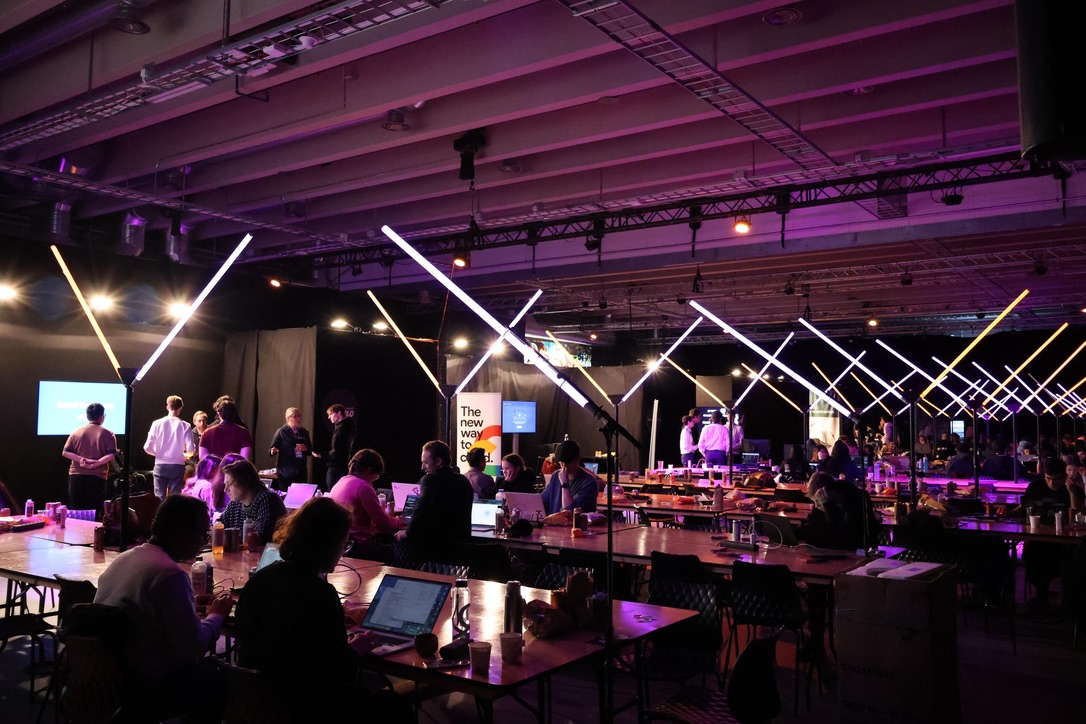
Most teams has the maximum allowed number of team members: 17 teams of four, with 15 teams of two or three. Four people worked alone. All three winning teams had two to four members.
| Finland | 45 |
|---|---|
| United Kingdom | 8 |
| France | 7 |
| Germany | 5 |
| Italy | 4 |
| Singapore | 4 |
| Poland | 4 |
| Switzerland | 4 |
| Hungary | 3 |
| Spain | 2 |
| Austria | 2 |
| Latvia | 2 |
Of the 109 team members, 96 shared their country of residence. They live in 18 countries: Finland led with 45, followed by the United Kingdom (8), France (7) and Germany (5). Most were students: 62 mention a bachelor’s and 30 a master’s degree, alongside 15 professionals and 13 founders.
What they submitted
| source code | 36 | 100 % |
|---|---|---|
| video | 35 | 97 % |
| live demo link | 34 | 94 % |
| presentation | 31 | 86 % |
Every team linked its source code, 35 sent a video, 34 a live demo and 31 a slide deck. A complete submission was the norm, not the exception.
The statistics were made from all submitted repos that are listed at github.com/MariaDB/hackathons.
All 36 submissions
It is difficult to praise all the innovations in the submissions, but we have bolded some interesting highlights and efforts that we noticed, including BM25 ranking built in SQL, WITHOUT OVERLAPS used as a contradiction detector, framing measured as distances between vectors, link suggestions from vectors and link history, a real MediaWiki extension, and an S3 engine cold tier for old history.
The winners
- Janus (1st), by Saunan Pojat: A browser extension that marks where Wikipedia’s language editions disagree, right in the article, and ranks the articles that most need attention. It matches paragraphs across six editions with MariaDB Vector and runs on MariaDB Cloud. Highly usable solution ready to benefit Wikipedia editors. (code)
- Language Mirror (2nd), by Bob the Builders: Compares how every language edition tells the same story, and how that has changed over the years, with vector search on system-versioned tables. Along the way the team wrote a full bug report for a vector index under
FOR SYSTEM_TIME AS OF. (code) - Ghosts of Wikipedia (3rd), by Chrysalis: Brings deleted sentences back to life. Every removed sentence is kept as a history row, searchable by meaning and traceable through time, to show how edit wars rewrite history. (code)
Where the language editions disagree
- Better-Wikipedia (FR), by Para-Celsus: Aligns passages across Finnish, Swedish and English to find contradictions and gaps, with vector and full-text ranking fused in SQL, and
WITHOUT OVERLAPSused as a contradiction detector. (code) - Consensus, by MEBA-data: Facts shouldn’t change with the language: a browser extension and MediaWiki integration that compares facts across editions, running on MariaDB Cloud. (code)
- Midas’ Machine, by Midas’ Machine: Keeps every claim traceable: matches claims across languages through Wikidata and vector distance, and uses system-versioned tables to spot verdicts that have gone stale. (code)
- Parallax, by Attention Is All We Have: Shows how seven Wikipedias write the same article differently, matching sentences as each edition stood on a chosen date. (code · video)
- Parallax, by The CS Guy: Helps editors find cross-language disagreements and claims that their sources do not support, by aligning each claim with the sources it cites. (code · video)
- Ryyppyton, by Ryyppyton: One history, three Wikipedias: aligns sentences across Finnish, Swedish and English, and keeps apart when something happened and when Wikipedia said so, using application-time and system-time periods together. (code)
- Second Opinion, by Northbound Dispatch: Measures how each edition frames an event by a paragraph’s distance to two poles of anchor sentences, and shows only Wikipedia’s own words. (code · video)
- Since When, by Katalyst: Finds the day an edition changed its wording, by pairing passages across Finnish, Swedish and English as both stood on a past date. (code)
- Wiki Check, by Guardians of the Moonlight: Catches contradictions, missing context and shifts in stance in one click, and searches an article’s history for the moment its position changed. (code)
- WikiCross, by WikiCross: Pairs passages across up to 66 language editions, measures their framing against anchor vectors in SQL, and shows the results to the editors who can fix them. (code)
Edit history and edit wars
- 10X, by 10X: A reader that replays how an article was written, edit war by edit war, with hybrid search over all 568,873 Finnish articles that combines BM25 ranking built in SQL with MariaDB Vector. (code · video)
- AMPersand of Truth, by AMPersand of Truth: Connects the edits to expose the agenda: finds the articles on a topic with vector search and analyses editing patterns with window functions. The only .NET entry. (code)
- Dioptase, by Dioptase: Community knowledge in context: explains an article through its full revision history. (code)
- Progresful WikiLens, by Progresful: Matches a question to every wording an article ever had, so it finds answers that were deleted years ago, and shows only real paragraphs. (code · video)
- Rabbit Hole, by Risorgenza: Wikipedia keeps the history of every article; Rabbit Hole keeps the history of every link, and suggests links that were never made between articles close in meaning. (code)
- TimeProof, by ENLMe: Shows who is rewriting history on Wikipedia, when and how, with the evidence, and lets two AI models agree before an edit is flagged. (code)
- Wiki The Truth, by Staticvoid: Detects opinionated rhetoric, vandalism and suspicious edits in an article’s history. (code · video)
- wikilens, by Strongest-Link: Shows where Wikipedia editors disagree and how editing patterns change over time, from every revision loaded into MariaDB. (code)
- WikiMemory, by ByteMe: Wikipedia’s second memory: ask a question and see how its answer changed, with the articles laid out as a 3D galaxy of vectors. (code · video)
- Wikipedia Time Machine, by junctional programming: A MediaWiki extension that shows what Wikipedia said then, compares how its claims changed and answers with evidence, using bitemporal tables. (code)
- WikiPilot, by Hackoholics: Reveals the debate behind an article and what changed, with old history in an S3 engine cold tier and a vector index on the versioned passages. (code · video)
Trustworthy answers with sources
- Atlas, by Champions: Makes Wikipedia’s history searchable by meaning, with MariaDB vectors and AI. (code not public)
- D&D – Palimpsest, by D&D: Questions 862,076 versions of Wikipedia through Gemini and answers as of any moment in time. (code not public)
- Fact Checker Extension, by Klausde by Mustropic: Highlight any claim on any web page and get a verdict in seconds, backed by Wikipedia passages you can check. (code)
- Hindsight, by SCAN4x: Rebuilds Finnish Wikipedia articles exactly as they stood on any date, so answers come only from what was written then. (code)
- Kerros, by Lake Bandits: Answers questions about Finnish history in any language, citing the exact revision, with vector and full-text search fused in a single SQL statement. (code)
- Lähde, by Maito Juoma Technologies: A low-carbon research assistant that queries, time-travels and answers from Finnish Wikipedia. (code)
- Quackers, by Quackers: Makes Wikipedia easier to explore, verify and trust, built into MediaWiki instances of its own. (code)
- Sourced & Dated, by Tampere Titans: Shows how settled each fact is, with badges from 20 years of edits, and puts the date filter inside the vector search. (code · video)
- WikiGuardian, by ToTheMoon: Checks a proposed edit against what Wikipedia already knows, to stop misinformation one edit at a time. (code)
- WikiLens, by ASD: Turns Wikipedia search into a reading experience, connecting generated explanations to passages from all of Finnish Wikipedia. (code)
- Wikipedia Through Time, by ScoobaNi: Ask Finnish Wikipedia anything as it stood on any day since 2003, including paragraphs that were later deleted. (code · video)
- WikiSnitch, by Brainflow: Tells you whether a Wikipedia sentence has stood for ten years or was rewritten last week, and how other editions tell it. (code · video)
Numbers from the Junction platform and our own reading of 34 public repositories on 16 November 2026. Two repositories were not accessible. Categories and friction themes are our own judgement.
Leave a Reply