FOSDEM 2027 – The M-Ecosystem Devroom: Call for Participation

Different projects. Shared roots. One M-Ecosystem.
We are pleased to announce the Call for Participation (CfP) for the M-Ecosystem Devroom at FOSDEM 2027, taking place on Sunday, January 31, 2027, in Brussels, Belgium.

Following the tradition of the MariaDB, MySQL & Friends Devroom, we are opening a new chapter that brings together an even broader community of developers, contributors, maintainers, DBAs, and open-source enthusiasts.
Whether you’re working on MySQL, MariaDB, Percona Server, VillageSQL, AliSQL, or any of the tools, connectors, storage engines, and projects surrounding them, this devroom is for you!
The ecosystem has evolved, diversified, and expanded over the years. Different projects have followed different paths, introduced their own innovations, and sometimes approached the same technical challenges in very different ways.
We believe that bringing these experiences together is a fantastic opportunity to learn from each other.
And what better place to do that than FOSDEM?
Key dates
- October 27, 2026: Call for Participation opened
- November 29, 2026: Submission deadline (Brussels time, CET)
- December 7, 2026: Selected talks and schedule announced, or earlier
- January 30–31, 2027: FOSDEM 2027
- Sunday, January 31, 2027: M-Ecosystem Devroom
Submit your proposal: https://pretalx.fosdem.org/fosdem-2027/cfp
When submitting, make sure to select “The M-ecosystem” as your track.
What is the M-Ecosystem Devroom?
The M-Ecosystem Devroom builds on the long history of the MySQL and MariaDB communities at FOSDEM.
Over the years, these communities have shared more than code. They share protocols, tools, applications, users, and many of the same technical challenges (and Community Dinners).
Today, this ecosystem includes multiple database implementations, such as MariaDB, MySQL, Percona Server for MySQL, Percona Server for MariaDB, VillageSQL, and AliSQL, alongside a rich collection of independent projects.
It is not just about database servers.
Storage engines, connectors, replication technologies, proxies, backup utilities, monitoring solutions, development tools, and many other components play an essential role in making this ecosystem successful.
The M-Ecosystem Devroom aims to provide a neutral and welcoming technical space where all these projects can share knowledge and experiences.
We particularly encourage presentations that highlight collaboration, interoperability, or lessons that could benefit more than one project.
However, your talk doesn’t need to cover multiple database implementations to be relevant. Deep technical work on a single project is equally welcome.
The important thing is that your contribution brings technical value to the wider open-source community.
What topics are we looking for?
We welcome technical presentations on all aspects of the M-Ecosystem.
The following list is not exhaustive, but should help you understand the type of content we’d love to see.
Database development and internals
- Query optimizers, execution plans, and query processing
- Storage engines and their architectures
- Indexing strategies and new data structures
- SQL language features and compatibility
- Database internals, memory management, and concurrency
- Performance improvements, regressions, and debugging
- Extensibility, plugins, components, and user-defined functions
Replication, clustering, and high availability
- Replication architectures and protocols
- High availability, failover, and disaster recovery
- Distributed and clustered database solutions
- Replication compatibility between implementations
- Lessons learned from production incidents
- Consistency, reliability, and data integrity
Development, operations, and tooling
- Database connectors, drivers, and client libraries
- Proxies, routing, and connection management
- Backup, restore, and migration tools
- Observability, monitoring, and diagnostics
- Performance benchmarking and workload analysis
- Testing frameworks, continuous integration, and quality assurance
- Deployment automation, containers, and infrastructure as code
Security and reliability
- Authentication, authorization, and access control
- Encryption and data protection
- Security improvements and vulnerability management
- Database hardening and auditing
- Testing, fuzzing, and reliability engineering
New workloads and emerging technologies
- Vector search and AI-related database workloads
- Analytical queries and hybrid transactional/analytical processing
- JSON, document-oriented, and other specialized data
- Database extensibility for emerging use cases
- Integrations with other open-source data processing systems
Cross-project collaboration and interoperability
This is an area we’re particularly interested in.
Examples include:
- How different database implementations solve similar problems
- Protocol compatibility and its challenges
- Migration between database implementations
- Shared tools and technologies
- Interoperability between different components
- Architectural choices and their trade-offs
- Opportunities for collaboration between open-source projects
Have you implemented something interesting? Fixed a difficult bug? Discovered unexpected behavior? Built a useful tool? Compared two approaches? We’d love to hear about it!
And don’t be afraid to share something that didn’t work.
Failed experiments, unexpected results, and lessons learned can be just as valuable as successful implementations.
What makes a good proposal?
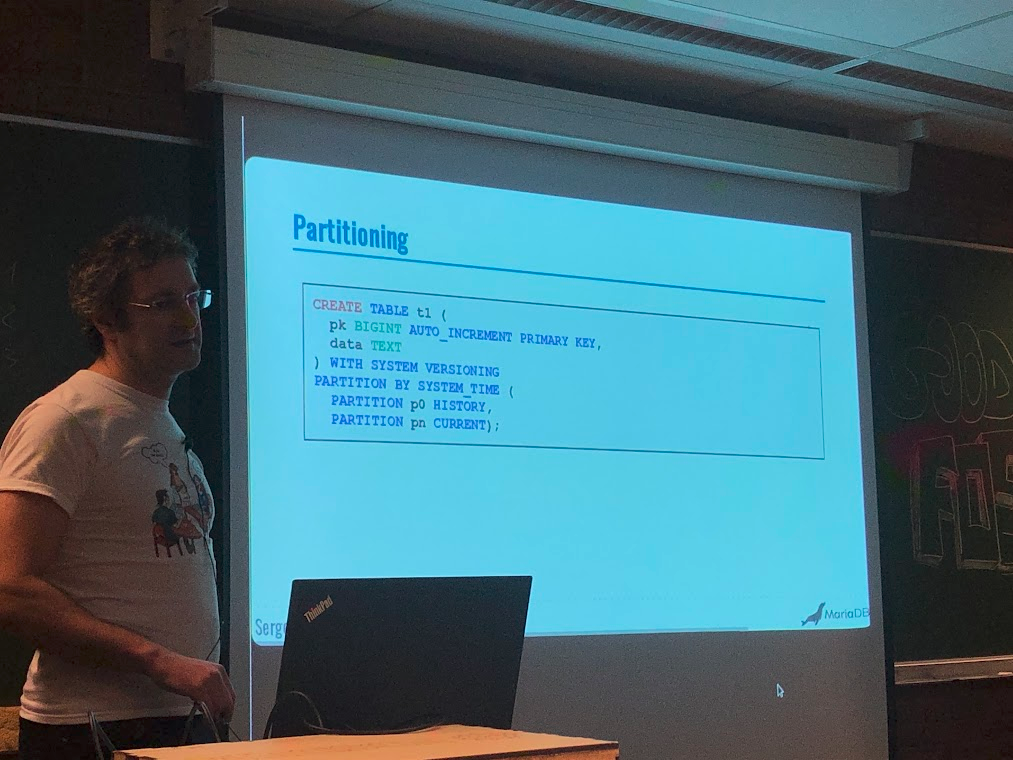
FOSDEM is a conference organized by and for the free and open-source software community.
We’re looking for technical content, real experiences, and knowledge sharing.
A good proposal should clearly explain what you intend to present, why it matters, and what attendees can expect to learn.
We particularly appreciate presentations that include:
- Technical explanations and implementation details
- Real code, examples, or demonstrations
- Architectural decisions and their consequences
- Performance measurements and reproducible results
- Practical experiences and lessons learned
- Challenges encountered and how they were addressed
We welcome proposals from experienced speakers, first-time presenters, independent developers, students, researchers, and contributors to projects of any size.
You don’t need to represent a company or a major open-source project to submit a talk.
If you’ve done something interesting and you’re willing to share it, please submit!
What we’re not looking for
Marketing presentations, sales pitches, and commercial product demonstrations without substantial open-source technical content are not appropriate for this devroom.
Proposals focused exclusively on proprietary or closed-source technologies will not be accepted.
Please also avoid submitting the same proposal to several FOSDEM tracks.
Remember the spirit of FOSDEM: hackier is better! 😉
Practical information
General details
- Date: Sunday, January 31, 2027
- Location: ULB Solbosch Campus, Brussels, Belgium
- Language: English
- Talk duration: Approximately 20 minutes
- Format: In-person technical presentations
- Admission: Free, with no registration required for attendees
Please keep your proposal focused enough to fit into the available presentation time.
All presentations must comply with the FOSDEM Code of Conduct and the conference’s free and open-source software principles.
Devroom presentations will be recorded and streamed. Recordings and presentation materials will be published under FOSDEM’s CC-BY licensing conditions.
How to submit your talk
Visit the official FOSDEM 2027 submission platform:
https://pretalx.fosdem.org/fosdem-2027/cfp
Create an account if necessary, or reuse your existing Pretalx account.
Your proposal should include:
- A descriptive title: Make it clear what your talk is about.
- A short abstract: Summarize the subject and what attendees will learn.
- A detailed description: Explain the technical content, intended audience, and key takeaways.
- Relevant references: Links to open-source repositories, documentation, articles, or related projects, where applicable.
- Speaker information: Introduce yourself and your involvement with the topic.
Make sure to select “The M-ecosystem” as the track when submitting.
You may submit more than one distinct proposal, but please be reasonable about the number of submissions.
The deadline is November 29, 2026.
Selection process
All proposals will be reviewed by the devroom selection committee, which will consider their technical relevance, quality, originality, and potential interest to the community.
We’ll aim to build a balanced schedule representing the diversity of projects, contributors, and technical subjects across the ecosystem.
As the number of available slots is limited, we unfortunately won’t be able to accept every proposal.
For accepted talks
If your proposal is selected, you’ll receive further information through the conference submission system.
Please make sure your speaker profile and contact details are up to date.
Speakers are expected to attend in person, respect the allocated presentation time, and follow the FOSDEM guidelines.
For proposals that are not selected
If your proposal isn’t selected, please don’t be discouraged.
The available time is limited, and not being selected doesn’t necessarily reflect the quality of your work.
We encourage you to continue sharing your contributions through the different community events and other opportunities throughout the year.
About FOSDEM
FOSDEM is one of the largest gatherings of free and open-source software developers in Europe.
Every year, thousands of contributors meet in Brussels to share ideas, present their work, exchange experiences, and collaborate across projects.
FOSDEM is free to attend and organized by volunteers.
- FOSDEM 2027: https://fosdem.org/2027/
- Submission platform: https://pretalx.fosdem.org/fosdem-2027/cfp
- Code of Conduct: https://fosdem.org/2027/practical/conduct/
See you in Brussels!
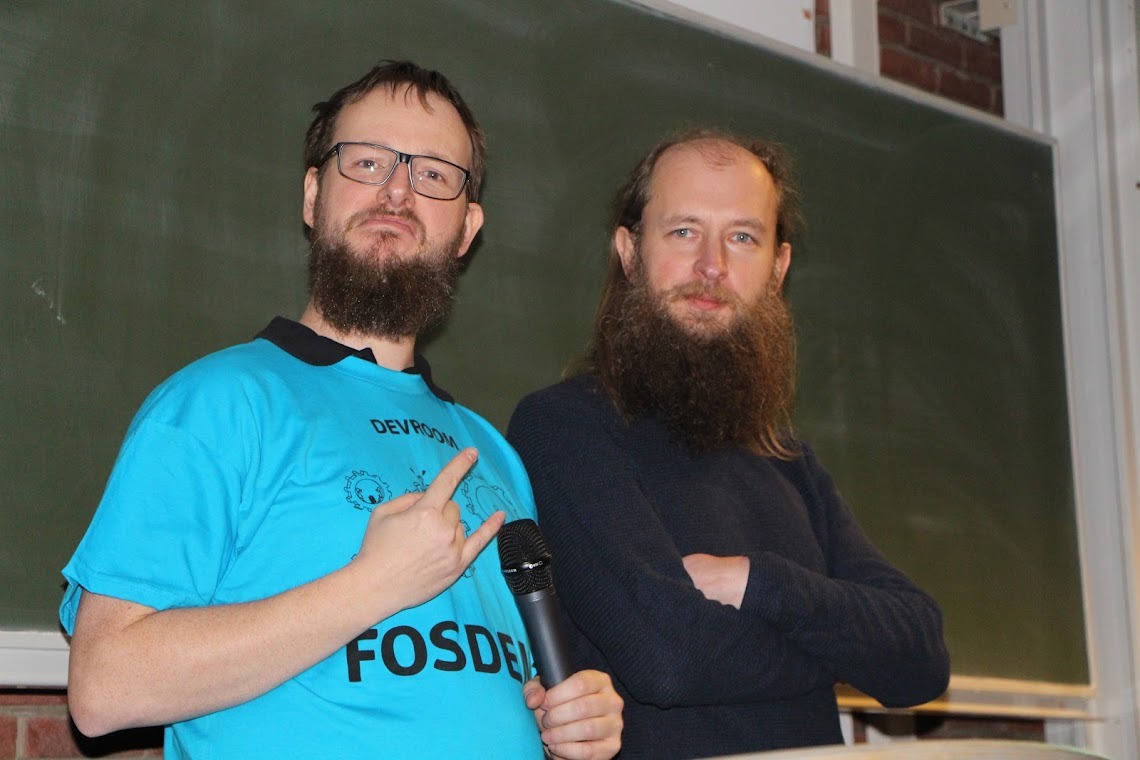
The M-Ecosystem has always been about more than a single database server.
It’s about the developers who contribute code, the maintainers who keep projects alive, the DBAs who run these systems every day, and the communities that continue pushing the technology forward.
We may not always agree on implementation choices, architecture, or even the direction a project should take.
And that’s perfectly fine.
Different approaches are an opportunity to learn from each other.
We hope the M-Ecosystem Devroom will encourage new conversations, strengthen existing connections, and perhaps even inspire new collaborations.
So, whether you’re developing a database engine, building a connector, experimenting with a new storage engine, maintaining an open-source tool, or simply working on something interesting in this ecosystem, we want to hear from you.
Submit your talk before November 29, 2026, and join us on January 31, 2027, in Brussels!
Different projects. Shared roots. One M-Ecosystem.
See you at FOSDEM 2027!
Leave a Reply