
Author: Frédéric Descamps
-
MariaDB Server 10.6 Reaches End of Life on July 6th
MariaDB Server 10.6 has been with us for a long time. It was the last MariaDB LTS released under the previous release model, and it has served many users, distributions, applications, and production environments very well.
But every maintained series eventually reaches the end of its maintenance lifetime.
MariaDB Community Server 10.6 will reach End of Life on 6 July 2026.
After that date, the MariaDB Foundation will no longer provide maintenance releases for MariaDB Community Server 10.6. That means […]
-
MariaDB Foundation Sea Lion Champions Nominees: Sylvain Arbaudie
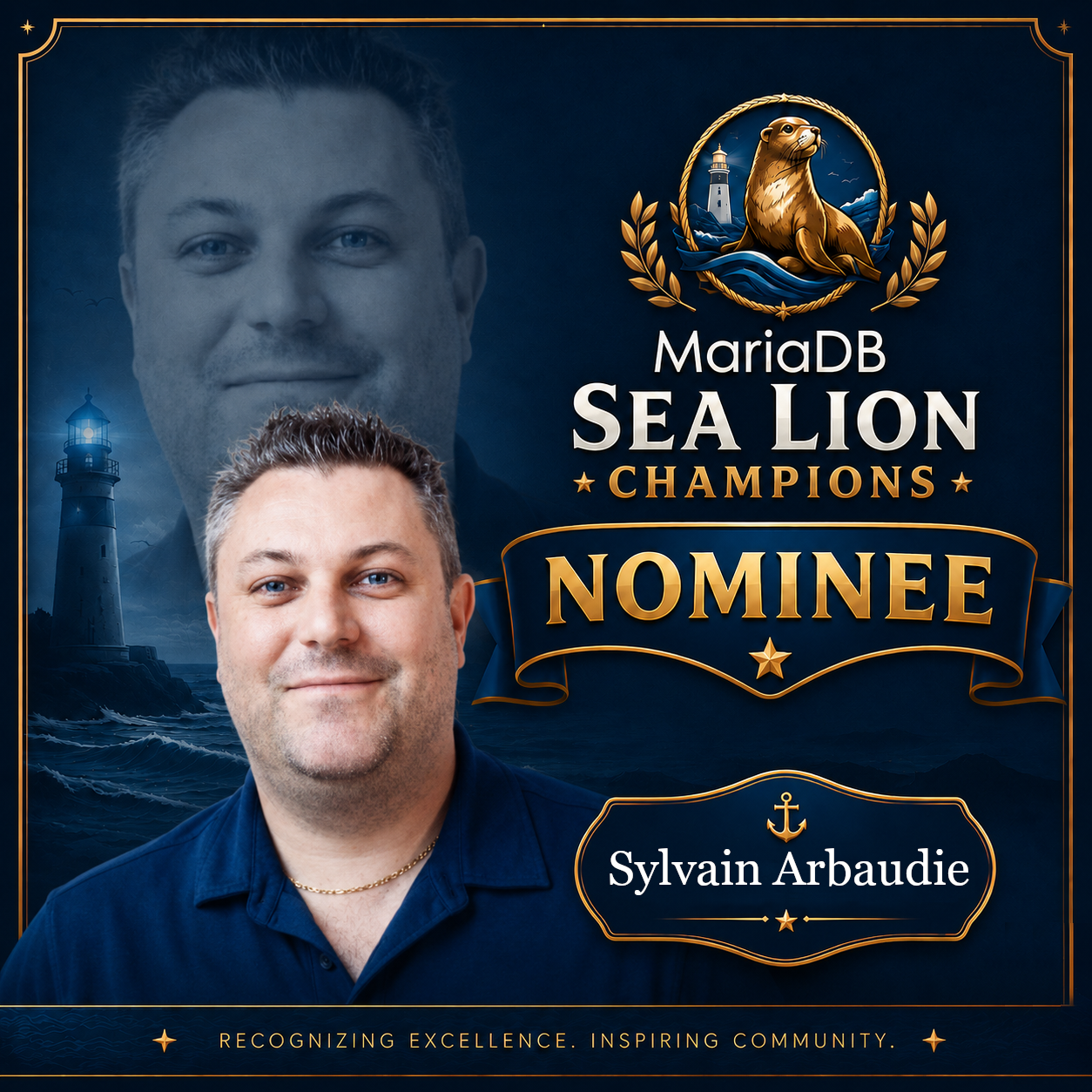
Interview with Sylvain Arbaudie, nominated in the Technical Excellence category.
The MariaDB Foundation Sea Lion Champions program celebrates the people and organizations who help make the MariaDB ecosystem stronger, more open, and more useful for everyone.
Let’s continue the series of interviews with nominees for the MariaDB Foundation Sea Lion Champions program.
I had the pleasure of speaking with Sylvain Arbaudie, a nominee for our “Sea Lions Champions” program in the Technical Excellence category. With over a decade of experience […]
-
MariaDB + DuckDB: A New Playground for Analytics – A First Look at the New Storage Engine
MariaDB just announced it has learned to quack: the new DuckDB storage engine has joined the large family of storage engines in MariaDB Server.
The idea is very interesting: use MariaDB Server as usual, but create some tables using ENGINE=DuckDB and benefit from DuckDB’s columnar storage and vectorized execution for analytical queries.
In other words, we can keep our transactional workload in InnoDB, and use DuckDB tables for analytics… in the same MariaDB instance. Not a new concept, but a […]
-
MariaDB Server 12.3, 11.8, 11.4, 10.11, 10.6 – May 2026’s releases: thank you for your contributions
On May… we have released an update of our 5 current LTS releases:
These new releases contain a large amount of external contributions. The number of contributors is constantly growing, which is great!
On behalf of the MariaDB Foundation and the entire MariaDB Team, let me thank you all!
If we refer to MariaDB Server 11.8, we have about 62 contributions from 35 external contributors.
And with the latest 12.3.2, we increase that number to 57 external contributors!!! See Joro’s […]
-
MariaDB Foundation Sea Lion Champions Nominees: Mark Callaghan
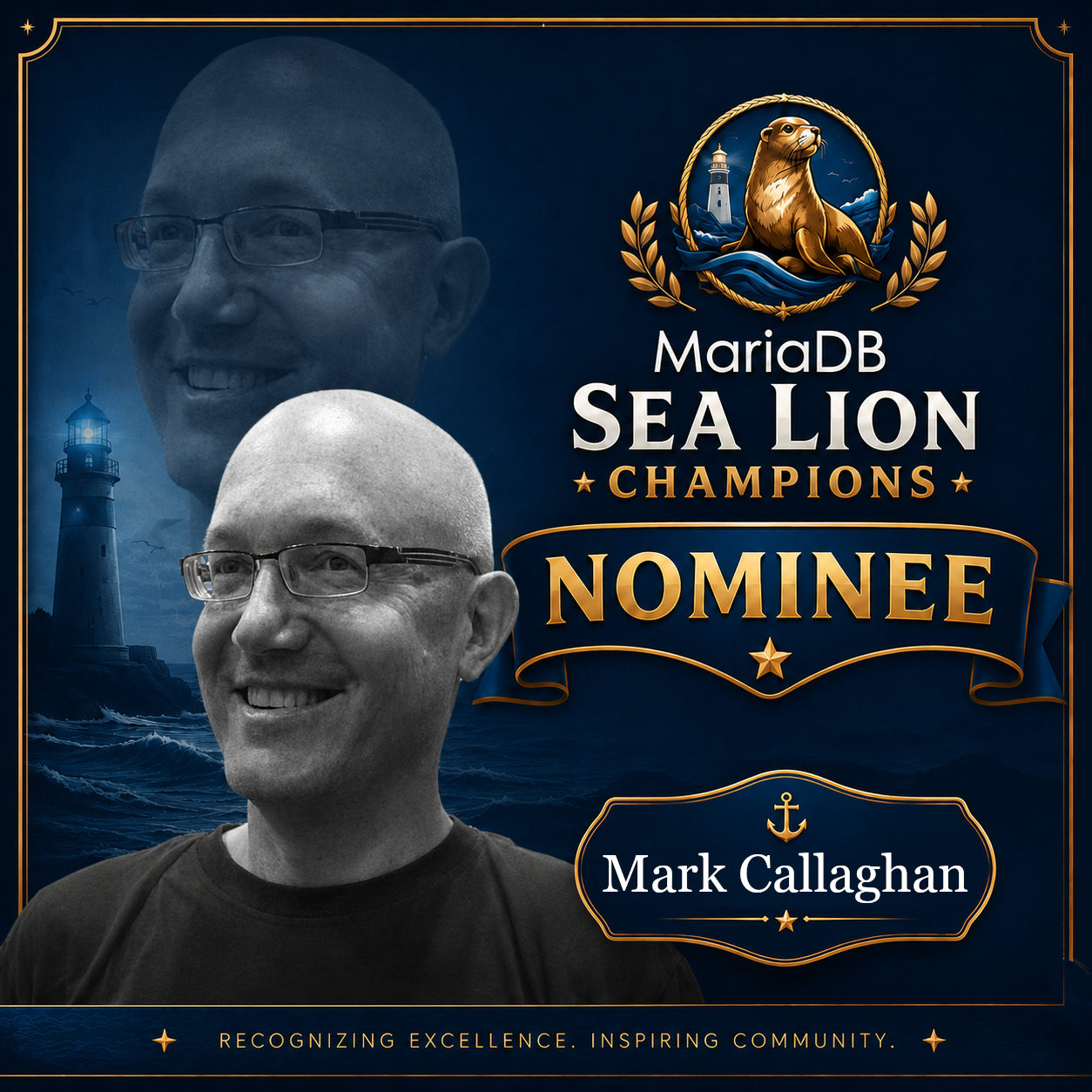
Interview with Mark Callaghan, nominated in the Technical Excellence category.
I had the pleasure of speaking with Mark Callaghan, recently nominated for the MariaDB Sea Lion Champions program in the “Technical Excellence” category. Mark is a respected figure in the database community, known for his in-depth performance analysis and contributions to the open-source dialogue.
The Interview
lefred: Mark, congratulations on your nomination as a MariaDB Sea Lion Champion. How do you feel about this recognition?
Mark Callaghan: I am always […]
-
MariaDB Hidden Gem: Create Aggregate Function
Have you ever written a query where the GROUP BY was easy, but the aggregate was the problem?
You know how to group the rows.You know what result you want for each group.But none of the built-in aggregate functions really match your logic.
So you end up with a long expression using SUM(), CASE, IF(), GROUP_CONCAT(), JSON functions, or application-side code. It works, but it is not beautiful. And if you need the same logic in several places, it becomes […]
-
Celebrating the MariaDB Foundation Sea Lions Champions Nominees
The MariaDB Foundation Sea Lions Champions recognize individuals and organizations that strengthen the MariaDB ecosystem through technical excellence, community leadership, open-source stewardship, ecosystem impact, and real-world adoption.
This first edition’s nominees reflect the diversity and strength of the MariaDB Community: developers, educators, advocates, companies, community organizers, and partners who help MariaDB grow as an open, collaborative, and industry-relevant database platform.
Each nomination highlights a different way to strengthen the database ecosystem and help MariaDB remain open, useful, and innovative.
Technical […]
-
MariaDB Community Server Corrective Releases
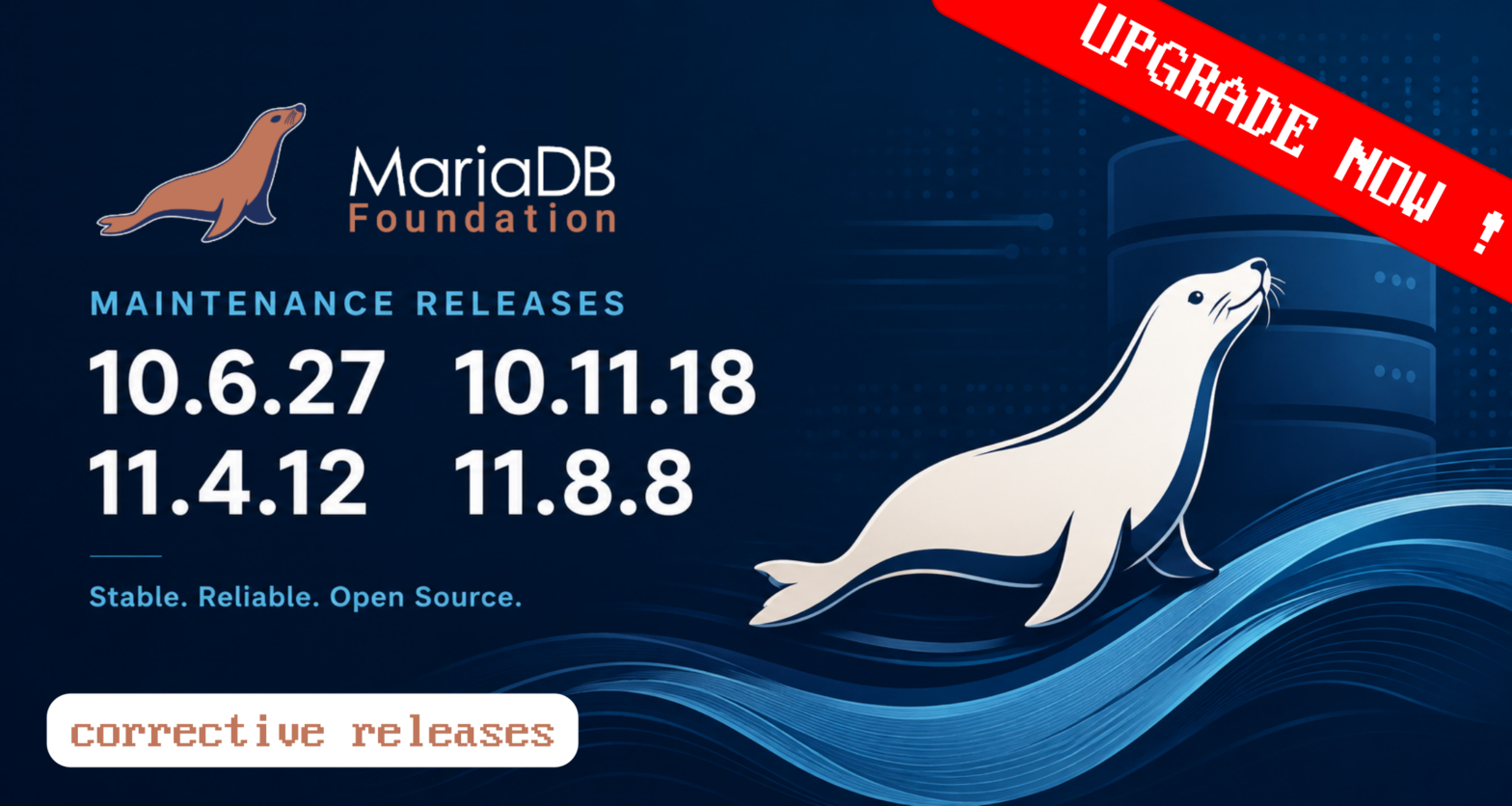
MariaDB Community Server corrective releases are now available for the currently maintained long-term series. These releases address critical CVEs, and we strongly recommend that all users review the security advisories and upgrade as soon as possible.
These are Stable (GA) releases and are recommended for users running the corresponding MariaDB Server series. They have been available on our repositories since May 26.
Please note that the versions quickly released after the previous release on May 18th are corrective releases. More […]