
Author: Frédéric Descamps
-
MariaDB 13.1 Feature in Focus: JSON Operators and JSON_TABLE Improvements
JSON support in MariaDB has improved significantly over the years.
We have functions to create JSON documents, extract values, modify objects, inspect arrays, compare documents, and even transform JSON into relational rows using JSON_TABLE().
But sometimes, a very small piece of syntax can make a surprisingly large difference.
With MariaDB 13.1, we can finally write:
and:
Yes, the JSON arrow operators have arrived in MariaDB!!
And MariaDB 13.1 also improves JSON_TABLE() with support for formatted JSON columns, allowing complete JSON […]
-
From a Production Problem to MariaDB: Headout’s Open-Source Contribution Journey
A production bottleneck at Headout led to a new MariaDB Server improvement. This is the story of how engineers, maintainers and AI-assisted development turned a real-world problem into an upstream open-source contribution.
-
Adobe Commerce Chooses MariaDB as Its Default Database Platform
Adobe Commerce is making MariaDB its default and recommended database platform.
-
Say the Name: MariaDB, MySQL, and the Ecosystem We Share
MariaDB and MySQL share history, tools, protocols and a large technical community. But compatibility does not mean identity—especially when reporting bugs. A MariaDB Connector/C issue submitted to the MySQL bug tracker offers a funny reminder to say the product’s actual name.
-
Deploying the MariaDB Privacy-First Stack Anywhere with Terraform
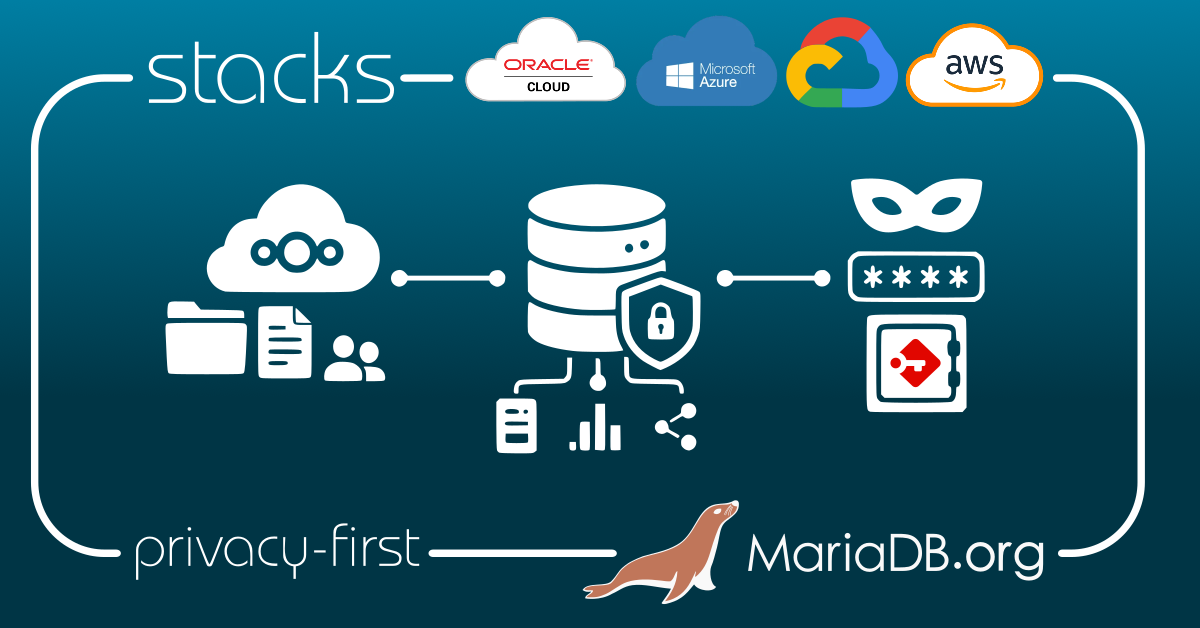
In my previous post, I introduced the MariaDB Privacy-First Stack.
Nextcloud for collaboration, Passbolt for passwords and secrets, and MariaDB Server for the data.
Simple enough.
But after explaining what the stack is, the next question is usually very practical:
Where can I deploy it?
And the answer should not be:
On the cloud provider the template was written for.
That would be a strange way to talk about digital sovereignty.
If the architecture is really meant to give you […]
-
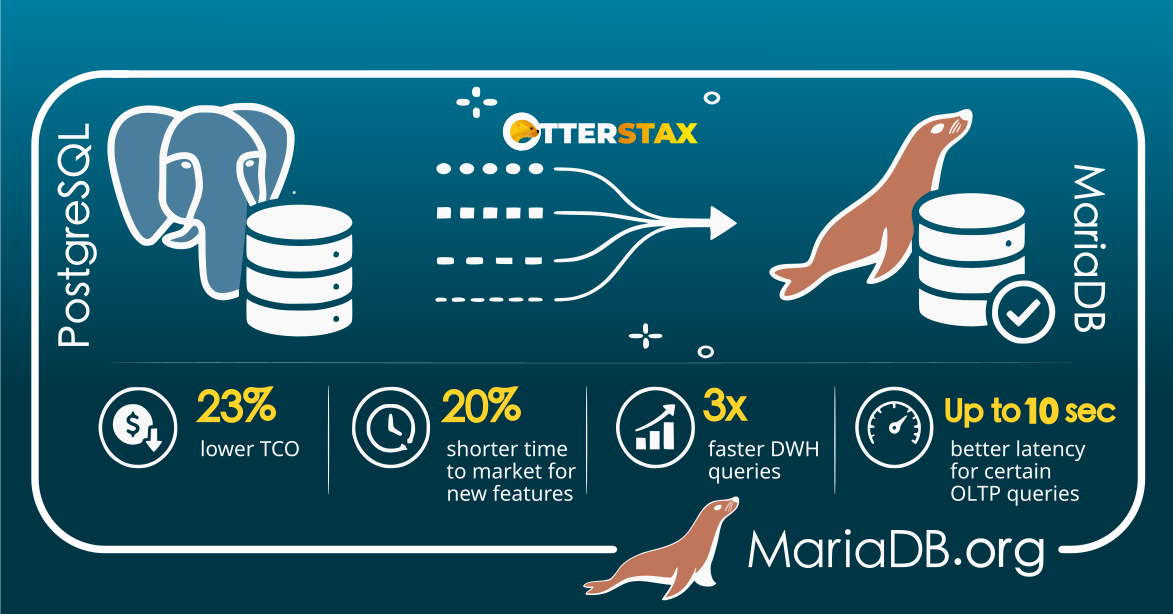
From PostgreSQL 12 to MariaDB 11: A Gradual Fintech Migration with 23% Lower TCO
Database migrations are rarely only about replacing one database server with another.
In real production systems, especially in fintech, a migration is usually about reducing risk, keeping the application online, improving scalability, and giving teams more room to evolve the architecture without freezing product development.
This story is about a fintech B2B enterprise that migrated from a monolithic PostgreSQL 12 environment to MariaDB 11. The company runs a payments-related platform for discounts and cashback, where users can check balances, transaction […]
-
MariaDB 13.1 Feature in Focus: Validate Your Configuration Before Starting the Server
Have you ever modified a MariaDB configuration file, restarted the service, and immediately regretted it?
You wanted to change:
but accidentally wrote:
One missing letter.
That is enough to turn a perfectly healthy database server into a service that refuses to start.
And of course, this kind of mistake never happens during a quiet maintenance window when everybody is available.
It happens during an automated deployment.It happens during an upgrade.It happens on a remote server.Or it happens just before you […]
-
MariaDB Hidden Gem: Online Schema Change without pt-osc
When people hear “online schema change” in the MySQL and MariaDB world, many immediately think about pt-online-schema-change. And for good reasons: for years, changing a large table in production was one of those tasks that could ruin your day.
Recently, I discovered that MariaDB includes a very useful hidden gem I completely missed: the ability to update a table schema without blocking concurrent DML statements for the duration of the schema change. [1]
As you probably already know, MariaDB Server […]