

Category Archives: Community
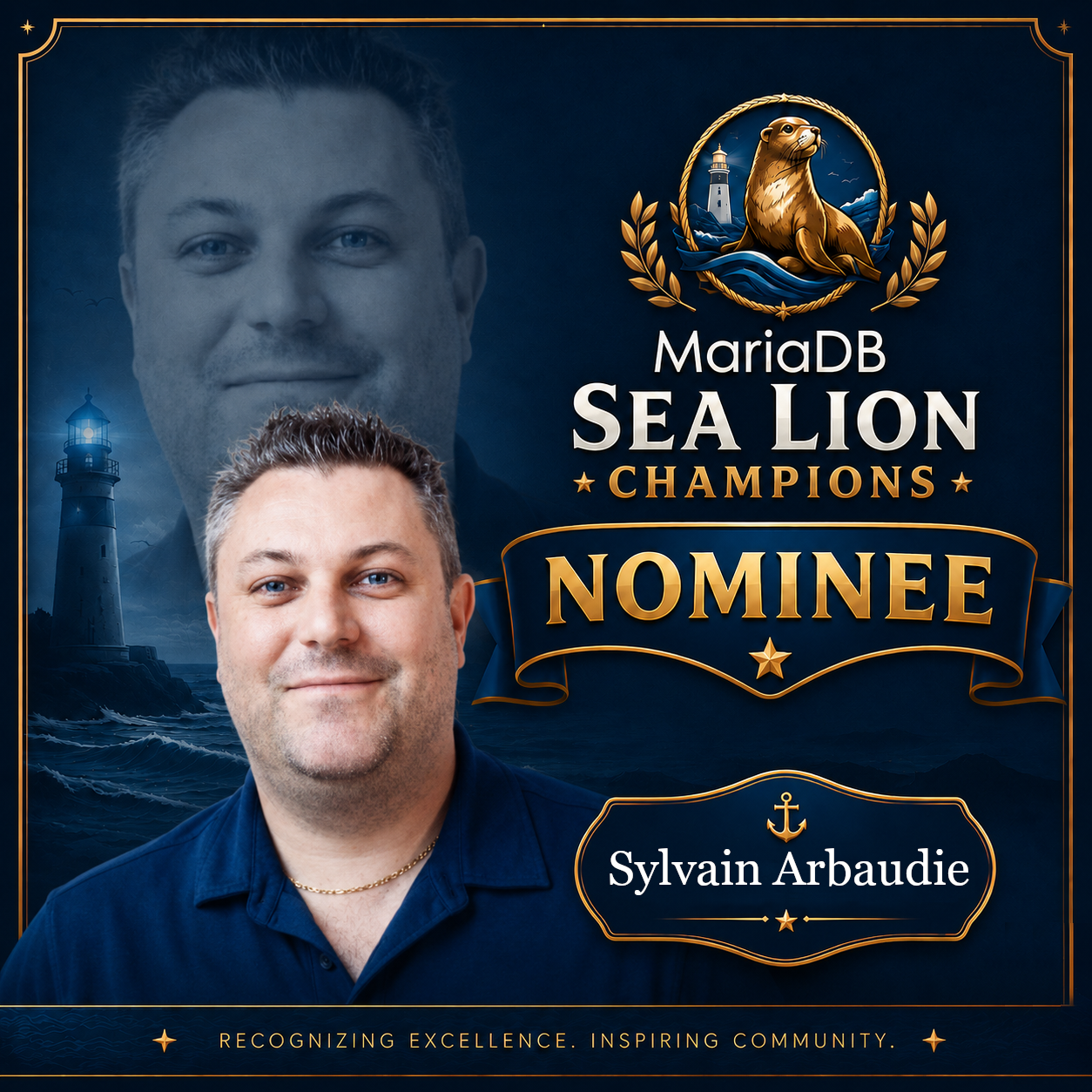
Interview with Sylvain Arbaudie, nominated in the Technical Excellence category.
The MariaDB Foundation Sea Lion Champions program celebrates the people and organizations who help make the MariaDB ecosystem stronger, more open, and more useful for everyone.
Let’s continue the series of interviews with nominees for the MariaDB Foundation Sea Lion Champions program.
I had the pleasure of speaking with Sylvain Arbaudie, a nominee for our “Sea Lions Champions” program in the Technical Excellence category. With over a decade of experience in the MariaDB ecosystem, Sylvain offers valuable insights into the platform’s evolution, its role in the AI landscape, and the crucial function of the MariaDB Foundation.
…
Continue reading “MariaDB Foundation Sea Lion Champions Nominees: Sylvain Arbaudie”

On May… we have released an update of our 5 current LTS releases:
These new releases contain a large amount of external contributions. The number of contributors is constantly growing, which is great!
On behalf of the MariaDB Foundation and the entire MariaDB Team, let me thank you all!
If we refer to MariaDB Server 11.8, we have about 62 contributions from 35 external contributors.
…

An early look at the DuckDB storage engine for MariaDB — columnar, vectorized analytics that live right next to your transactional tables.
The problem
MariaDB’s InnoDB is excellent at what it was built for: transactions. Row-by-row inserts, updates, point lookups, strong consistency. But the moment you ask it to scan tens of millions of rows for a multi-way join with a few aggregations, a row store has to work hard.
The usual answer is to stand up a separate analytical system, then build ETL pipelines to copy data into it.
…
Continue reading “DuckDB Storage Engine for MariaDB. When the Sea Lion Learns to Quack.”
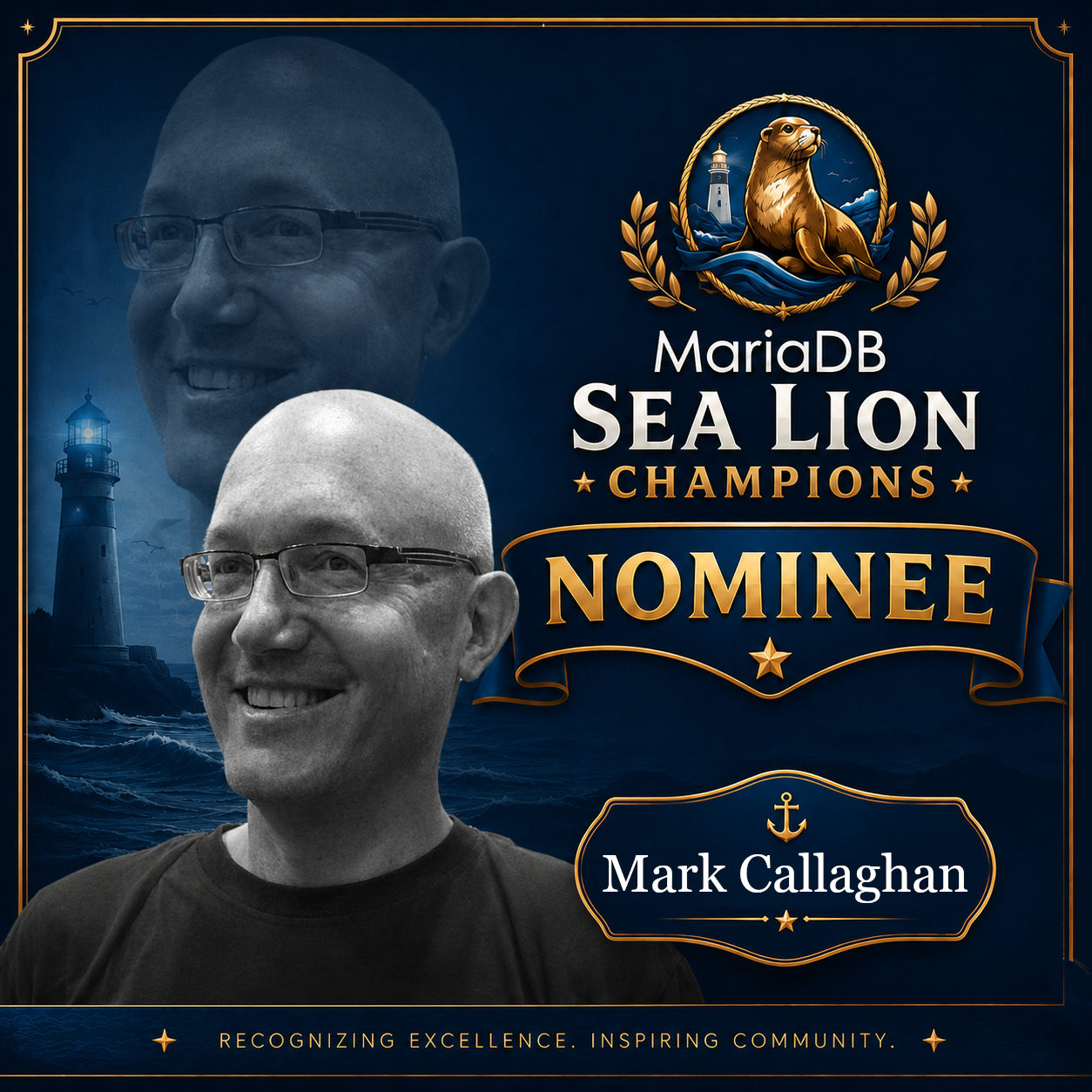
Interview with Mark Callaghan, nominated in the Technical Excellence category.
I had the pleasure of speaking with Mark Callaghan, recently nominated for the MariaDB Sea Lion Champions program in the “Technical Excellence” category. Mark is a respected figure in the database community, known for his in-depth performance analysis and contributions to the open-source dialogue.
The Interview
lefred: Mark, congratulations on your nomination as a MariaDB Sea Lion Champion. How do you feel about this recognition?
Mark Callaghan: I am always grateful for acknowledgment. But I’m a private person, so I’m not always comfortable standing out.
…
Continue reading “MariaDB Foundation Sea Lion Champions Nominees: Mark Callaghan”

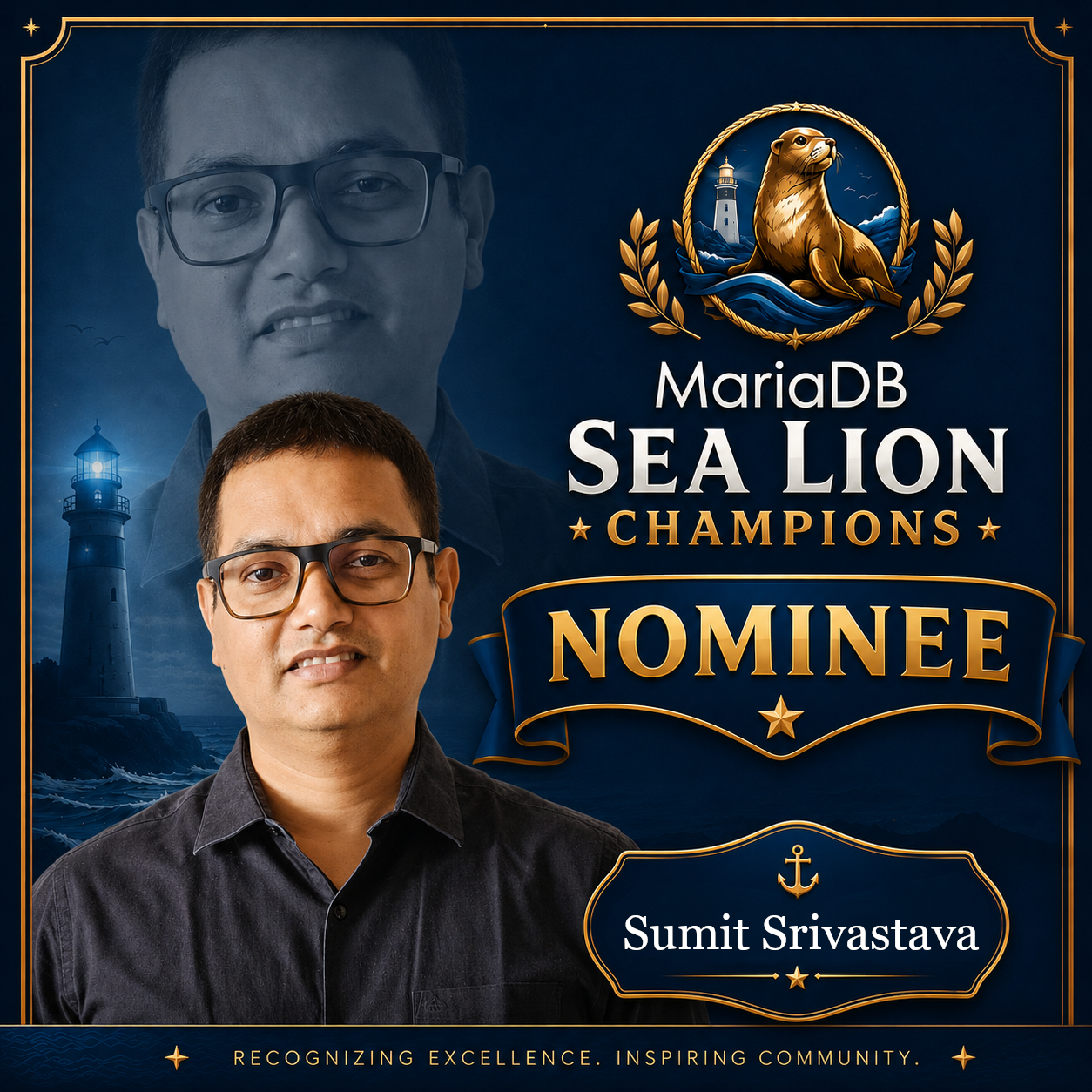
Interview with Sumit Srivastava, nominated in the Adoption & Industry Impact category.
I had the pleasure of speaking with Sumit Srivastava, SVP Business Development & Products at Tayana, a Bangalore-based telecom software company. Sumit was nominated for championing MariaDB adoption in the telecommunications industry and its demonstration of open-source database delivering performance, scalability, and business impact in mission-critical systems. Like me, Sumit sits between technical and business — “the business people think I’m technical, and the technical people think I’m business,” as he put it. It made a lively conversation.
The Interview
Kaj: Sumit, Congratulations on your nomination.
…
Continue reading “MariaDB Foundation Sea Lion Champions Nominees: Sumit Srivastava”

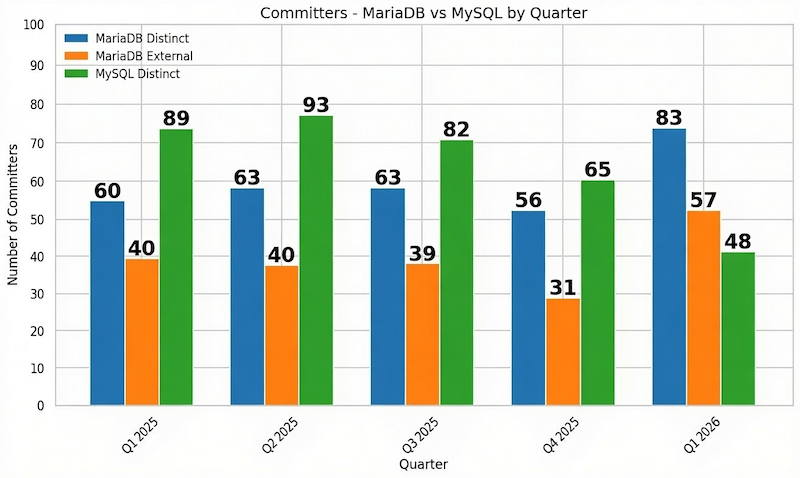
Inspired by some recent LinkedIn posts, I decided to take the AI in my own hands and do some stats on the MariaDB and MySQL repositories.
This graph is what I’ve got.
Not only have MariaDB Server distinct contributors surpassed the distinct MySQL Server contributors count! The External MariaDB contributors alone did! *
This is how the Power Of the Community looks like!
- You get to use a more functional, performant and error free MariaDB Server
- You get a say in shaping the future of the MariaDB Server.
…
Have you ever written a query where the GROUP BY was easy, but the aggregate was the problem?
You know how to group the rows.
You know what result you want for each group.
But none of the built-in aggregate functions really match your logic.
So you end up with a long expression using SUM(), CASE, IF(), GROUP_CONCAT(), JSON functions, or application-side code. It works, but it is not beautiful. And if you need the same logic in several places, it becomes even worse.
This is exactly the kind of problem MariaDB’s CREATE AGGREGATE FUNCTION solves.
…
Continue reading “MariaDB Hidden Gem: Create Aggregate Function”
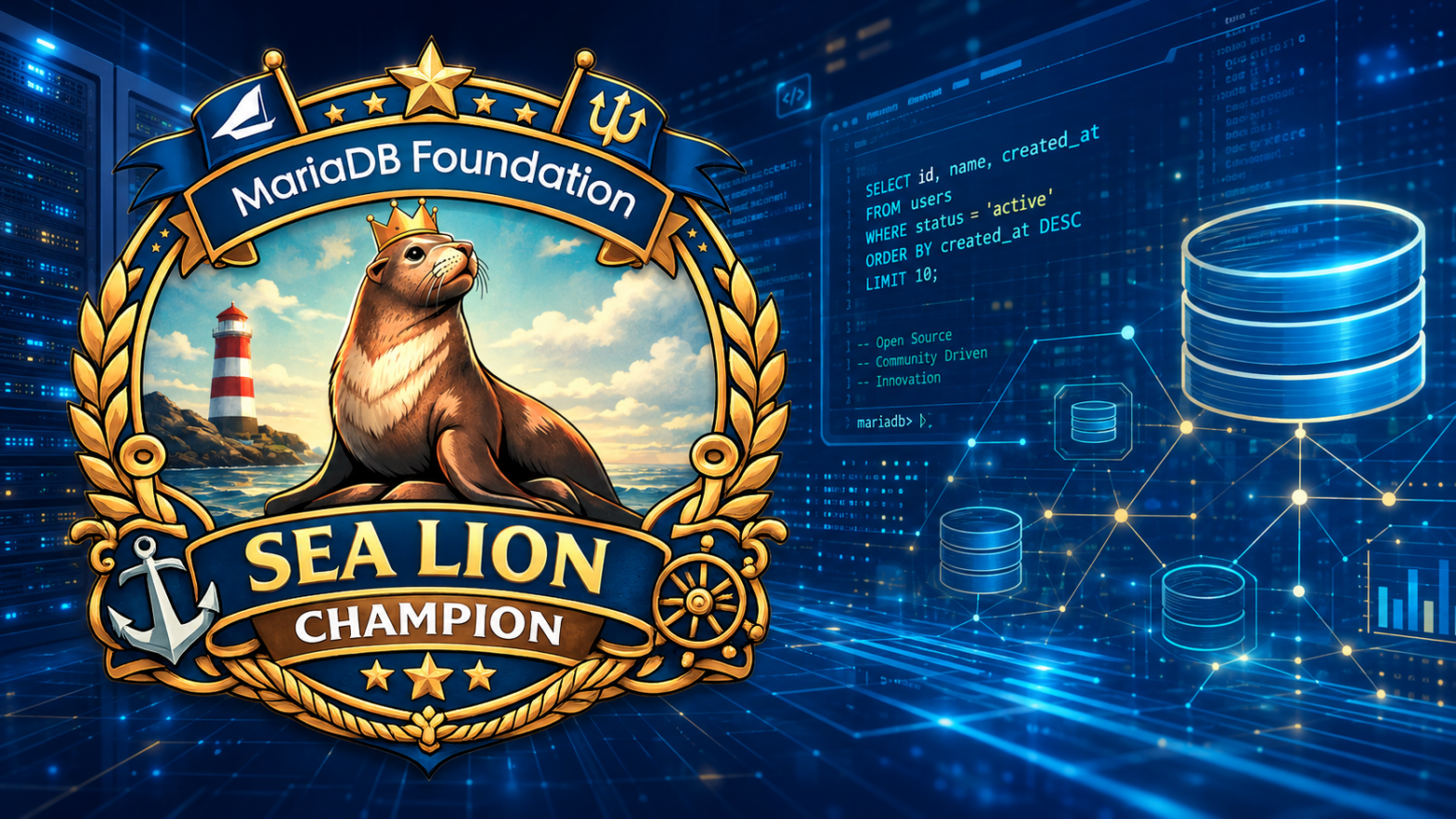
The MariaDB Foundation Sea Lions Champions recognize individuals and organizations that strengthen the MariaDB ecosystem through technical excellence, community leadership, open-source stewardship, ecosystem impact, and real-world adoption.
This first edition’s nominees reflect the diversity and strength of the MariaDB Community: developers, educators, advocates, companies, community organizers, and partners who help MariaDB grow as an open, collaborative, and industry-relevant database platform.
Each nomination highlights a different way to strengthen the database ecosystem and help MariaDB remain open, useful, and innovative.
Technical Excellence
The Technical Excellence category highlights people who contribute deep technical expertise, engineering quality, and innovation around MariaDB and the broader database ecosystem.
…
Continue reading “Celebrating the MariaDB Foundation Sea Lions Champions Nominees”