


Category Archives: Community

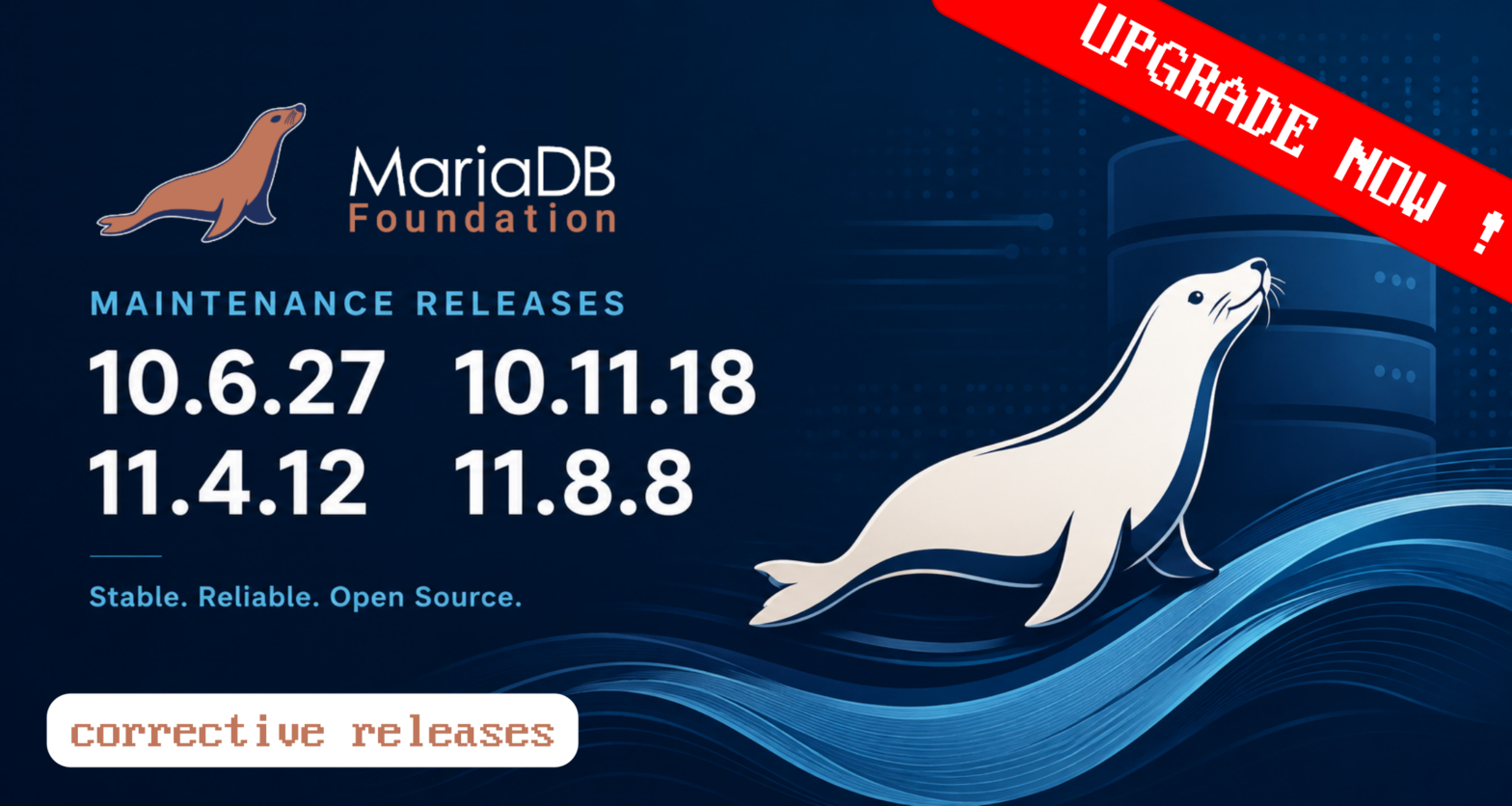
If you are a Galera user, you are strongly recommended to upgrade ASAP!
MariaDB Community Server corrective releases are now available for the currently maintained long-term series. These releases address critical CVEs, and we strongly recommend that all users review the security advisories and upgrade as soon as possible.
These are Stable (GA) releases and are recommended for users running the corresponding MariaDB Server series.
…
Continue reading “MariaDB Community Server Corrective Releases”

We have a new record average time to process a pull request: 21 days!
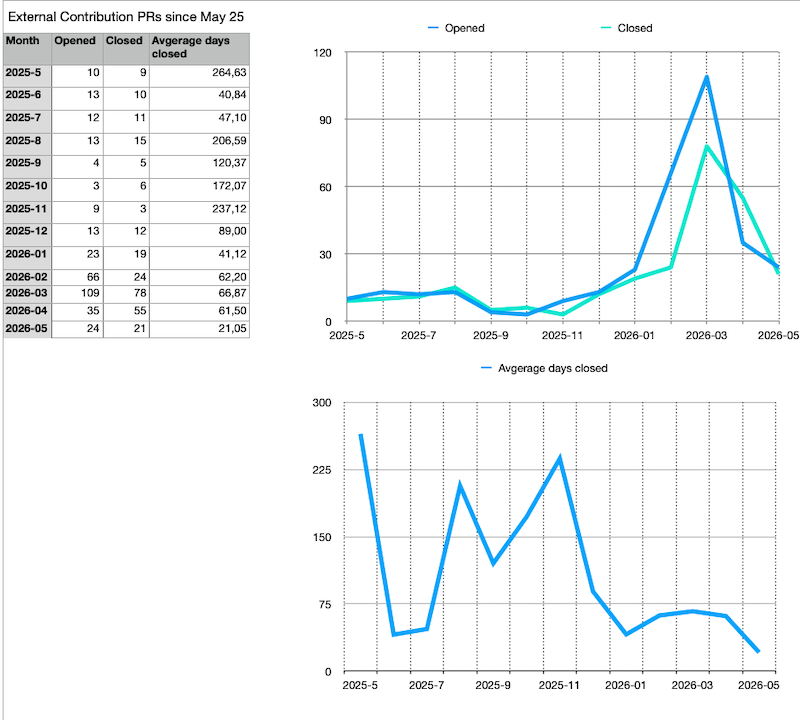
Part of my job is following (and trying to improve of course) some key metrics about MariaDB Server pull request processing. As a part of that I compile a nice pull request metric and a graph of it. This is what it looked like for the last month:
There’s a single number that caught my attention: 21.05 ! This is a new record low! That’s how much it takes on average from opening a pull request to closing it for all the requests closed last month!
…
Continue reading “A New Pull Request Processing Time Record”
The MariaDB Foundation is pleased to announce the availability of MariaDB Server 12.3 LTS, the latest Long Term Support release of MariaDB Server. The first GA of the 12.3 series is 12.3.2.
MariaDB Server 12.3 LTS includes the features and improvements introduced during the MariaDB 12.x development series and provides a stable release line for production environments requiring long-term maintenance.
Highlights
MariaDB Server 12.3 LTS includes improvements across several areas of the server, including binary logging, SQL compatibility, replication, optimizer behavior, security, GIS, JSON, and general server usability.
Important
In MariaDB 12.3, innodb_snapshot_isolation defaults to ON
As we wanted to be correct when using REPEATBLE READ isolation level, we changed the default of the InnoDB snapshot isolation.
…
We are very pleased to welcome ProxySQL as a Silver Sponsor of the MariaDB Foundation.
ProxySQL is the leading proxy for MySQL and has recently focused on supporting more and more of MariaDB, both with the Proxy and with other open-source projects ProxySQL is stewarding, like dbdeployer and orchestrator.
I had the chance to interview René Cannaò, CEO of ProxySQL.
Why is it important for ProxySQL to sponsor an organization like the MariaDB Foundation?
ProxySQL was born within the MySQL ecosystem, and MariaDB has always been an important part of it.
…
Continue reading “ProxySQL joins MariaDB Foundation as Silver Sponsor”

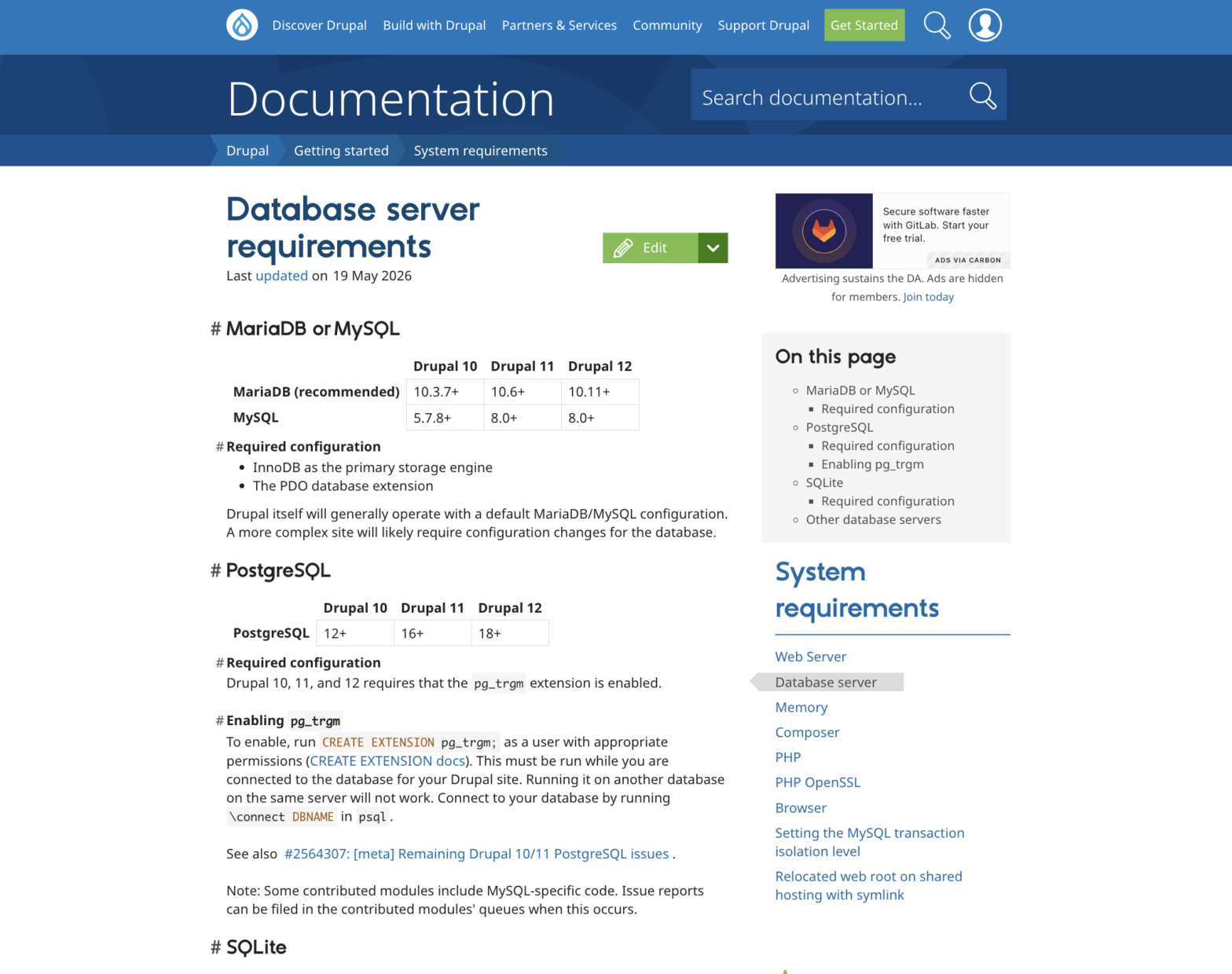
MariaDB is now clearly listed as the recommended database in Drupal’s official documentation. Following community discussion on Drupal.org, the Database server requirements now lists MariaDB first, and identifies it as the recommended database for Drupal 10, 11, and 12. Drupal is a major open source content management system—a flexible platform used by a substantial share of websites globally.
We’re glad to see this. Recognition matters because MariaDB is often used but documented as MySQL, going unnoticed under the hood—and when it goes unnamed, the work behind it loses visibility, a point Anna Widenius made in “I Am Not Building Cadillacs Anymore“, on how Henry Ford was long mistaken for the company that took his designs and became Cadillac.
…
If you ever considered contributing code to the MariaDB server, you should know that this is an intricate process involving multiple steps and multiple actors. To help you see your contributions successfully merged into the MariaDB Server codebase I’ve compiled a comprehensive description of the contribution process itself, the roles involved into it, the sequence of actions and conditions for transition from one to another. There’s even a diagram!
Please go to COMMUNITY_CONTRIBUTIONS.md.
This of course is going to be a moving target! I fully intend to keep the document up to date and enhance it with clarifications and process changes as they happen.
…
Continue reading “Documented: The MariaDB Server (Community) Contribution Process”

One of the corner stones in MariaDB Foundation’s mission is:
We strive to increase adoption by users and across use cases, platforms and means of deployment.
MariaDB Server plugins are definitely a prime “means of deployment” for server features. But a relatively neglected one so far. They have been around for many years. But, somehow, they have escaped the user’s focus. Why that happened is a very interesting topic. And one that I’d definitely like to hear your opinion on!
Which brings me to my main topic: How do we all change that?
…

We are concluding our series related to new data types using the Type_handler framework, with some limitations that are not yet covered by the framework:
- No custom indexing methods. A plugin type cannot introduce a new indexing method.
- No custom hashing. Plugin types can’t provide their own function for hash-based operations. Things like MEMORY table indexes, GROUP BY, and partitioning fall back to the underlying type’s hash.
- No new field attributes. Plugin types cannot define custom attributes beyond the existing ones: length, precision, scale, and GIS SRID.
…
Continue reading “Adding a New Data Type to MariaDB with Type_handler – Part 5”