

Category Archives: Community

As a DBA, there are some surprises I enjoy. Discovering a useful feature is one of them. Discovering that an application behaves differently after a maintenance update is considerably further down the list.
Maintenance updates should provide security and bug fixes while also helping people keep their applications running smoothly. Updates should not change behavior, especially not during maintenance releases. Should that happen for some reason, users and maintainers need a clear explanation and a practical way forward.
That’s not exactly what happened recently, causing an issue CONC-821 in MariaDB Connector/C.
Spoiler alert: The behaviour that MariaDB Connector/C changed was undocumented and implicit.
…
Continue reading “MariaDB Connector/C Compatibility: An Update on CONC-821”
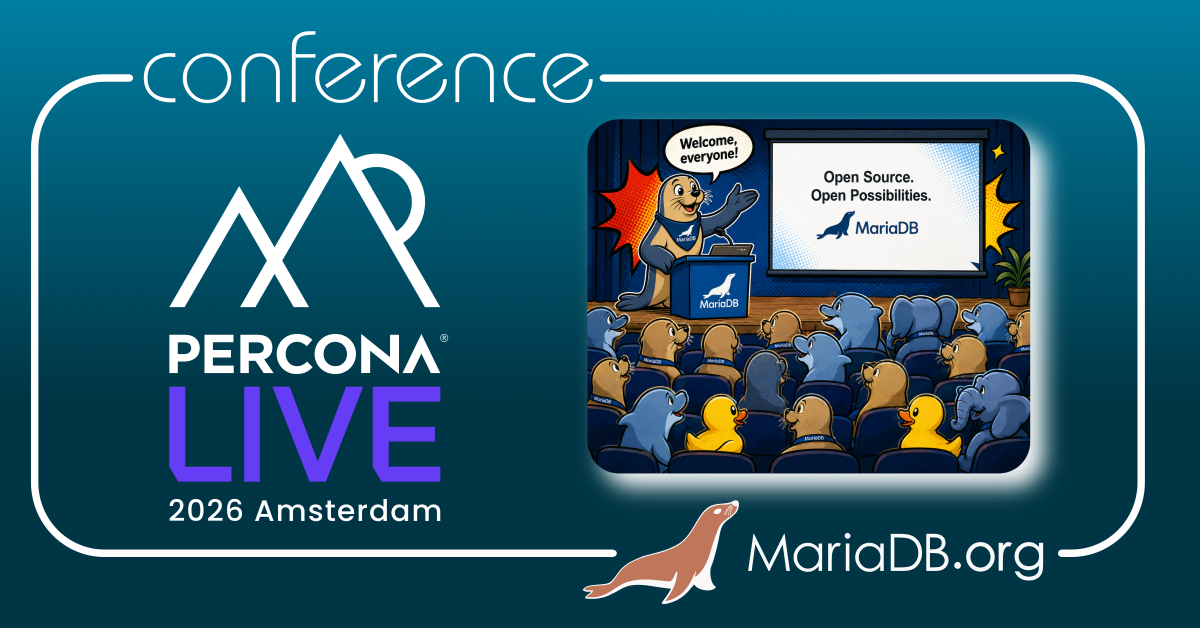
Percona Live returns to Europe on September 9–11, 2026, and MariaDB will be there!
The open source database community will gather at the Mövenpick Hotel Amsterdam City Centre for three days of technical sessions, discussions and, probably just as importantly, conversations between the people building and running open source databases every day.
MariaDB will have a strong presence this year, with sessions from MariaDB Foundation and MariaDB engineers covering server extensibility, protocol security and the ecosystem surrounding MariaDB Server.
The MariaDB story at Percona Live goes beyond our own sessions: other members of the database community will share their experiences running MariaDB.
…
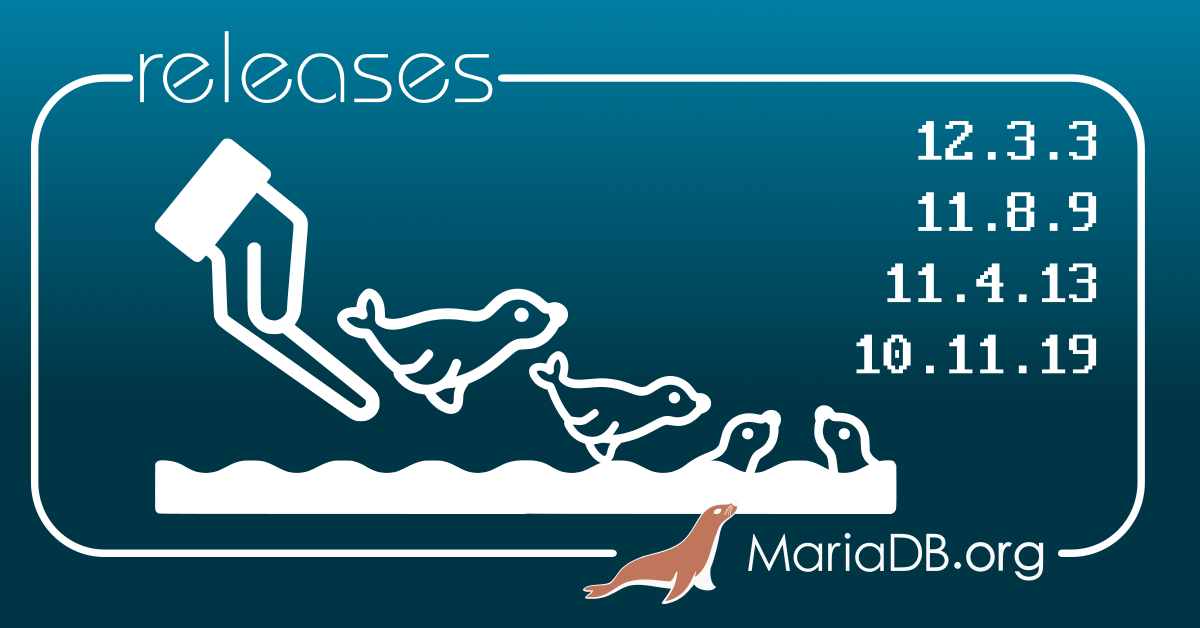
MariaDB Server maintenance releases are here!
On August 24, we released updates for our four currently maintained Long Term Support series:
- MariaDB 12.3.3
- MariaDB 11.8.9
- MariaDB 11.4.13
- MariaDB 10.11.19
As usual, these maintenance releases include bug fixes, stability improvements, and ongoing work across MariaDB Server.
You can find the complete release notes and changelogs for each version:
MariaDB 12.3.3
MariaDB 11.8.9
MariaDB 11.4.13
MariaDB 10.11.19
If you are running one of these MariaDB Server versions, we recommend reviewing the changelog and planning your upgrade.
…
When we talk about open source contributions, we often focus immediately on the code.
How many lines were changed?
What feature was added?
What do the benchmarks show?
But sometimes, the most interesting part is not the feature itself. It is the journey that transforms a production problem inside one company into an improvement available to an entire community.
This is exactly what happened with Headout, Arcadiy Ivanov (Karellen, Inc), and MariaDB Server.
The technical result is support for BLOB values in in-memory internal temporary tables.
…
Continue reading “From a Production Problem to MariaDB: Headout’s Open-Source Contribution Journey”
Sometimes a change happens progressively, one compatibility matrix at a time, until somebody finally writes down what has already become obvious.
This time, Adobe wrote it down.
In its database compatibility guidance for Adobe Commerce, Adobe now describes MariaDB as the default and recommended database platform going forward.
This is the future direction of Adobe Commerce, and, I must admit, this is very nice to read.
Magento, Magento Open Source and Adobe Commerce
Before going further, it is useful to clarify the names, because Magento and Adobe Commerce are often used interchangeably, even though they do not refer to exactly the same product.
…
Continue reading “Adobe Commerce Chooses MariaDB as Its Default Database Platform”
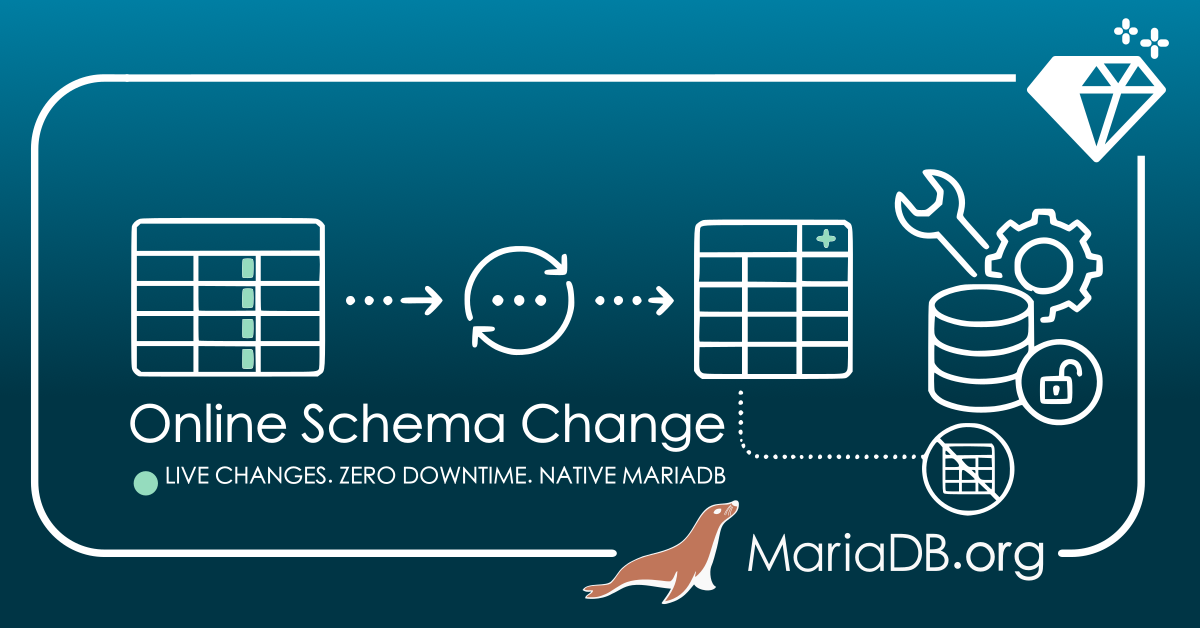
When people hear “online schema change” in the MySQL and MariaDB world, many immediately think about pt-online-schema-change. And for good reasons: for years, changing a large table in production was one of those tasks that could ruin your day.
Recently, I discovered that MariaDB includes a very useful hidden gem I completely missed: the ability to update a table schema without blocking concurrent DML statements for the duration of the schema change. [1]
As you probably already know, MariaDB Server supports multiple schema change algorithms.
This is an overview summary:
| ALGORITHM=INSTANT | Metadata-only change. |
…
Continue reading “MariaDB Hidden Gem: Online Schema Change without pt-osc”
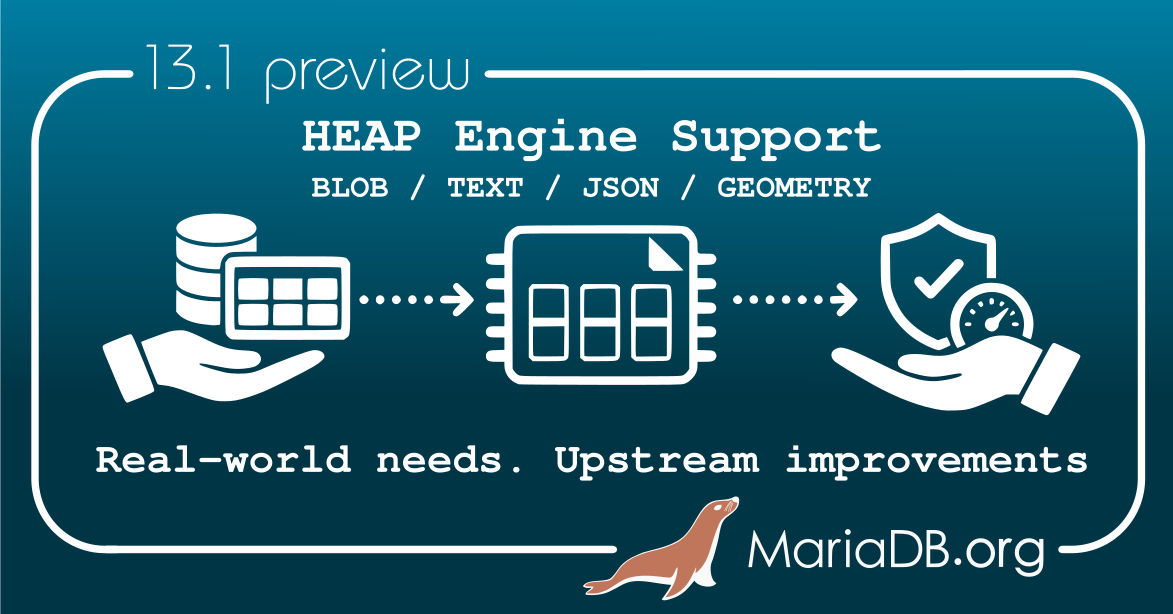
Some contributions improve MariaDB Server by adding new capabilities.
Some go further: they start from a concrete production problem with an existing feature, not a bug, but a design limitation, solve it upstream, and leave the whole ecosystem better off.
This is one of those contributions.
The platform team at Headout, a global platform that helps travelers discover and book curated real-life experiences, encountered a few inefficiencies in MariaDB Server around temporary tables and the HEAP engine. Instead of treating these as isolated local problems, they worked upstream. Arcadiy Ivanov, operating through Karellen, Inc.
…

Interview with Federico Razzoli, nominated in the Community Leadership category.
The MariaDB Foundation Sea Lion Champions program celebrates the people and organizations who help make the MariaDB ecosystem stronger, more open, and more useful for everyone.
Behind every open-source project, there are contributors whose work takes many forms. Some write code. Some review, test, document, teach, organize, advocate, support users, build tools, or bring MariaDB into production environments where it proves its value every day. Together, they help MariaDB remain a vibrant, collaborative, and industry-relevant database platform.
To highlight this diversity of contributions, we are launching a new series of interviews with nominees for the MariaDB Foundation Sea Lion Champions program.
…
Continue reading “MariaDB Foundation Sea Lion Champions Nominees: Federico Razzoli”