


The Helsinki Python meetup on Tuesday 27th May was hosted by MariaDB Foundation with nearly 100 participants of the 2600+ members of the Helsinki python meetup community.
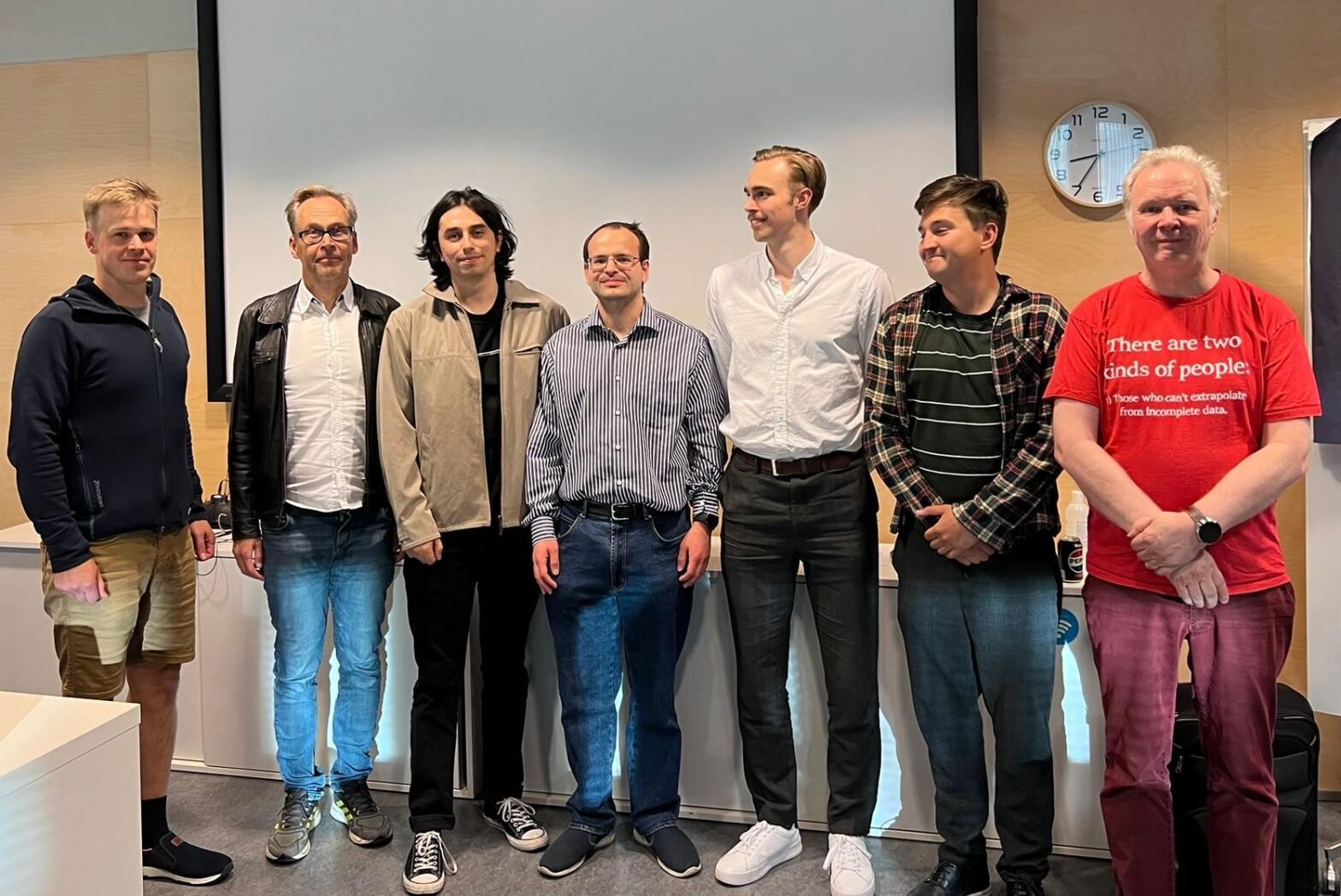
In addition to being a successful opportunity to mingle and learn python together, we finally got to announce the winners of the MariaDB AI RAG Hackathon! (winners posing in the feature photo of the blog)
Presentations: AI and MariaDB
We welcomed participants of the meetup with a brief introduction to what MariaDB is as a software, and the sponsoring parties: MariaDB Foundation, Open Ocean Capital and verkkokauppa.com.
…
Continue reading “Helsinki Python meetup with AI RAG and MariaDB Foundation”

Legend says Queen Guinevere once presided over a court where knights debated honor and destiny. In my version, the knights bring code diffs, sponsorship agreements, and opinions on open source governance. There’s less jousting, more Zoom calls — and while I lack a crown, I do wield a formidable calendar and an unshakable belief in collaboration.
As I reflect on the May 2025 meeting of the MariaDB Foundation Board, one truth stands tall (in shining armor): the MariaDB kingdom is not divided. It is uniting.
Harmony in the Realm
The collaboration between MariaDB Foundation and MariaDB plc has never been more dynamic — or more impactful.
…
Continue reading “The Round Table Expands: A Queen’s Reflections on Unity and Momentum”

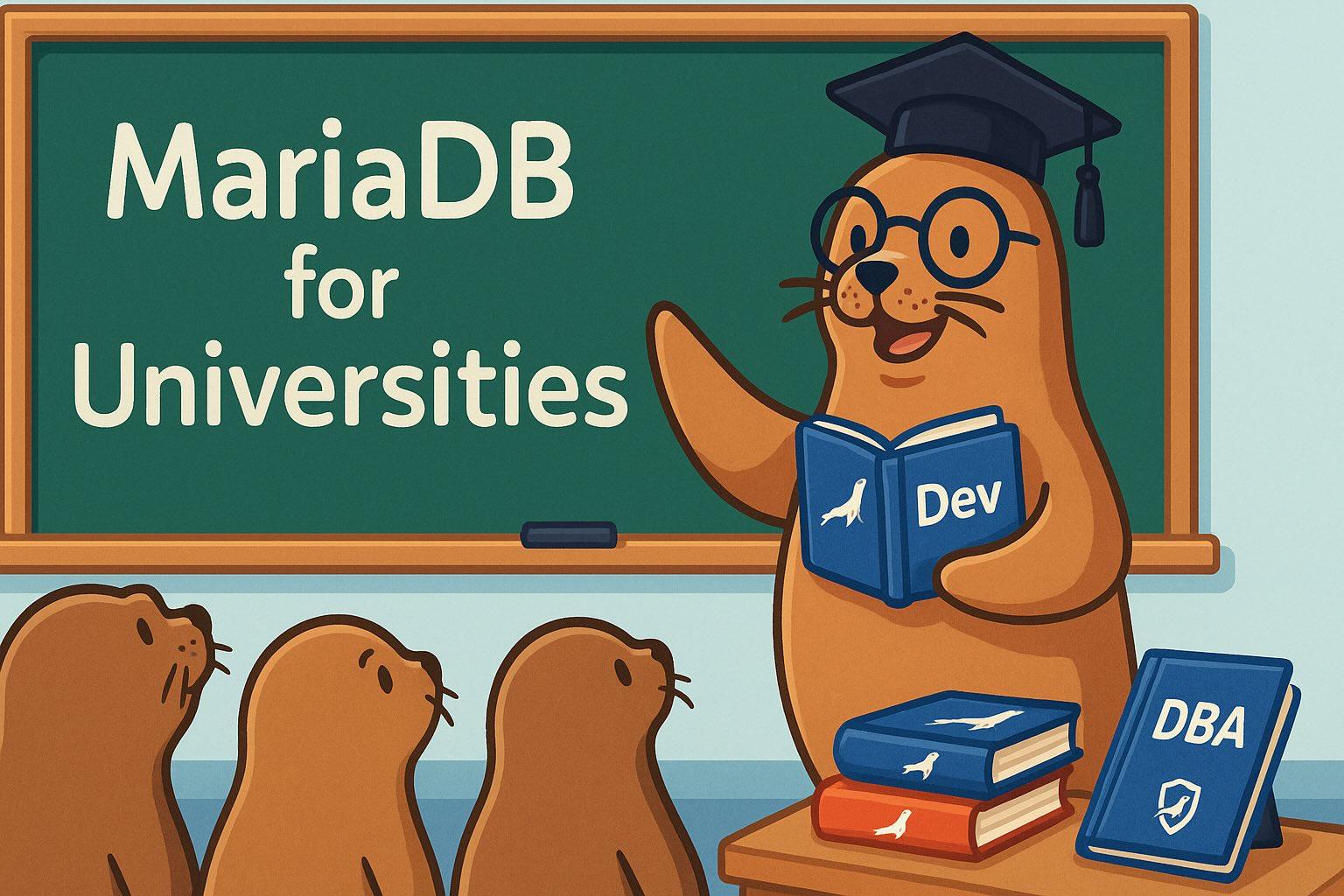
We have long had a vision: that learning relational databases with MariaDB should be accessible to everyone — students, educators, and self-learners alike. Today, MariaDB Foundation and MariaDB plc together take a major step forward in realizing that vision.
A Shared Effort for Open Education
MariaDB plc has generously released substantial professional training materials for academic and other non-commercial usage under an open source license. These materials are now publicly available on our GitHub repository at https://github.com/MariaDB/mariadb-for-universities/, and also accessible in a reader-friendly format at https://uni.mariadb.org.
The materials are structured to guide users from beginner to intermediate levels, and are intended for incorporation into university courses or for self-paced study.
…
Continue reading “Releasing MariaDB for Universities: Lecture Materials for a New Generation”


We welcome Senticore Technologies as a Silver Sponsor. Senticore, a leader in engineering and manufacturing applications, focuses on cutting-edge AI solutions, particularly for the aerospace and defense sectors, and powers critical systems worldwide. Senticore addresses these sectors’ concerns with locally deployed LLMs. Their platform integrates PDFs related to manufacturing, maintenance, and inspections processes into the digital thread. MariaDB supports their data-intensive workloads, crucial for high performance, reliability, and security, and its Vector capabilities are particularly important to Senticore’s AI development, enabling efficient storage and retrieval of LLM vector embeddings.
Senticore Technologies is renowned for pushing innovation in complex technical domains.
…

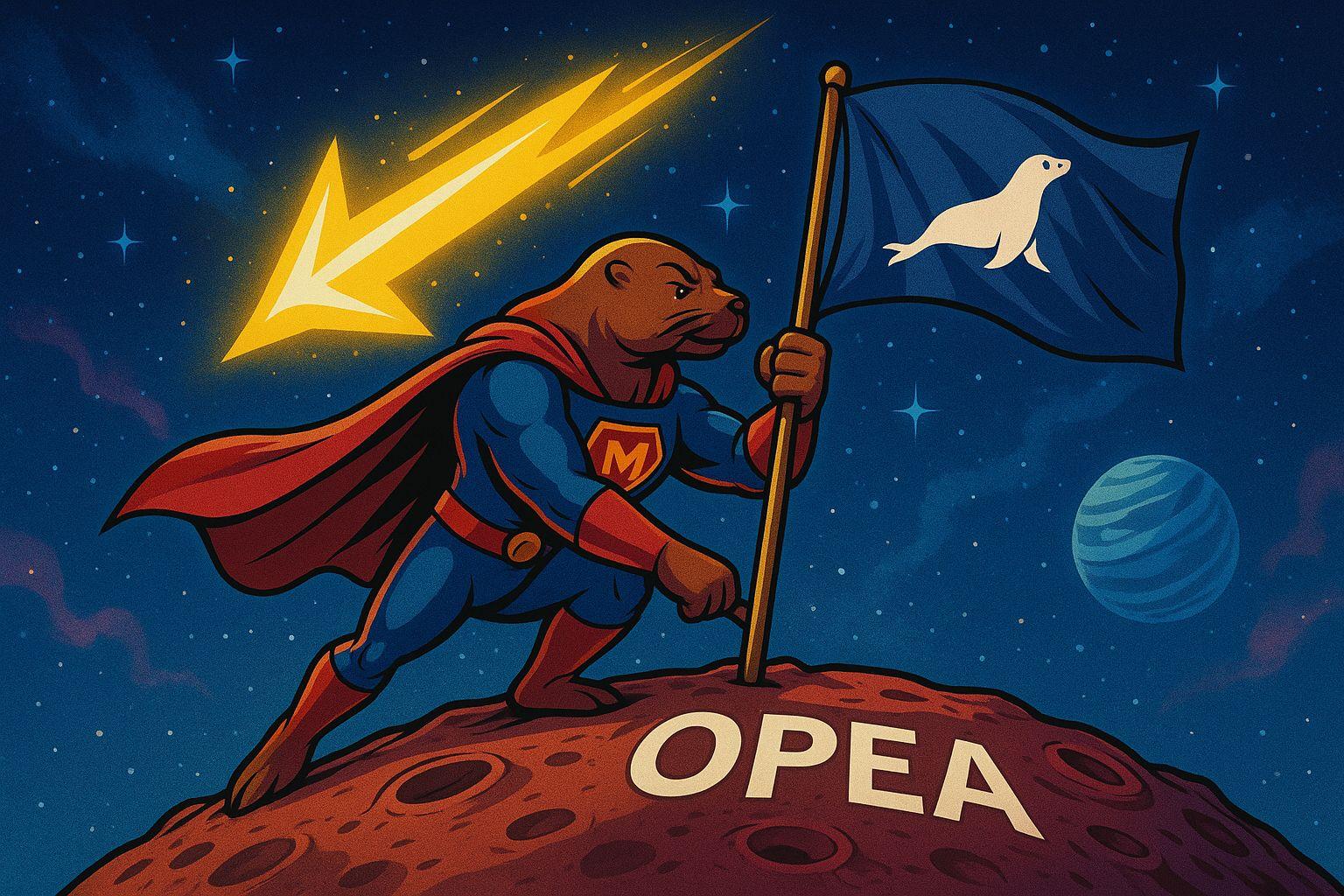
I think you’ve come to expect that every collaboration with Intel leads to meaningful, well-executed projects that bring great value to the community. This time, we’re spreading our wings towards empowering enterprises to deploy AI solutions, and we’re excited to show how MariaDB Vector fits into the Open Platform for Enterprise AI (OPEA).
🤖 Open Platform for Enterprise AI
The Open Platform for Enterprise AI, or simply OPEA, is a new sandbox-level project within the LF AI & Data Foundation where Intel plays a pivotal role in its active development and once again it shows its strong commitment to open-source innovation.
…
On Monday we had our final submission day for the MariaDB AI RAG Hackathon. We got several high quality replies in both tracks: integration and innovation.
The quality was so high that we are keen to replicate this hackathon in other locations and are currently looking for cooperation partners. We are truly grateful to the Helsinki Python meetup group without which this would not have been possible. They have a great community, organise excellent events, and played a key role in making the hackathon happen.
We are now reviewing the submissions together with the Helsinki Python meetup group.
…
Continue reading “Impressive Submissions at the MariaDB AI RAG Hackathon”
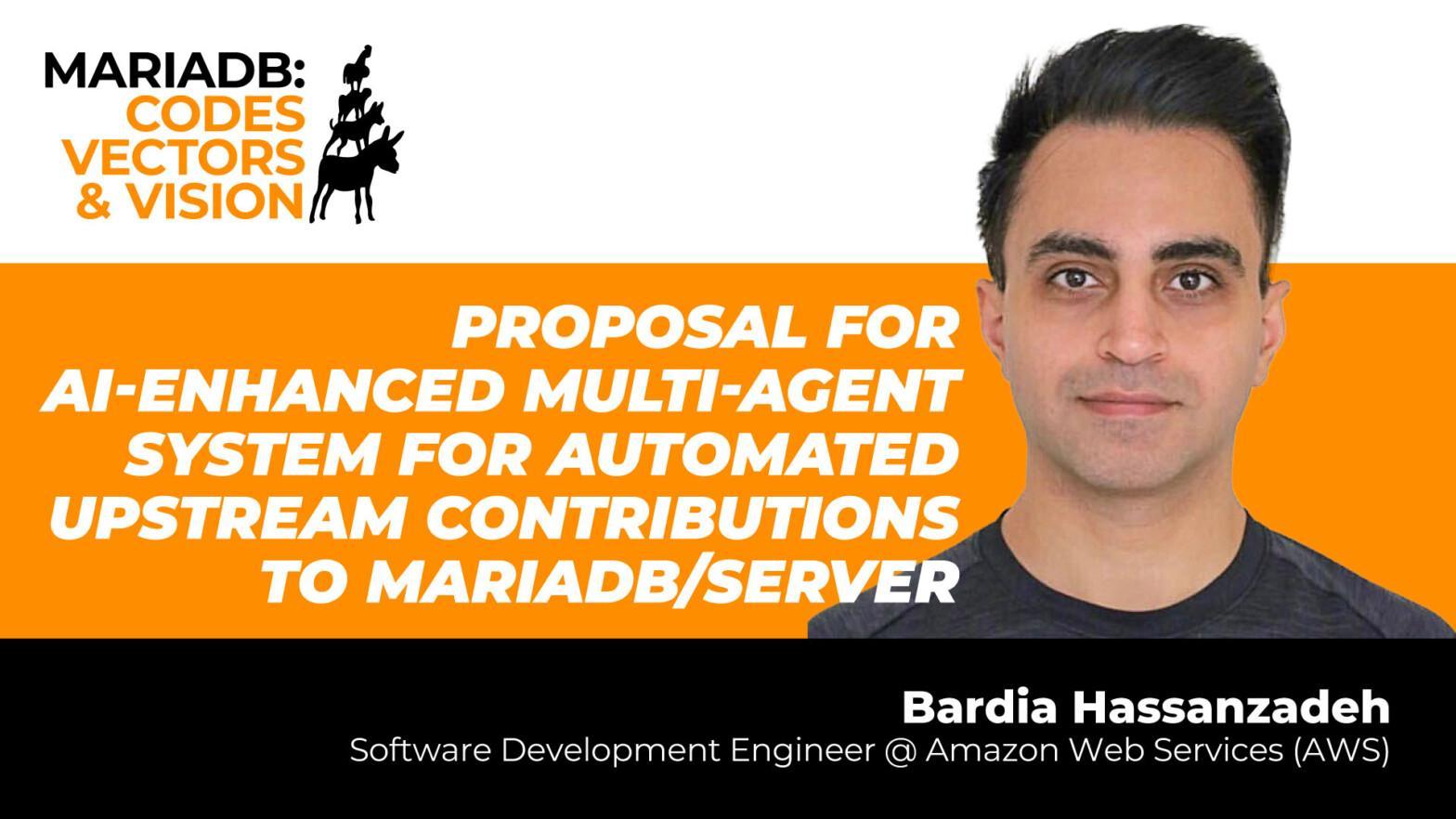
We at MariaDB Foundation are thrilled to see Amazon at the forefront of applying artificial intelligence to open source contributions — with MariaDB as their pilot.
At the May 6th MariaDB meetup in Bremen, Bardia Hassanzadeh, PhD, presented the Upstream Pilot tool: an AI-based assistant designed to help developers identify, analyze, and resolve open issues in MariaDB more effectively.
This initiative is the most promising we’ve seen for improving the open source contribution process. Bardia and Hugo Wen of Amazon gave us a preview last week and we were already very impressed.
…
Continue reading “Amazon’s AI-agents for MariaDB Contributions”
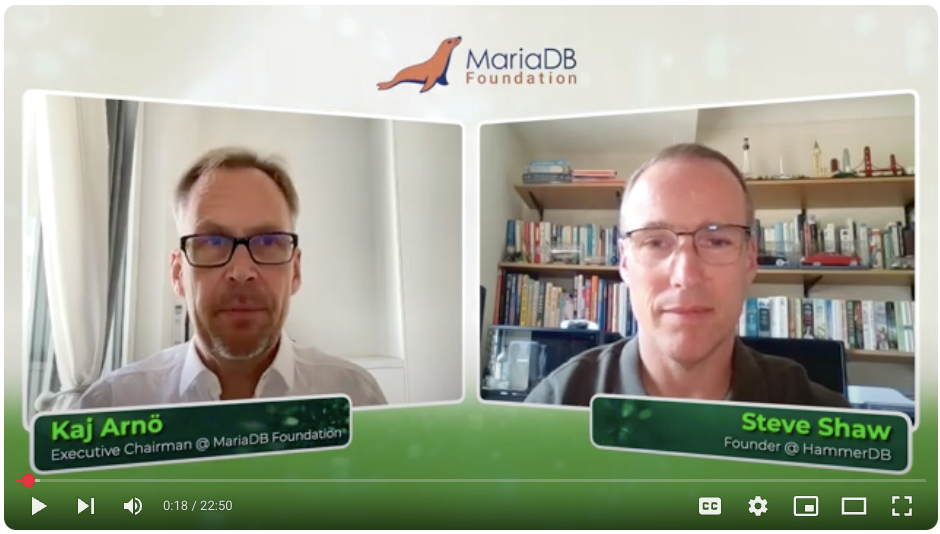
Right after the recent MariaDB Meetup in London, I had the pleasure of sitting down with Steve Shaw – founder and CEO of HammerDB, former Principal Engineer at Intel, and board member of the MariaDB Foundation. Steve delivered the keynote talk at the event and has a unique perspective on performance, open source, and the intersection between commercial and community-driven database development.
This blog post captures our conversation – a dialogue between two people passionate about open source and database performance. We talk about Steve’s transition from Intel to HammerDB, his relationship with MariaDB Corporation, the nuances of performance testing, and what lies ahead for the HammerDB and MariaDB communities.
…
Continue reading “Open Source Performance, Benchmarks and MariaDB: A Conversation with Steve Shaw”