
Category: Generic
-
Vibe-coding an Audit Plugin in Under 3 Minutes
Who says developing MariaDB plugins is hard? I was able to produce one in under 3 minutes!
I of course did it by asking Grok nicely:
The produced result is actually very decent:
It even produced a Makefile:
And compilation instructions:
The plugin has even compiled and worked on my Mac!
Tests are Important!
While I had Grok’s attention I’ve given it a follow up task:
Note the “please” part! It’s important!
This second prompt made it realize its naiveté […]
-
Introducing Our First MariaDB Server Solution Stack: A Privacy-First Stack with Nextcloud, Passbolt, and MariaDB
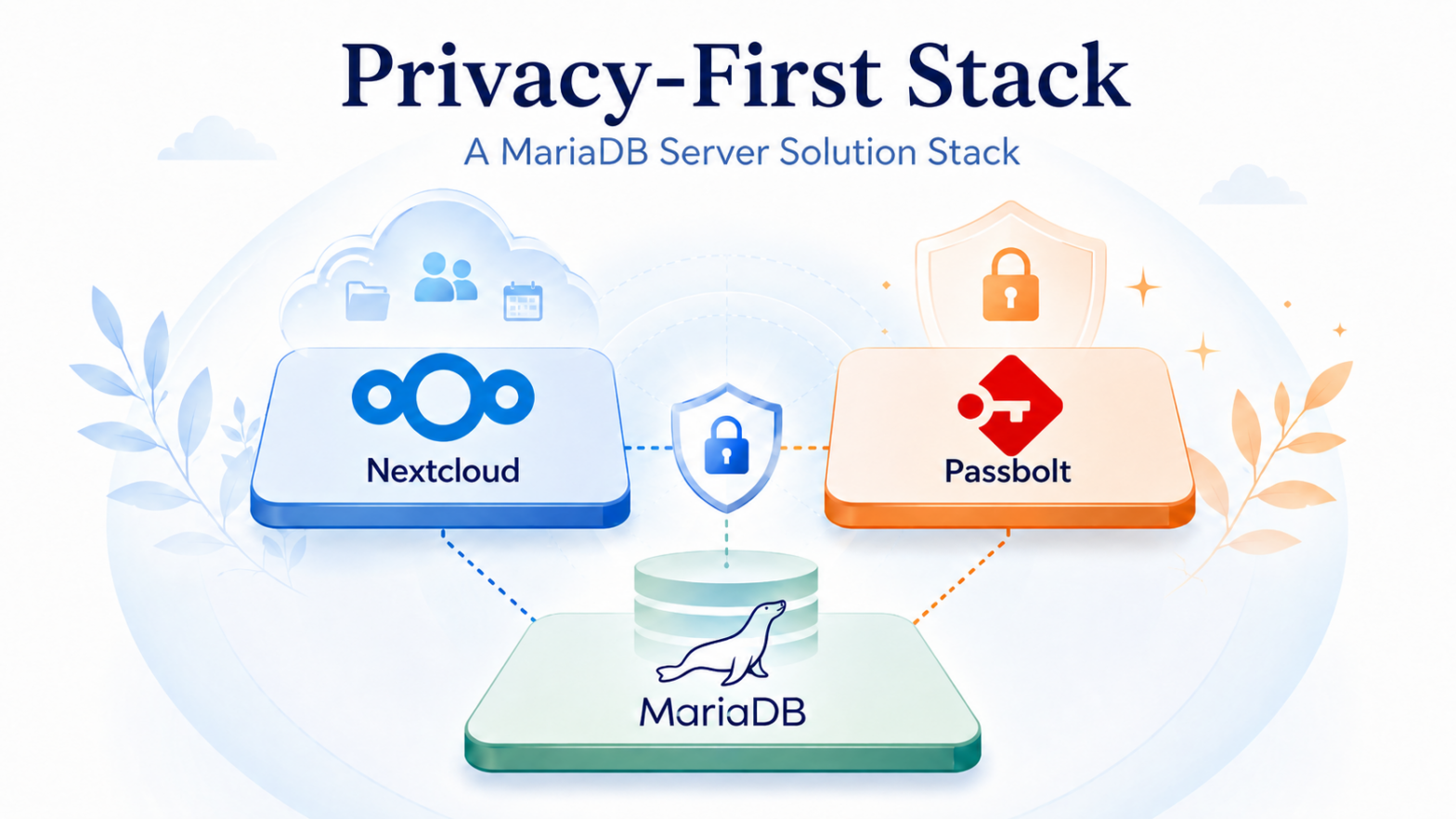
MariaDB Foundation is pleased to announce the publication of our first MariaDB Server Solution Stack in the MariaDB Server Ecosystem Hub:
Privacy-First Stack: Nextcloud, Passbolt, and MariaDB Server
This stack brings together three open-source technologies with a shared purpose: helping organizations build collaboration infrastructure around privacy, control, and long-term digital sovereignty.
The stack combines:
Together, they form a practical architecture for organizations that want to keep collaboration data, credentials, and structured data under their own control.
What is a MariaDB […]
-
MariaDB Foundation releases the BETA of the Test Automation Framework (TAF) 2.5
The MariaDB Foundation is releasing the BETA version of the Test Automation Framework (TAF) 2.5. This release represents a significant architectural upgrade, strengthening the framework’s lifecycle model, profiling capabilities, extraction and install pipeline, and reporting consistency. The focus of the BETA is on determinism, clarity, and contributor‑proof behavior across the entire workflow.
TAF continues to serve as an open, reproducible framework for evaluating MariaDB builds, running performance workloads, collecting diagnostics, and validating behavior across versions. The 2.5 BETA builds on […]
-
Contributions As a Cost-saver

The economics of open source contribution development. And some questions.
-
Datography Joins MariaDB Foundation as Silver Sponsor

We are pleased to welcome Datography as a Silver Sponsor of the MariaDB Foundation.
Datography focuses on helping organizations understand, map, and manage complex data environments. As data infrastructures grow increasingly distributed across platforms, services, and geographies, having clear visibility into how data flows and where it resides becomes critical for governance, security, and operational efficiency.
This aligns closely with the MariaDB Foundation’s mission to support the adoption of open, transparent, and reliable data infrastructure.
Why This Matters
Modern organizations […]
-
Queen Shrugged

It’s easy to be a queen. Why? Because you can always count on your true selfless friends. I learned this already as a young princess. Nothing brightens a ball quite like a comment from one of your most trusted girlfriends:
It’s beautiful. It’s pure. It’s a sign of true friendship and it has nothing to do with the fact that this girlfriend is interested in the same prince who has spent the whole evening dancing with you…
When I grew […]
-
Big Vector Search Benchmark: 10 databases comparison

I have benchmarked MariaDB Vector before, but it was a while ago. Users kept asking about Milvus. New pgvector alternatives were gaining popularity. And I simply wanted to see if MariaDB got any better. This benchmark round includes more databases, larger dataset, and no irrelevant datasets that only add noise but don’t really help today in 2026.
Dataset
Now is the AI time. Vector search is used for embeddings generated by LLMs. Most ann-benchmarks datasets are pre-AI and use, for […]
-
What the MariaDB Community Wants Next: A Look at Our MySQL-Compatibility Poll
We recently asked the community:
“Which MySQL-compatibility feature would you most like to see in the next MariaDB release?”
A big thank you to everyone who voted. We received 506 votes, and the results give us a helpful snapshot of which compatibility gaps feel most important to users right now.
Poll results
A two-feature race
The first thing that jumps out is how close the top two were.
MEMBER OF json operator (MDEV-38591) came in first with 145 votes, but […]