

Tag: MariaDB
-
Building a Public Performance Change Detection Library for MariaDB
Performance engineering inside a database project is usually private. Teams run internal workloads, investigate changes, fix issues, and move on. The knowledge stays inside the company, and the outside world only sees a benchmark graph or a release note.
I know this pattern well — I spent more than twenty‑six years doing this work for both PervasiveSQL and MySQL.
The investigations were deep, the lessons were real, but almost none of it was visible to the outside world.
The surprises, […]
-
MariaDB Foundation Adds PostgreSQL to Its Engine‑Agnostic Testing Framework (TAF).
The Test Automation Framework (TAF) was designed so that database makers themselves could create a plugin and integrate their database engine directly into the framework.
TAF provides the structure — lifecycle management, workload execution, profiling, reporting, and reproducible properties files — and each database plugin supplies the engine‑specific logic.
The first two plugins added to TAF were MariaDB and MySQL, proving the model: database vendors can plug their engine into TAF and immediately gain automated installs, structured workloads, concurrency sweeps, […]
-
Migrating a 500 GB Production MariaDB Database from Amazon RDS to EC2, With a Rollback Path
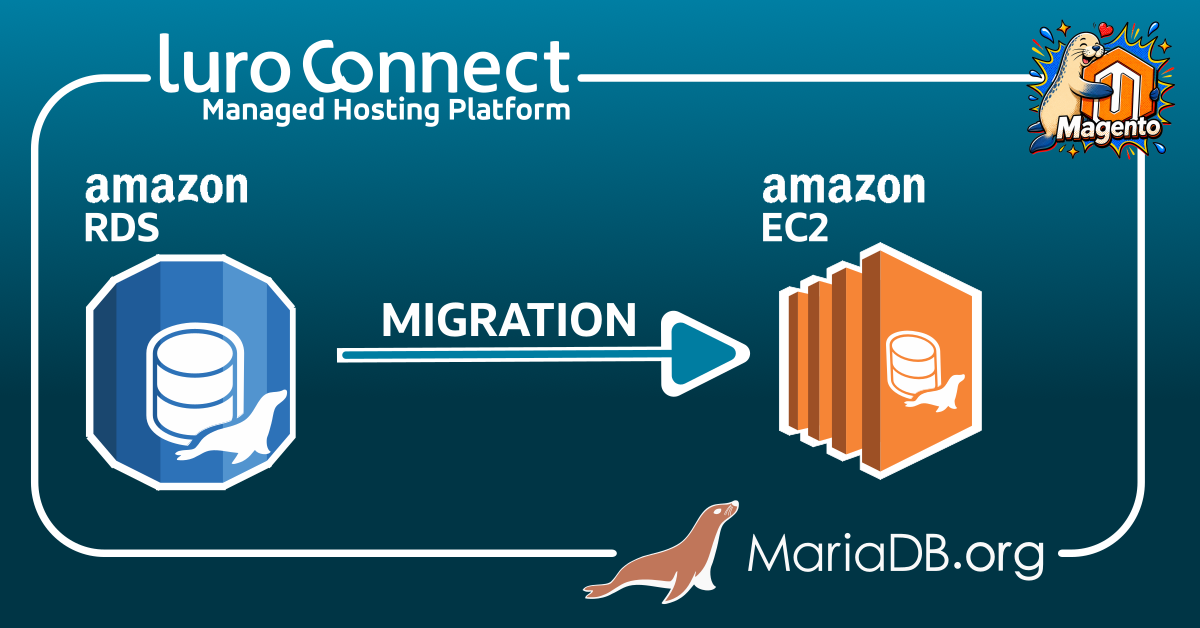
I always enjoy real production stories where MariaDB is used in demanding environments and the people involved are willing to share the architecture, the challenges, and the decisions made along the way.
Pradip Shah from luroConnect recently documented how his team migrated a 500+ GB production MariaDB database from Amazon RDS to self-managed MariaDB on EC2.
Moving from RDS to EC2 is often expected to bring significant cost savings because you are moving from a fully managed database service to […]
-
MariaDB Foundation: TAF Now Supports Embedded Database Configuration in User Properties
TAF: One File to Rule Them All
In a one‑on‑one review of TAF with Monty Widenius, the creator of MySQL and MariaDB, he looked at me and said: “I want everything in one user file.”
It was simple, direct, and completely right direction.
TAF’s configuration model had inherited its design from older frameworks — a user properties file and a separate database configuration file.
Monty’s comment cut straight through it. He wanted simplicity — one file that defines everything.
So […]
-
MariaDB 13.0 Is Now Stable
MariaDB Server 13.0 is now Stable!
The 13.0 series started its journey in March 2026 with the Preview. It then progressed through the Release Candidate phase and is now ready for general use as MariaDB’s latest Stable rolling release.
This is not a long-term support release, which means that an upgrade is relevant for you in the specific scenario that you want to try one of the new features described below. In a test or production environment. But this is […]
-
From a Chocolate Wrapper to Concurrent InnoDB Page Splits
This work started from a conversation with Monty Widenius at Meet Magento Czech in August. We discussed possible ways to improve the scalability of the InnoDB B+Tree, especially its insert path and page splits.
Monty explained several ideas about reducing synchronization during structural changes and allowing independent parts of the tree to make progress concurrently. We did not have a whiteboard, so we made the first design sketch on the back of a dark chocolate wrapper.
The sketch contained a […]
-
Extending MariaDB with Native Aggregate Plugins: Laying the Groundwork for HyperLogLog
MariaDB already allows developers to add new Pluggable Data Types and scalar Plugin Functions. One missing piece has been Pluggable Aggregate Functions operating on PDTs. That matters for functionality such as HyperLogLog, where an extension needs to aggregate values into a custom statistical sketch while preserving its native SQL type.
MDEV-40672 closes that architectural gap. Aggregate functions can now participate in MariaDB’s native aggregation infrastructure, including DISTINCT, window execution, prepared statements and Pluggable Data Types.
MariaDB already supports MariaDB_FUNCTION_PLUGIN, a […]
-
MariaDB Foundation Advances TAF with HammerDB 6.0 and xt_reservoir Integration
Overview
While validating MariaDB RSS stability under stored procedure workloads, I ran into unexpected memory growth. The goal was straightforward: confirm that MariaDB was not leaking memory when running TPROC-C stored procedure workloads. To do this, I used HammerDB TPROC-C SP and added improved RSS monitoring so I could watch memory usage over long-duration runs.
The results were clear. MariaDB RSS stayed stable. HammerDB 5.0 kept growing, and growing.
This led to a deeper investigation into HammerDB itself, and ultimately […]