

Blog
-
The database world grew up — notes from Percona Live Amsterdam
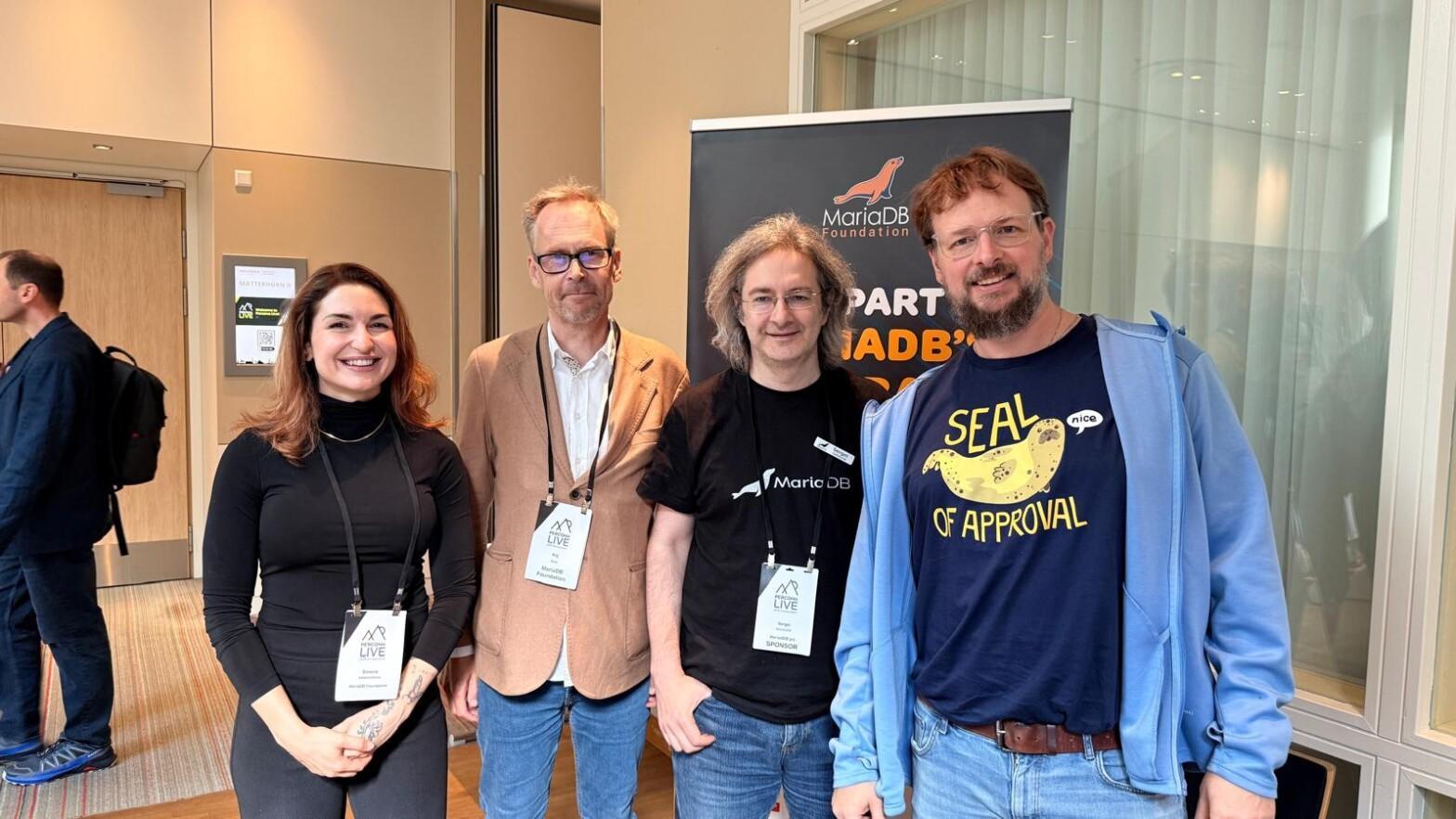
Last week I spent a few days in Amsterdam at Percona Live. It was the first Percona Live in Europe since before the pandemic, and you could feel it in the room: a slightly disbelieving happiness at simply being together again. Peter Zaitsev put it well when we sat down afterwards — nobody was quite sure what to expect, and it turned out to be a great event precisely because everyone had missed this.
I have been around since the […]
-
MariaDB 13.0 Is Now Stable
MariaDB Server 13.0 is now Stable!
The 13.0 series started its journey in March 2026 with the Preview. It then progressed through the Release Candidate phase and is now ready for general use as MariaDB’s latest Stable rolling release.
This is not a long-term support release, which means that an upgrade is relevant for you in the specific scenario that you want to try one of the new features described below. In a test or production environment. But this is […]
-
Trying DuckDB for Magento Analytics: An Experiment with One Million Orders
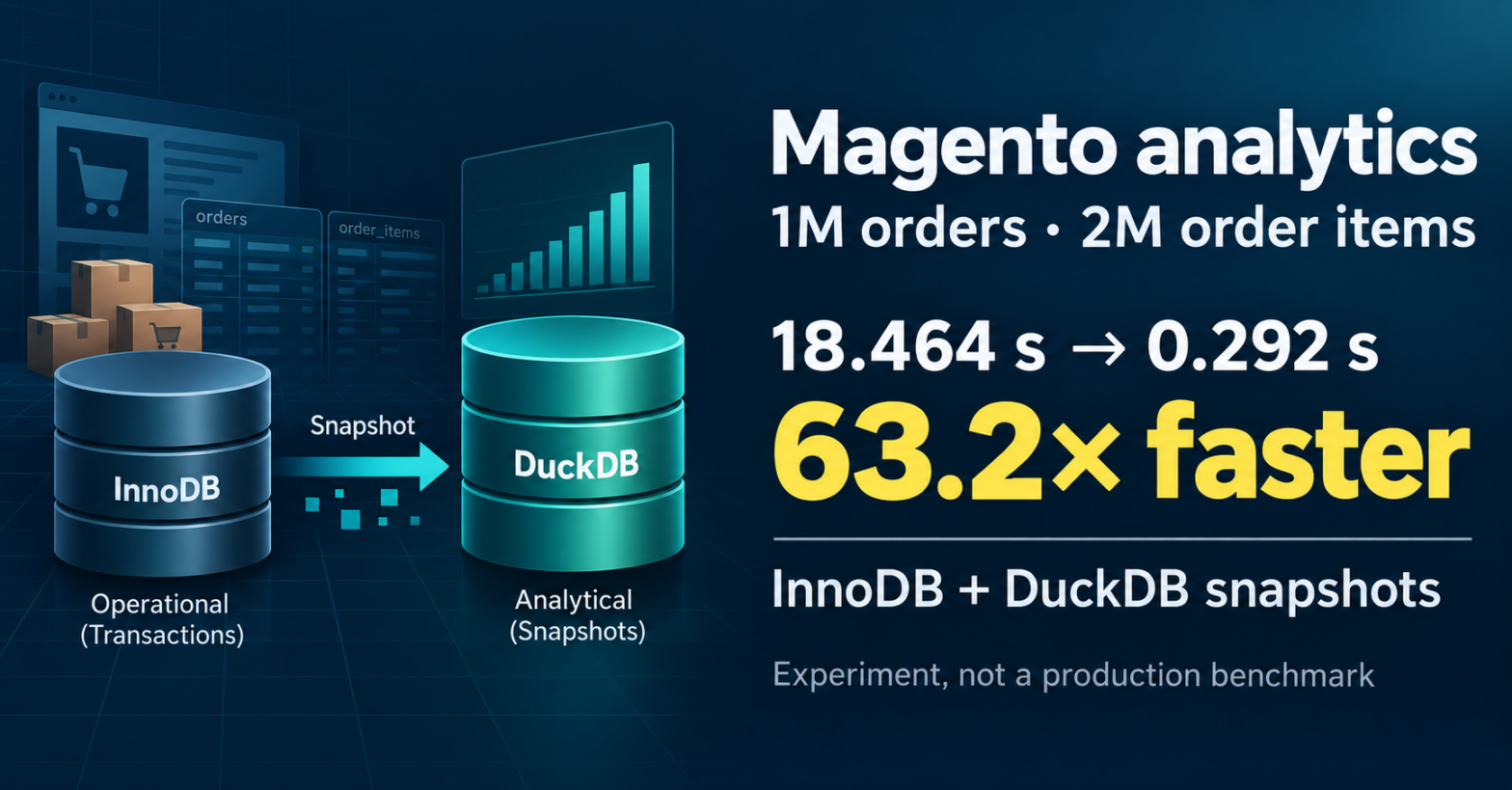
Magento normally uses InnoDB for orders, order items, invoices, and other transactional data. However, analytical reports have another workload. I wanted to check whether DuckDB can improve a real Magento report without replacing the operational database.
For this experiment, I generated one million Magento orders and two million order items. Then I executed two complete Magento Orders Report queries in three storage configurations.
Short result
Why I started this experiment
The Magento database has a mostly transactional workload. It creates […]
-
MariaDB adoption is growing, and the way people get it is changing – Adoption Index 2026-09
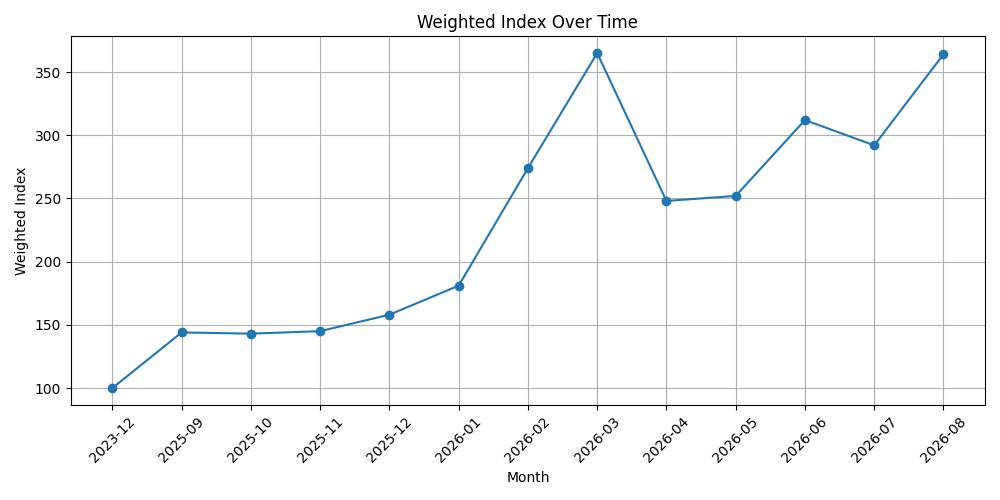
The MariaDB Adoption Index is up 126% in a year. More people are downloading MariaDB, more people are contributing to it, and more projects are building on it than at any point since we started measuring.
At the same time, the numbers show something else: the way people acquire and discover MariaDB is changing. Some of our older metrics are falling – not because MariaDB is, but because the channels they measure are.
The index combines 24 metrics – downloads, […]
-
AWS renews Diamond sponsorship of MariaDB Foundation for a fourth consecutive year

MariaDB Foundation is pleased to announce that Amazon Web Services (AWS) has renewed its Diamond sponsorship for a fourth consecutive year.
AWS became the Foundation’s first Diamond sponsor in 2023, building on years of technical engagement with MariaDB Server and its community. Since then, the relationship has developed into a sustained collaboration supporting the openness, adoption, and long-term continuity of MariaDB Server.
AWS engineers contribute code and technical expertise to MariaDB Server, and ongoing dialogue between AWS and the Foundation […]
-
Rethinking PAM
PAM, Pluggable Authentication Modules, originated in Solaris and became common place in all Linux, BSDs, and AIX, HP-UX and macOS. MariaDB has had PAM support as an option since MariaDB 5.2.10 becoming stable in 10.0.11. So if this is all old and boring why reconsider it? The environment in which Linux operates with PAM has changed in the last 15 years.
MariaDB’s PAM plugin version 1 (as its become known) has a restriction, because the pam module loaded was loaded […]
-
From a Chocolate Wrapper to Concurrent InnoDB Page Splits
This work started from a conversation with Monty Widenius at Meet Magento Czech in August. We discussed possible ways to improve the scalability of the InnoDB B+Tree, especially its insert path and page splits.
Monty explained several ideas about reducing synchronization during structural changes and allowing independent parts of the tree to make progress concurrently. We did not have a whiteboard, so we made the first design sketch on the back of a dark chocolate wrapper.
The sketch contained a […]
-
Launching MariaDB’s Database Survey 2026
We want to know how you’re really using MariaDB — and databases in general. Not the marketing version or the one-off case study. The real story: what you’re building, how you are using it, what’s working, and what’s frustrating.
Last year we ran the first State of MariaDB survey. 275 of you took part, and the results became a public report linked from mariadb.org/survey. Now we’re back with the 2026 edition — the second annual survey — fresh questions, tailored […]