

Tag: MariaDB
-
Generating MariaDB Metrics
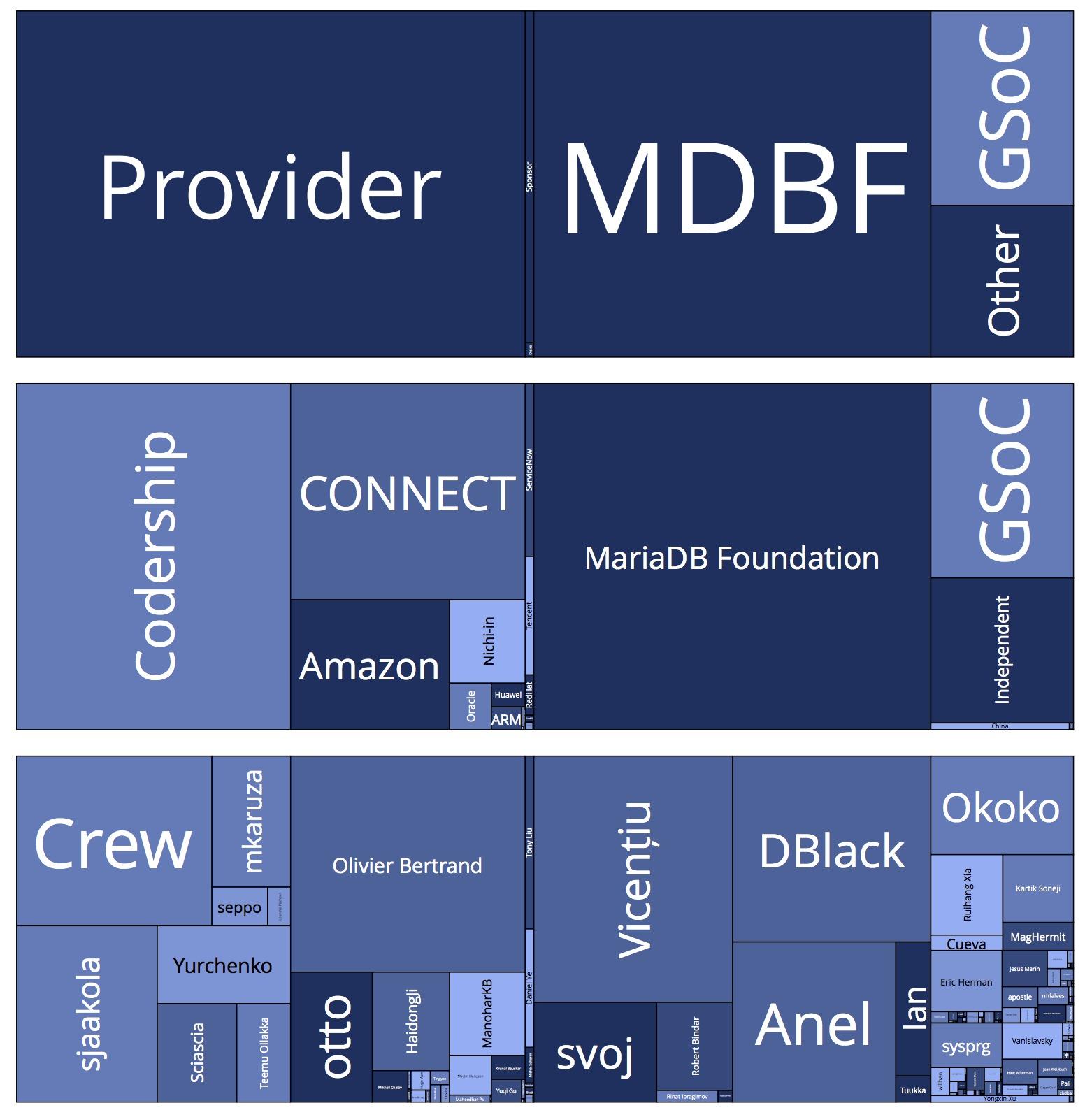
Something that is very important to us in the MariaDB Foundation is “Openness”. This is not only in the open source nature of MariaDB, but we are also very transparent in what happens with the MariaDB source code. With that in mind we have been working on ways to generate metrics that show information about the community in a consumable form.
As with everything we do the scripts to generate these metrics are completely open to the public so that […]
-
The Path to Code Contributions in MariaDB Server

I have been working for the MariaDB Foundation as the Chief Contributions Officer for a couple of weeks and it is fantastic being part of the MariaDB family again. Part of my job is to help the community massage pull requests into something that we can merge. I am, however, finding that one of the worst parts of my job is having to say “no” to contributions that clearly took a lot of time and effort on the part of […]
-
MariaDB & K8s: How to replicate MariaDB in K8s
In the previous blog we have seen how to create a statefulset MariaDB application. Also, we learned how replication works in MariaDB in this blog. Now, we will try to create a replicated statefulset application. As good references for creating this blog, I would like to give credit to the Kubernetes documentation as well as an example from Alibaba Cloud.
Configure replication
To replicate a MariaDB application we are going to create a statefulset that will consist of a single […]
-
Cyber Protection – best practices for backing up data
A few weeks ago we hosted a webinar together with Acronis and CPanel on security and backup best practices as both provide software in this space. Acronis develops Cyber Security cloud based software particularly specializing in backup and disaster recovery for other service providers. CPanel in turn helps those service providers to enable their customers to administer their systems via a fully fledged dashboard. The webinar was a follow-up on another join presentation at CloudFest. The webinar presented quite a […]
-
Create statefulset MariaDB application in K8s
In the previous blog we created a stateless application, deployed with K8s resource Deployment, which allows one to replicate the application, but where data is lost when Pods are restarted, meaning there were no data consistency. In the same blog we used PersistentVolumeClaim for dynamic provisioning of PersistentVolume, but we used Deployment, meant for stateless application, and this way is *not recommended* for statefulset application where each replica should have its own persistent volume. The proper way to achieve that […]
-
MariaDB & K8s: Deploy MariaDB and WordPress using Persistent Volumes
In the previous blog, MariaDB & K8s: Create a Secret and use it in MariaDB deployment, we used the Secrets resource to hide confidential root user data, and in the blog before that in the series, MariaDB & K8s: Communication between containers/Deployments, we created 2 containers (namely MariaDB and phpmyadmin) in a Pod. That kind of deployment didn’t have any persistent volumes.
In this blog we are going to create separate Deployments for MariaDB and WordPress applications as well as […]
-
MariaDB & K8s: Communication between containers/Deployments
In the previous blog, a background Deployment resource was created from a YAML file, consisting of a single container (MariaDB) that acts as a background container.
In this blog we are going to proceed to create the frontend container to communicate with the backend through a Service and other resources.
About Services
When an application is run through the Deployment Pods are created and destroyed dynamically. When created, they get the internal IP address in a cluster, and since they […]
-
Start MariaDB in K8s
This is the first in a series of blogs explaining how to use MariaDB in Kubernetes (K8s), as well as explaining some important concepts of K8s and of MariaDB.
This blog explains how to start MariaDB as a stateless application in K8s using the CLI and explores different commands you can run on your CLI.
The prerequisites are that you have installed kubectl (which will also install Docker runtime) and minikube (local K8s).
Let’s first start the minikube
The Pod […]