

Blog
-
Atarim joins MariaDB Foundation as a Silver sponsor
MariaDB Foundation is pleased to welcome Atarim as a Silver sponsor, strengthening the connection between MariaDB and the agencies and hosting providers shaping the web.
Atarim is an AI web agency that plugs into existing web agencies and does the client work. Agencies point it at the sites they look after, and it designs, writes, fixes and ships changes under their brand, while the agency keeps the client relationship and approves what goes live. Hosting providers also offer Atarim to […]
-
Amazic joins MariaDB Foundation as a Silver Sponsor
MariaDB Foundation is pleased to welcome Amazic as a Silver Sponsor, adding a new supporter with strong connections across the software ecosystem.
Amazic connects innovative software vendors with partners, developers and organisations looking to adopt modern technologies. Combining software distribution with technical enablement, training, content and community-focused events, Amazic helps bridge the gap between technology innovation and real-world adoption. MariaDB Enterprise is already part of Amazic’s software portfolio, making its support for the MariaDB Foundation a natural extension of its […]
-
MariaDB Foundation: Exploring TidesDB Performance with TAF
TidesDB now exists inside MariaDB as a pluggable storage engine.
With the TideSQL plugin available, anyone can load TidesDB into a MariaDB server and begin experimenting with it.
But having a plugin is only the first step — you still need a practical, reproducible way to run real workloads against it, that’s where TAF comes in.
This blog exists to give anyone interested in TidesDB a roadmap to the city of benchmarking it — a clear, reproducible starting point for […]
-
MariaDB Foundation Newsletter – 15 October 2026
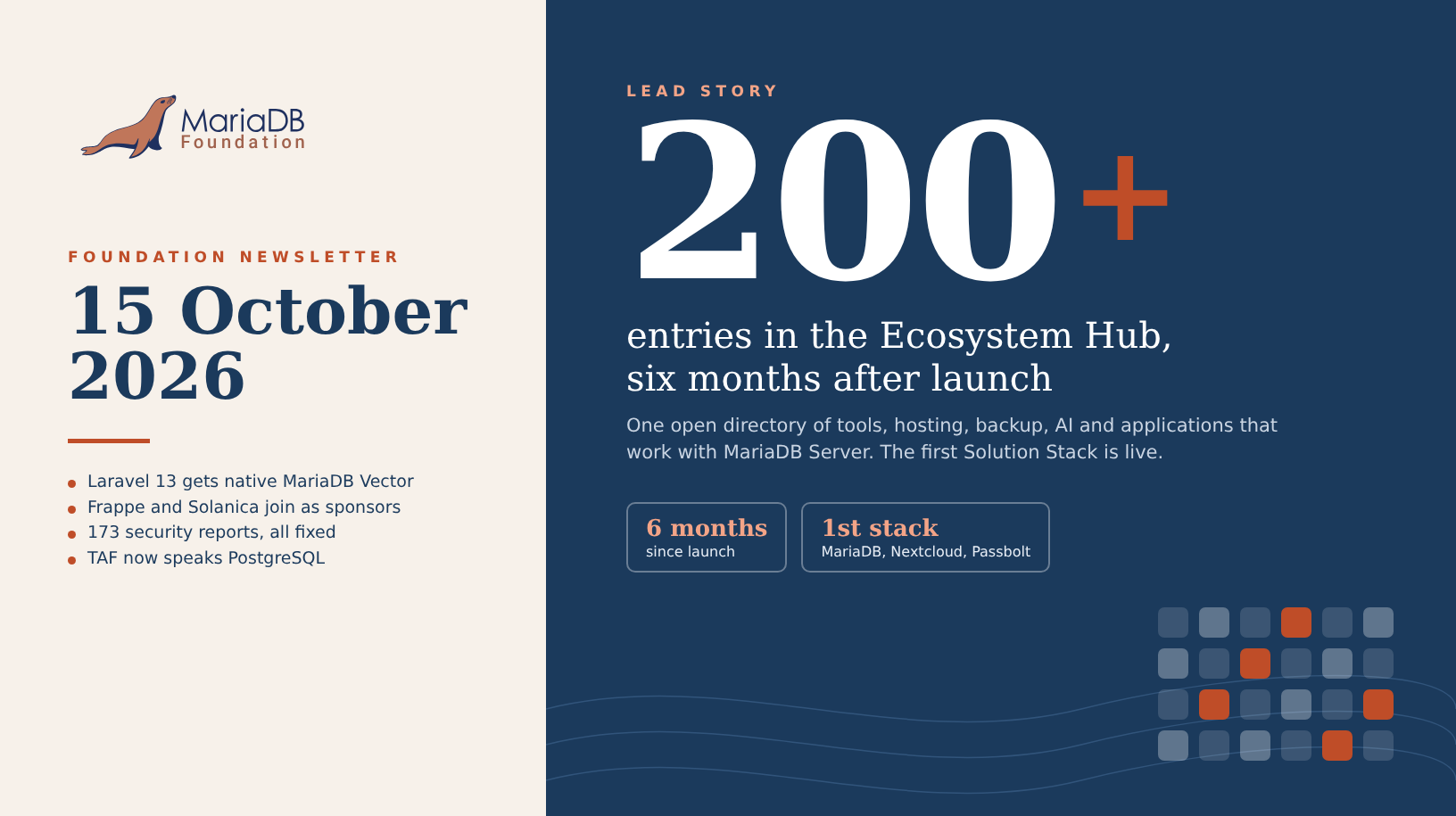
The first half of October belonged to the ecosystem. The MariaDB Ecosystem Hub passed 200 entries six months after launch, Laravel 13 gained native MariaDB Vector support through community contributors, and Frappe and Solanica joined the Foundation as Silver Sponsors. The Foundation’s testing framework learned PostgreSQL, reproduced a regression reported by Mark Callaghan and confirmed the fix, and Frédéric Descamps explained why 173 security reports in two quarters is good news. Here’s what happened.
-
Solanica joins MariaDB Foundation as a Silver Sponsor
We are pleased to welcome Solanica, the company driving the development of OpenEverest, as a MariaDB Foundation Silver Sponsor.
OpenEverest is an open-source platform for deploying and managing databases on Kubernetes. Its recently added MariaDB support gives developers and platform teams another way to bring MariaDB into their infrastructure, with deployment, high availability, backups and recovery accessible through a common interface.
MariaDB in the Kubernetes ecosystem
For organisations running applications on Kubernetes, database support is an important part of their […]
-
MariaDB Foundation: Reproducing and Validating MDEV‑37992 with TAF
Thanks to Mark Callaghan for filing MDEV‑37992. This regression only appears under specific LRU and buffer‑pool conditions, and requires a memory‑resident workload to expose.
Using TAF, I reproduced the issue across 11.8, 12.3, and 13.1 using both parent commits and patched commits from MDEV‑33966. The fix restores expected throughput in all branches.
The workload used was POINTS‑COVERED‑PK with 10M rows × 8 tables, 40 threads, warmup enabled, and a 90G buffer pool. TAF’s warmup iteration, rest detection, and stable‑state perf […]
-
Bagisto MariaDB Vector Semantic Search
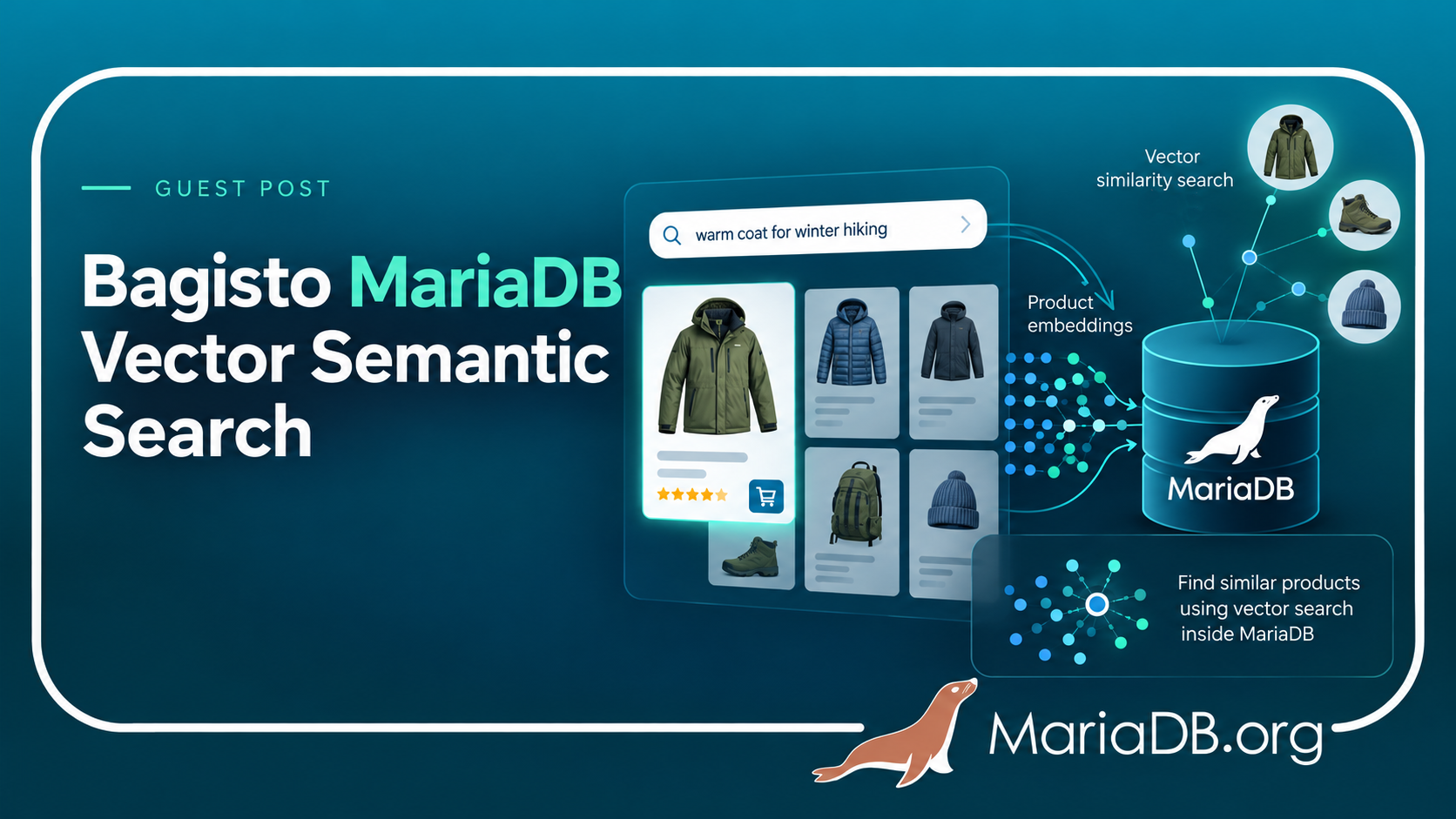
I’m always interested to see how MariaDB Vector is being used in real applications, beyond the usual demos and simple similarity-search examples.
In this guest post, the team behind Bagisto takes a very practical look at semantic search for e-commerce using MariaDB Vector. What I particularly like is that they don’t stop at showing it works: they test indexing, query latency, concurrency, filtering, recall, and the impact of tuning the vector cache, the InnoDB buffer pool, and the HNSW index […]
-
Community Spotlight: Slava Rozhnev and SQLtest.online
Open source runs on people. Not only the engineers who commit code, but everyone who builds tools, answers questions, writes tutorials and shows up when help is needed. Slava Rozhnev, creator of SQLtest.online, is one of those people for MariaDB. He has been creating SQL quizzes with the MariaDB Foundation for a while now, and this post is our way of saying thank you.
A collaboration that keeps growing
Slava’s work with the Foundation goes back further than this year’s […]