


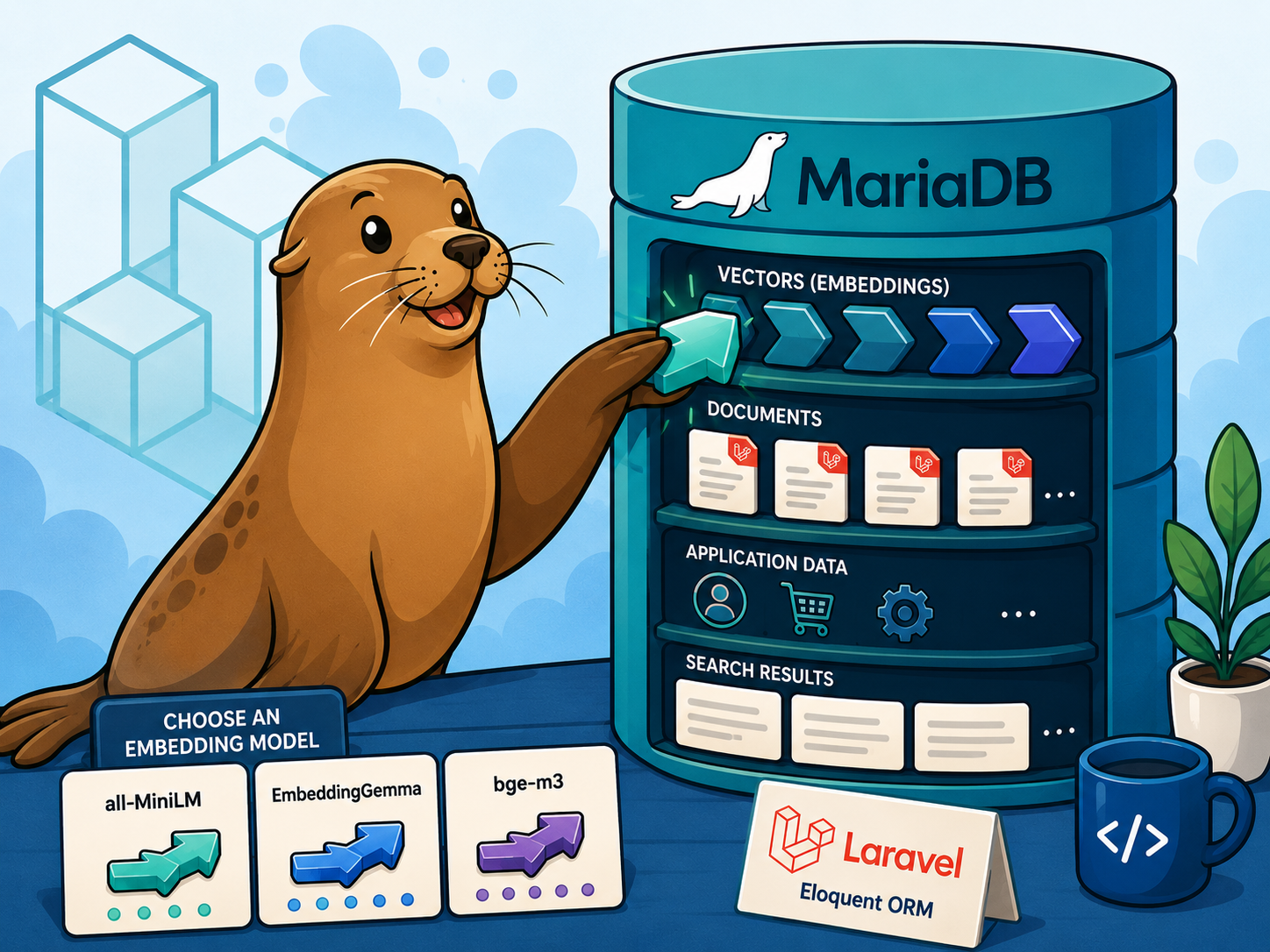
laravel-mariadb-vector is an open-source project by Erik Ros, bringing MariaDB’s native vector search to Laravel’s Eloquent ORM. In his guest post, Erik shares how it works, and his insights about picking an embedding model.
I maintain laravel-mariadb-vector, a small open source package that brings MariaDB’s native vector search to Laravel’s Eloquent ORM. It’s my first open source project, it has over 100 installs, no marketing budget, and it exists because I needed it.
This post is a quick introduction and an experiment with 2,942 job titles in English and Dutch that shows why the embedding model you pick and how you use it matters far more than you might expect.
…
Continue reading “MariaDB Vector in Laravel: insights on choosing an embedding model”
MariaDB Server 10.6 has been with us for a long time. It was the last MariaDB LTS released under the previous release model, and it has served many users, distributions, applications, and production environments very well.
But every maintained series eventually reaches the end of its maintenance lifetime.
MariaDB Community Server 10.6 will reach End of Life on 6 July 2026.
After that date, the MariaDB Foundation will no longer provide maintenance releases for MariaDB Community Server 10.6. That means no more bug fixes, no more security fixes, and no more corrective releases for that branch.
…
Continue reading “MariaDB Server 10.6 Reaches End of Life on July 6th”
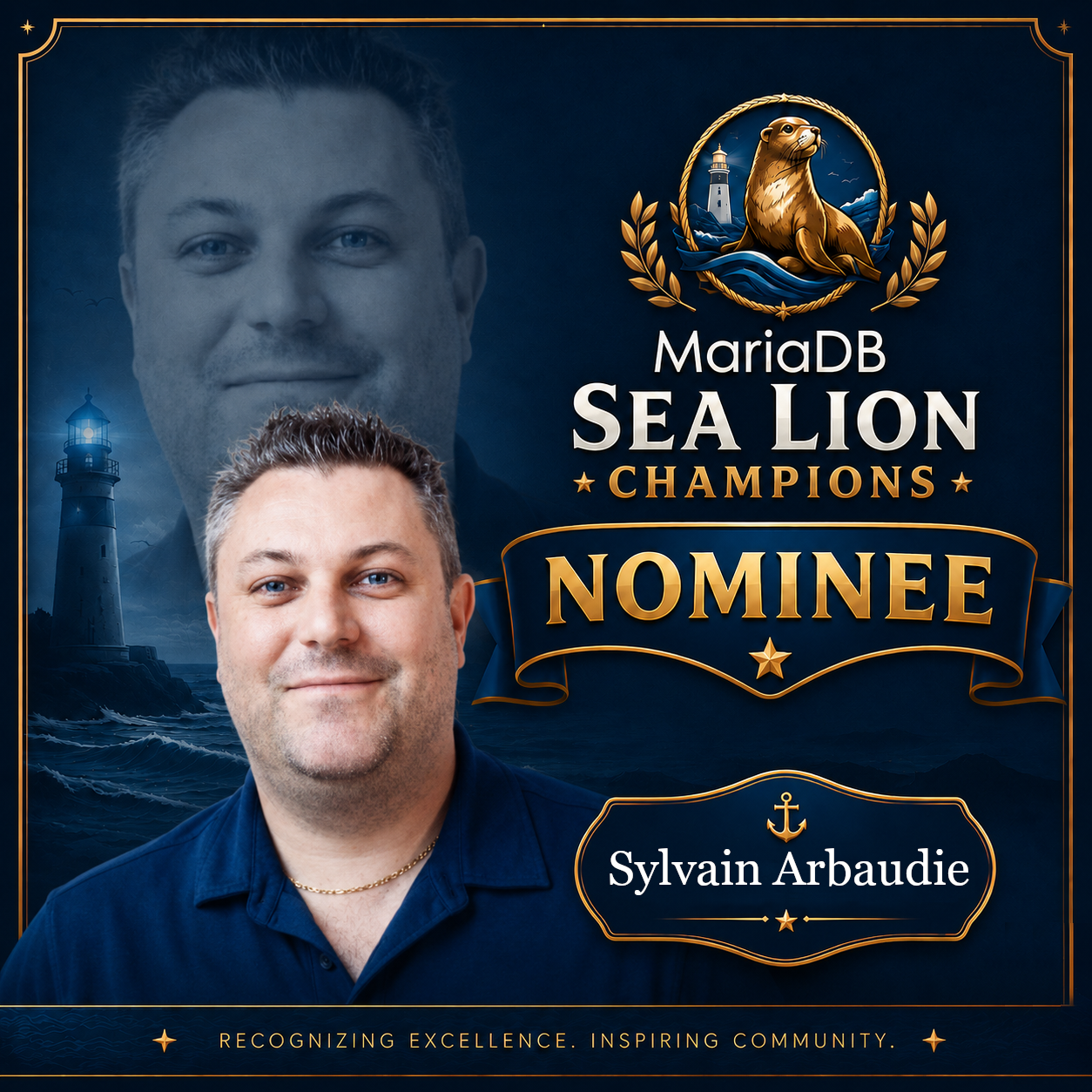
Interview with Sylvain Arbaudie, nominated in the Technical Excellence category.
The MariaDB Foundation Sea Lion Champions program celebrates the people and organizations who help make the MariaDB ecosystem stronger, more open, and more useful for everyone.
Let’s continue the series of interviews with nominees for the MariaDB Foundation Sea Lion Champions program.
I had the pleasure of speaking with Sylvain Arbaudie, a nominee for our “Sea Lions Champions” program in the Technical Excellence category. With over a decade of experience in the MariaDB ecosystem, Sylvain offers valuable insights into the platform’s evolution, its role in the AI landscape, and the crucial function of the MariaDB Foundation.
…
Continue reading “MariaDB Foundation Sea Lion Champions Nominees: Sylvain Arbaudie”
MariaDB just announced it has learned to quack: the new DuckDB storage engine has joined the large family of storage engines in MariaDB Server.
The idea is very interesting: use MariaDB Server as usual, but create some tables using ENGINE=DuckDB and benefit from DuckDB’s columnar storage and vectorized execution for analytical queries.
In other words, we can keep our transactional workload in InnoDB, and use DuckDB tables for analytics… in the same MariaDB instance. Not a new concept, but a new and powerful implementation!
This is, of course, not something I would recommend for production today;
…

On May… we have released an update of our 5 current LTS releases:
These new releases contain a large amount of external contributions. The number of contributors is constantly growing, which is great!
On behalf of the MariaDB Foundation and the entire MariaDB Team, let me thank you all!
If we refer to MariaDB Server 11.8, we have about 62 contributions from 35 external contributors.
…

An early look at the DuckDB storage engine for MariaDB — columnar, vectorized analytics that live right next to your transactional tables.
The problem
MariaDB’s InnoDB is excellent at what it was built for: transactions. Row-by-row inserts, updates, point lookups, strong consistency. But the moment you ask it to scan tens of millions of rows for a multi-way join with a few aggregations, a row store has to work hard.
The usual answer is to stand up a separate analytical system, then build ETL pipelines to copy data into it.
…
Continue reading “DuckDB Storage Engine for MariaDB. When the Sea Lion Learns to Quack.”
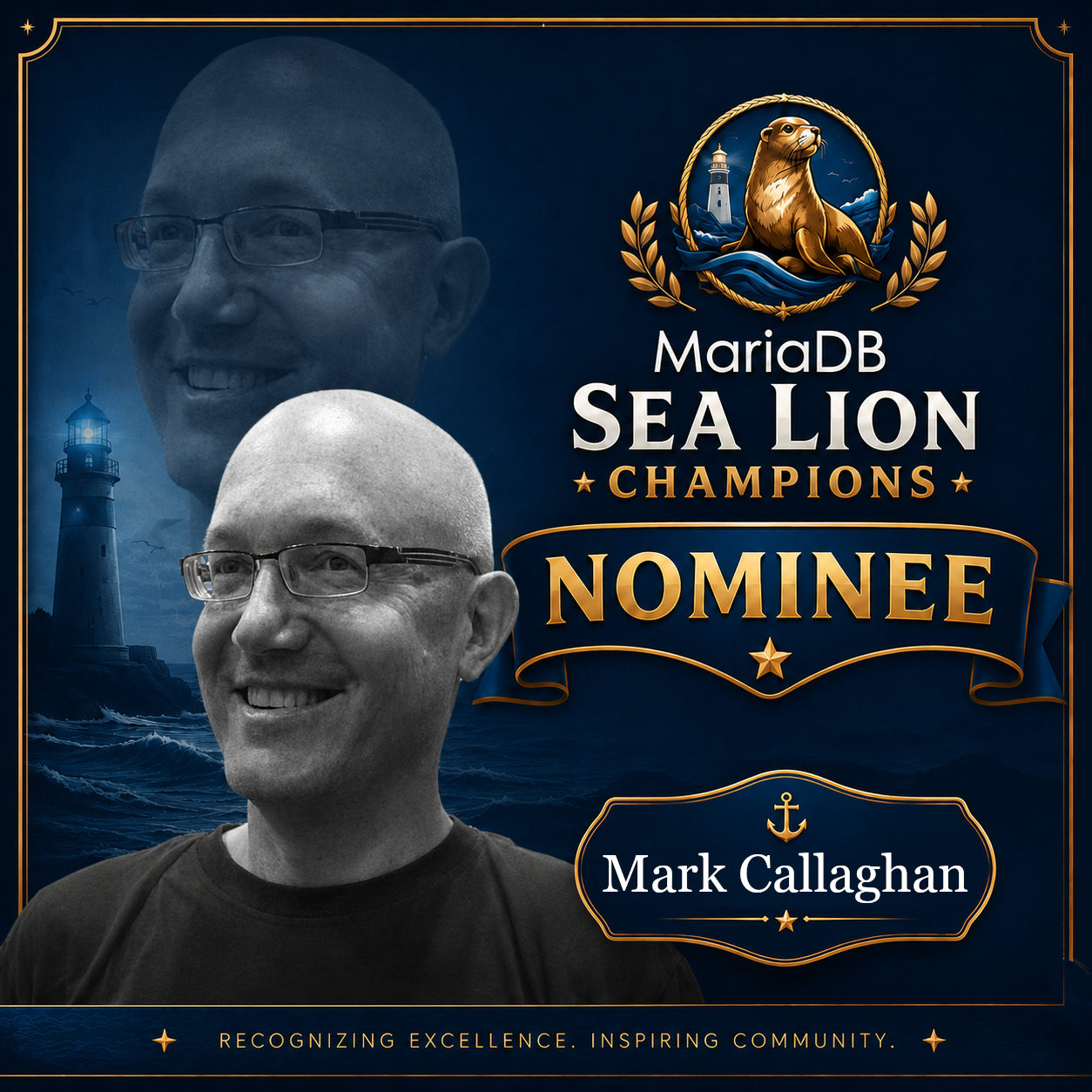
Interview with Mark Callaghan, nominated in the Technical Excellence category.
I had the pleasure of speaking with Mark Callaghan, recently nominated for the MariaDB Sea Lion Champions program in the “Technical Excellence” category. Mark is a respected figure in the database community, known for his in-depth performance analysis and contributions to the open-source dialogue.
The Interview
lefred: Mark, congratulations on your nomination as a MariaDB Sea Lion Champion. How do you feel about this recognition?
Mark Callaghan: I am always grateful for acknowledgment. But I’m a private person, so I’m not always comfortable standing out.
…
Continue reading “MariaDB Foundation Sea Lion Champions Nominees: Mark Callaghan”

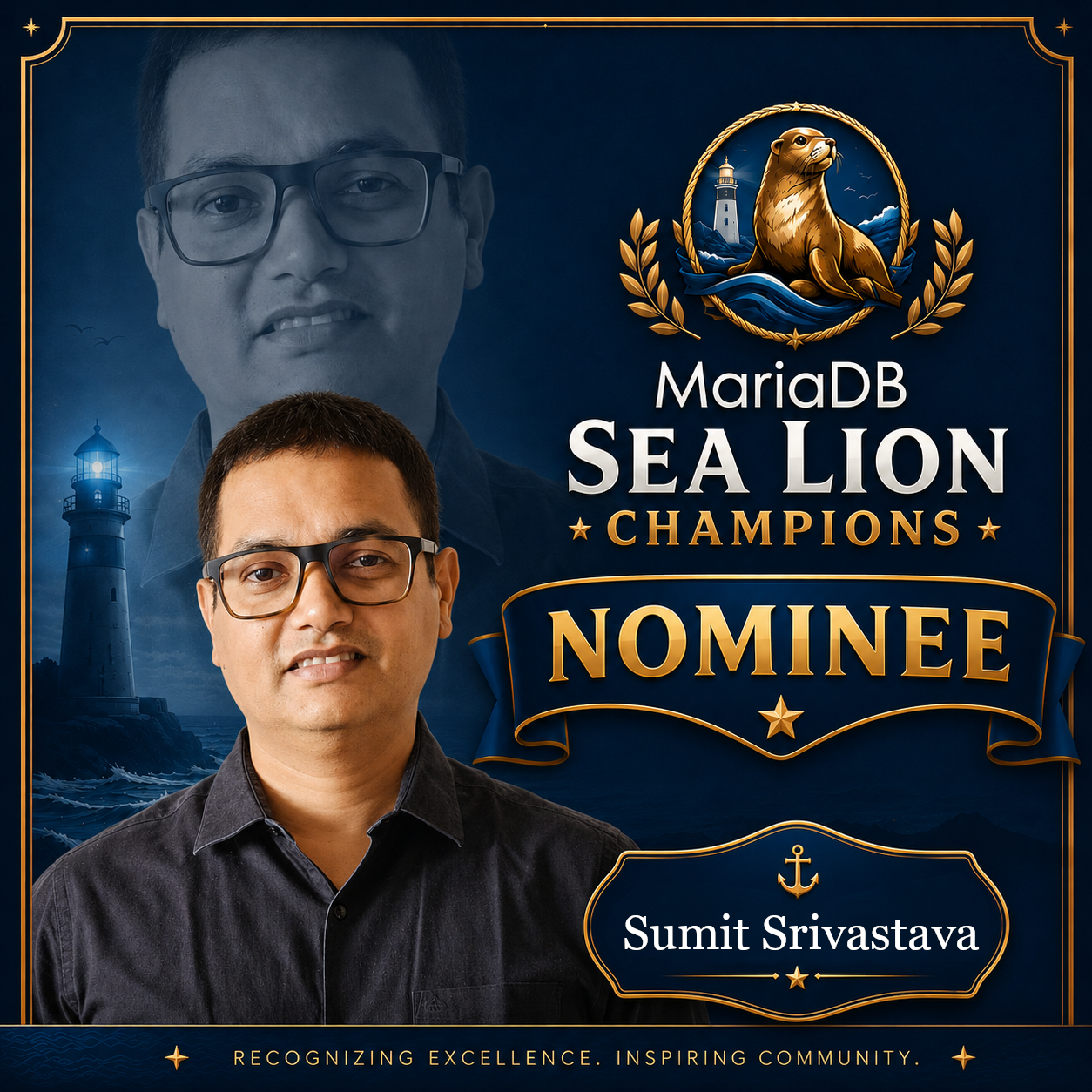

Interview with Sumit Srivastava, nominated in the Adoption & Industry Impact category.
I had the pleasure of speaking with Sumit Srivastava, SVP Business Development & Products at Tayana, a Bangalore-based telecom software company. Sumit was nominated for championing MariaDB adoption in the telecommunications industry and its demonstration of open-source database delivering performance, scalability, and business impact in mission-critical systems. Like me, Sumit sits between technical and business — “the business people think I’m technical, and the technical people think I’m business,” as he put it. It made a lively conversation.
The Interview
Kaj: Sumit, Congratulations on your nomination.
…
Continue reading “MariaDB Foundation Sea Lion Champions Nominees: Sumit Srivastava”